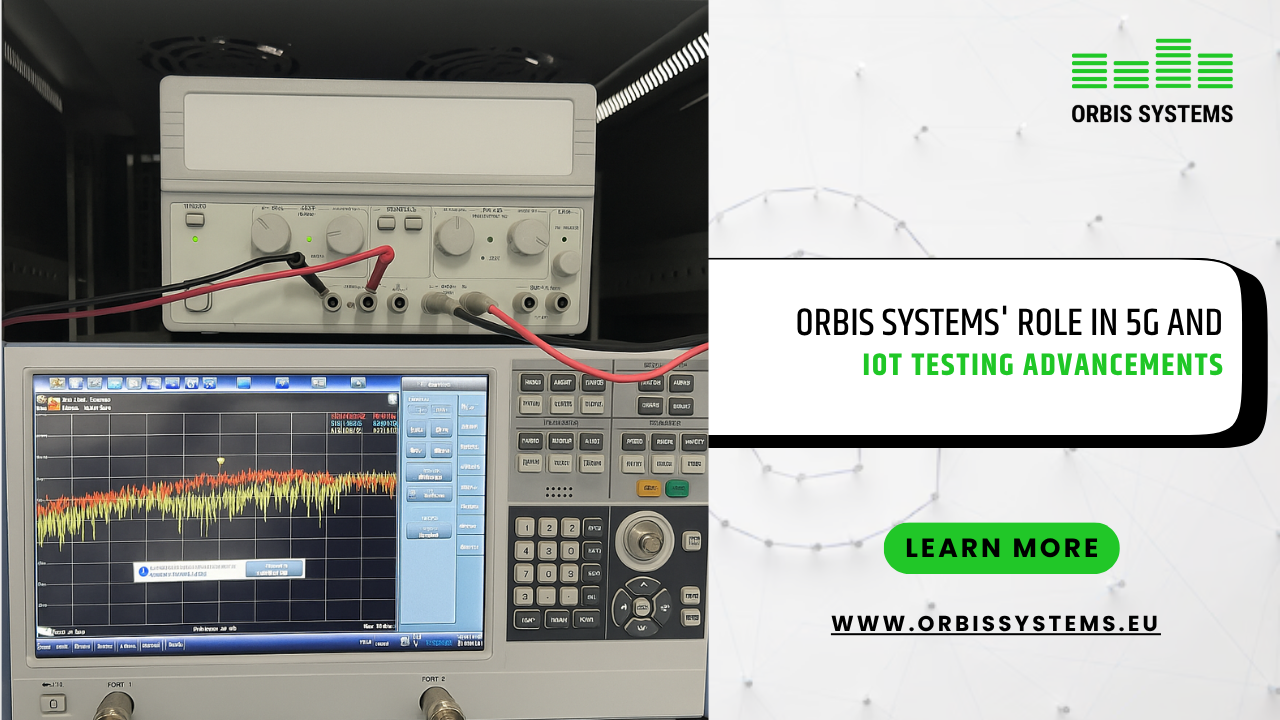
Orbis Systems participated in Wireless Japan and Expo 2025 Osaka, showcasing advanced wireless test solutions and reinforcing its leadership role in future-ready infrastructure across the global technology landscape.
Expo 2025 Osaka offered Orbis Systems valuable visibility among global technology leaders, allowing them to align with international innovation themes and connect with tech companies seeking scalable testing solutions.
At the Nordic Pavilion, Orbis Systems shared Vision 2030 through expert sessions, and strategic dialogue, highlighting their commitment to sustainable, collaborative growth in next-generation wireless ecosystems.
Through keynotes and active engagement, Orbis Systems sparked new partnerships with Kyushu University and Nogata City, laying the foundation for future research, development, and deployment of advanced test technologies.
When global technology leaders gather, opportunities for meaningful innovation follow. That’s exactly what unfolded as Orbis Systems participated in two key events in Japan, Wireless Japan in Tokyo and the Expo 2025 Osaka. Both platforms helped spark new conversations, deepen partnerships, and highlight the company’s role in shaping the future of wireless test solutions.
Why Expo 2025 Osaka Matters to Tech Companies
Expo 2025 Osaka is more than a world event; it’s a hub where over 150 nations, global technology pioneers, and millions of visitors come together. For tech companies, it offers unmatched visibility and the chance to align with visionary themes like “Designing Future Society for Our Lives.” Orbis Systems, representing Finland in the Nordic Pavilion, is using this stage to show how wireless test solutions can help create smarter, more connected futures.
How Orbis Systems Benefits from Participating
Joining Expo 2025 Osaka enables Orbis Systems to demonstrate its long-term commitment to future-ready infrastructure and collaborative innovation. Their presence isn’t just about visibility; it’s about impact. From presenting in Tokyo to engaging new contacts in Osaka, Orbis has extended its reach in Asia and laid the groundwork for ongoing partnerships.
Building Momentum: From Tokyo to Osaka
The journey started at Wireless Japan in Tokyo, where Orbis Systems delivered a well-received presentation at Birth Lab. With a full room and enthusiastic engagement, the team had productive conversations with new and existing partners. This momentum carried over to Expo 2025 Osaka, where Orbis continued to showcase its capabilities and strengthen its presence among global technology leaders.
Highlighting Innovation in the Nordic Pavilion
At the Nordic Pavilion in Osaka, Orbis Systems took center stage. Antti Laitala’s keynote speech drew attention, including interest from Kyushu University. These moments weren’t just symbolic, they were stepping stones toward deeper collaborations, including potential initiatives in Nogata City.
A Strategic Approach to Tech Showcases
Expo 2025 Osaka gives tech companies the space to do more than display products; it’s about dialogue and direction. Orbis Systems used this opportunity to:
Demonstrate joint technology innovation with Japanese partners
Offer interactive demos of wireless test systems
Translate its Vision 2030 into real-world applications
These sessions created a hands-on experience that showcased how scalable and sustainable testing environments are key to the future of global connectivity.
Why Orbis Systems Stands Out
Orbis Systems is not just showing up at events; it’s shaping the narrative. The company’s ability to turn meetings into partnerships, presentations into opportunities, and vision into action sets it apart. Expo 2025 Osaka serves as a clear marker of Orbis’s place among global technology innovators and forward-thinking tech companies.
Final Thoughts
Expo 2025 Osaka is a critical point of connection for tech companies operating in today’s global technology landscape. For Orbis Systems, it’s a chance to show what’s possible when innovation meets purpose. From Tokyo’s technical presentations to Osaka’s strategic showcases, Orbis continues to pave the way for smarter, more connected systems, today and tomorrow.
Frequently Asked Questions
1. What events did Orbis Systems attend in Japan?
Orbis participated in Wireless Japan (Tokyo) and Expo 2025 Osaka (Nordic Pavilion).
2. Who represented Orbis Systems?
Antti Laitala, Yoko Keränen, Mr. Inagaki-san, and Mr. Hashimoto-san, as part of the Business Oulu delegation.
3. What were the key outcomes?
The team built new connections, deepened existing relationships, and gained strong leads through demos and discussions.
4. What theme was highlighted at Expo 2025 Osaka?
Orbis aligned with “Designing Future Society for Our Lives” and focused on wireless innovation and Vision 2030 goals.
5. What future opportunities emerged?
Early-stage conversations with Kyushu University and Nogata City hint at future partnerships in research and tech deployment.
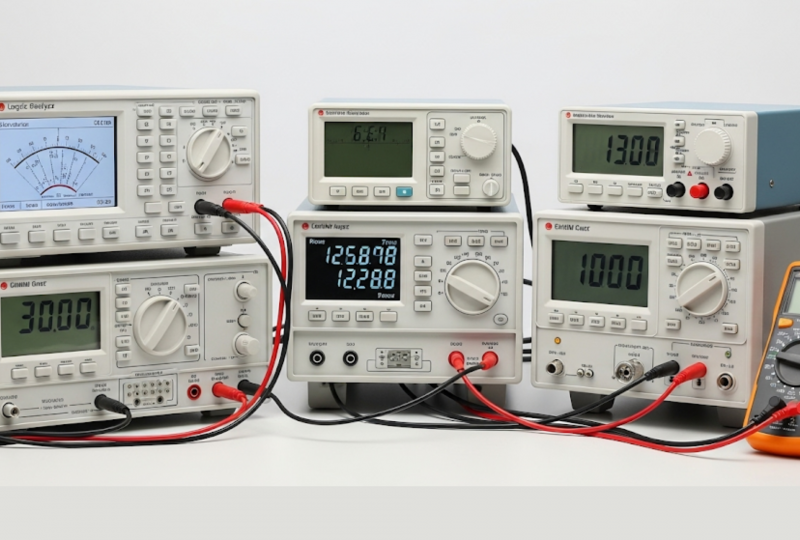
Telecommunication test equipment helps reduce time-to-market by accelerating validation cycles for telecom networks and connected devices.
Advanced telecom testing solutions improve precision, minimize the need for retesting, and support emerging technologies such as 5G, IoT, and future wireless standards.
Orbis Systems delivers detailed telecom testing services to support various stakeholders in the telecom ecosystem.
Advanced telecom testing solutions improve precision, minimize the need for retesting, and support emerging technologies such as 5G, IoT, and future wireless standards.
Rapid telecom advancements demand equally fast and reliable testing. Whether it’s for 5G networks, IoT integration, or antenna validation, getting products to market faster requires smarter solutions. Orbis Systems provides accurate, effective, and scalable testing services to telecom companies by utilizing our state-of-the-art telecommunication test equipment. Our goal is simple: to reduce time-to-market without compromising on quality.
The Growing Demand for Faster Telecom Testing
Operators, device makers, and R&D teams are facing increased challenges due to the rollouts of 5G, the expansion of IoT ecosystems, and constant updates in wireless technologies. These companies must test more products in less time while keeping up with rapidly shifting standards.
Traditional testing methods can’t keep up with this pace. They are slow, resource-intensive, and often inconsistent. To meet these modern demands, businesses need reliable, efficient, and scalable testing services. Orbis Systems meets this need by providing advanced testing systems and expert services that help clients reduce time-to-market without compromising on quality.
How Telecommunication Test Equipment Supports Rapid Testing
Telecommunication test equipment encompasses a range of tools, software, and hardware used to evaluate the performance, reliability, and functionality of telecom products and networks. This includes everything from signal switching units and RF chambers to automated controllers and test management software.
Our testing service helps simulate real-world conditions to verify that devices or network components perform as expected under stress, load, and variability. This level of testing precision is essential for reducing retesting, eliminating errors, and bringing telecom products to market faster.
Why Manual Testing Slows You Down
While useful in the early stages of development, manual testing processes have significant limitations when speed and accuracy are crucial.
Here’s why manual testing can slow your product down:
Time-Consuming: Manual setups and executions take significantly longer, slowing down overall development cycles.
Human Error: Inconsistent results and missed errors are common with human-led testing.
Low Repeatability: Reproducing test results with precision is difficult without automation.
Delayed Feedback: Slow turnaround increases costs and pushes back release timelines.
As telecom networks grow more complex, relying solely on manual testing is no longer sufficient. To stay competitive, businesses need testing systems that deliver speed, scalability, and consistency without sacrificing accuracy
Benefits of Using Advanced Telecom Testing Equipment
Our telecom testing services are designed to offer measurable advantages for companies developing or operating in complex telecom environments. When you leverage advanced telecom solutions through Orbis, you gain access to
Faster Test Cycles: Automated systems run tests continuously, significantly reducing turnaround time.
High Accuracy: Sophisticated tools catch performance issues early and minimize false positives or missed faults.
Scalability: When testing one device or thousands at once, our testing systems can handle the load without additional time or cost.
Cost Reduction: Automation and streamlined workflows reduce manual labor, minimize errors, and cut operational expenses.
How Orbis Systems Delivers Testing Solutions
Orbis Systems provides end-to-end telecom testing services powered by proprietary, state-of-the-art test equipment. Unlike traditional hardware vendors, we focus on delivering fully managed, flexible, and scalable testing solutions tailored to each client’s needs.
Our testing environments include modular setups that can be customized per project. Using automated signal switching units, RF testing chambers, and programmable logic controllers, we simulate real-world telecom network conditions. This enables us to validate everything from antenna performance to system interoperability and 5G signal integrity.
Partner with Orbis Systems for Faster Market Readiness
Reducing time-to-market is not just about faster testing; it’s about smarter testing. Partnering with Orbis Systems means gaining a reliable ally equipped with cutting-edge telecommunication test equipment, deep expertise, and scalable systems to accelerate the testing, validation, and deployment of your telecom solutions.
Whether you’re developing new devices, expanding your network capabilities, or validating the performance of excess telecom equipment, we deliver precise, reliable, and scalable results.
Frequently Asked Questions
1. What is telecommunication test equipment?
Telecommunication test equipment refers to the specialized tools, devices, and software used to evaluate, measure, and verify the performance, reliability, and functionality of telecom networks, devices, and systems
2. How do your services reduce time-to-market?
Our systems reduce manual labor, eliminate human errors, and provide rapid, scalable testing. This process helps reduce delays and allows you to launch faster.
3. Can you test 5G, IoT, or other modern technologies?
Yes. Our testing environments are fully equipped to handle 5G, Wi-Fi 6, and other emerging telecom technologies.
4. What types of telecom networks can you test?
We support testing for a wide range of telecom networks, including 4G, 5G, LTE, and Wi-Fi. Our systems can simulate complex network conditions to ensure your equipment performs reliably in real-world environments.
5. Do I need technical knowledge to work with Orbis Systems?
No. We work with technical teams, but our process is collaborative and transparent. Whether you’re in R&D or project management, we’ll guide you through every step of the testing process with clear communication and support.
Automated testing ensures faster, more reliable telecom validation, which is ideal for evolving technologies like 5G and IoT.
Manual testing can’t match automation’s speed, consistency, or scalability in modern telecom environments.
Orbis Systems delivers advanced automated testing solutions for accurate, real-world testing of wireless products and networks.
Smart tools streamline test setup, execution, and reporting, making every test efficient, traceable, and repeatable.
Automation reduces costs, boosts test coverage, and accelerates time-to-market for telecom manufacturers and operators.
Automated testing is revolutionizing telecom validation with fast, accurate, and repeatable results. As wireless technologies evolve, automation helps operators, manufacturers, and engineers meet growing demands while ensuring performance and reliability. Orbis Systems delivers advanced solutions that boost quality, cut costs, and speed up time to market.
The Growing Need for Smarter Testing in Telecom
Telecom networks are evolving rapidly with 5G, IoT, and increasingly complex wireless ecosystems. These advancements demand fast, reliable, and scalable testing—something manual methods can no longer deliver. Automated testing meets this challenge by enabling high-speed validation that keeps pace with technological change.
By minimizing human error, reducing setup time, and ensuring consistent real-world testing, automated solutions empower telecom operators, device manufacturers, and R&D teams to accelerate innovation, improve quality, and stay competitive in a fast-moving industry.
Orbis delivers fully managed telecom testing services using the best telecom testing equipment that uses automation to deliver consistent, scalable, and accurate results for all types of wireless products.
How Automated Testing Works in Telecom
Automated telecom testing replaces manual tasks with smart tools and software. These tools are designed to run repeatable tests on systems, designs, or networks. The process starts with setting up test cases, triggering automated actions, collecting data, and analyzing results. Everything from RF performance to 5G signal quality can be measured using automated testing setups.
At Orbis Systems, automated testing solutions often include custom-designed test environments, intelligent switching units, and automated control systems capable of running tests around the clock. This approach delivers speed, precision, and flexibility, no matter how complex the telecom product or network under evaluation.
Why Manual Testing Is Not Enough
Manual testing still has a place in early-stage development. But when speed, scale, and accuracy matter, manual methods fall short.
Here are the key problems with manual testing:
It’s time-consuming and labor-intensive
Results vary based on the tester’s skill
It’s hard to repeat tests consistently
It delays time-to-market
In contrast, automated testing eliminates these problems. It gives teams faster feedback, ensures test reliability, and improves testing coverage. For modern telecommunications networks, automation is no longer a luxury. It’s a must.
How Orbis Systems Supports Automated Testing
At Orbis Systems, we specialize in advanced automated testing solutions for the telecom industry, combining cutting-edge equipment with custom-built environments to test RF signals, 5G connectivity, and wireless devices under real-world conditions—ensuring fast, reliable, and scalable validation across all stages of development. Our modular switching units allow for seamless rerouting and customization of complex test cases without rebuilding the entire setup. We also use proprietary test management tools to oversee scheduling, monitoring, and reporting, ensuring a smooth, transparent testing process managed entirely by our skilled team.
Streamlining the Testing Process Using Smart Tools
To make testing more efficient and easily manageable, we integrate smart test management tools to our automated setups. These tools provide clients with real-time updates on test progress, enable seamless scheduling of test cases, and automatically generate detailed reports for easy review. This workflow saves time and ensures that every test is fully documented and traceable. Whether testing locally or remotely, these tools keep the entire process smooth and reliable for all stakeholders involved.
Ready for the Next Step?
Telecom technology is growing fast, and manual testing methods simply can’t keep up. Whether you’re building next-gen networks, launching new devices, or improving quality, automated testing gives you the edge. At Orbis Systems, we help you move faster with smarter testing services. From RF testing to 5G OTA, we deliver reliable, flexible solutions using our telecom testing equipment.
Frequently Asked Questions
1. What is automated telecom testing?
Automated telecom testing uses specialized software and equipment to consistently evaluate networks, devices, and systems—testing RF, 5G performance, hardware reliability, and compliance without manual effort.
2. What components can be tested using automation?
Automation can help with testing of RF signals, 5G connectivity, latency, data throughput, device interoperability, antenna performance, and network behavior.
3. Does automated testing support 5G and IoT?
Yes. Automated testing is best for modern telecom technologies like 5G, Wi-Fi 6, and IoT. It supports flexible, rapid, and accurate testing at scale.
4. How do I get started with Orbis Systems?
Simply reach out to the Orbis team. We’ll collaborate with you to understand your testing goals and develop customized solutions tailored to your specific needs.
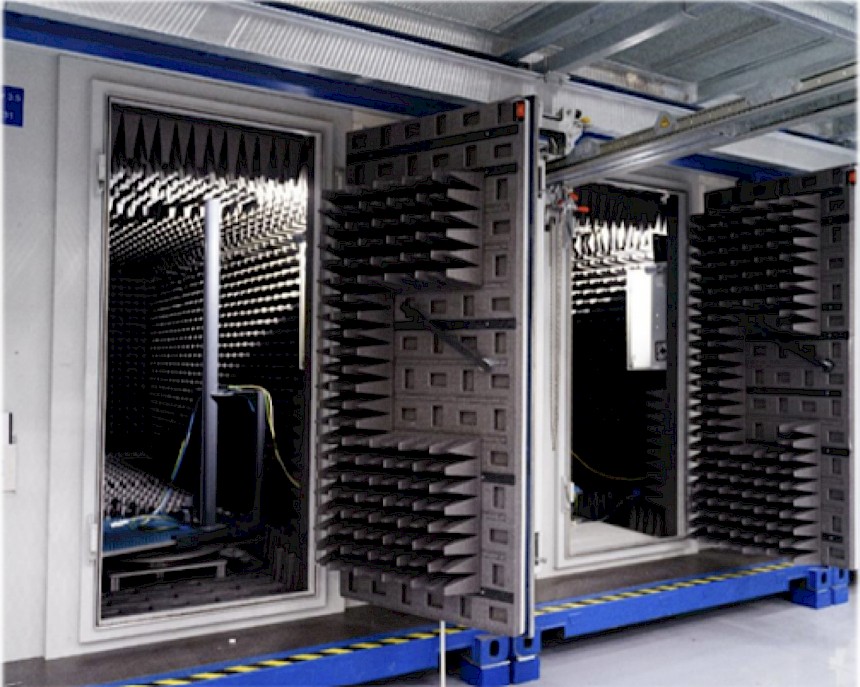
Sea container-based OTA chambers offer mobility and flexibility, making them ideal for remote or temporary over-the-air (OTA) signal testing scenarios. These modular setups are especially well-suited for field deployments or dynamic testing environments.
In contrast, traditional OTA test chambers deliver higher precision and measurement consistency, making them the preferred choice for controlled, high-volume lab environments. Their robust infrastructure supports rigorous, repeatable testing ideal for long-term validation and certification processes.
When it comes to cost and scalability, sea container solutions have the edge. They are often more affordable and easier to deploy, making them attractive to startups and companies with evolving OTA testing requirements.
While traditional chambers demand more infrastructure investment, they ensure reliable, repeatable results and are optimal for organizations with stable, long-term OTA testing needs.
Choosing the right OTA chamber depends on factors such as flexibility, budget, testing volume, and your product’s wireless communication performance requirements
When it comes to testing wireless devices, getting accurate results is super important. That’s where OTA (Over-the-Air) testing comes in. It checks how well devices like phones, routers, or sensors perform without needing cables. But there’s a big question to answer: should you go for a traditional OTA chamber or a sea container-based one? Both have their pros and cons, and choosing the right one can save you time, money, and headaches down the road.
If you’re unsure which setup best fits your testing needs, we’ve got you covered. In this blog, we’ll break down the differences in a simple, clear way so you can make a smart choice. Whether you’re new to OTA testing or looking to upgrade, this guide will help you pick the right path.
Understanding OTA Testing
OTA (Over-the-Air) testing evaluates a device’s ability to send and receive wireless signals in a controlled environment that simulates real-world conditions. This includes measuring performance across cellular, Wi-Fi, Bluetooth, and other wireless communication standards. The goal is to replicate live usage scenarios while isolating the device from external interference, allowing for accurate monitoring of its over-the-air signal transmission and reception capabilities.
Inside an OTA Performance Test System
An OTA performance test system typically consists an RF-shielded chamber, signal generators, measurement instruments, and software to manage testing scenarios. These systems enable manufacturers and engineers to evaluate device behavior under various conditions, including signal fade, latency, and frequency shifts.
Whether for R&D or regulatory compliance, a reliable OTA wireless testing setup is essential to meet today’s industry standards and ensure device performance in real-world environments.
Sea Container-Based Solutions Explained
Sea container-based OTA test systems are portable chambers build inside shipping containers. These units are fully RF-shielded, equipped with integrated test equipment, and designed for plug-and-play deployment.
Their key advantage is mobility, allowing businesses to relocate the testing facility based on production needs, field testing requirements, or temporary projects. This makes them ideal for organizations seeking flexibility without the burden of heavy infrastructure costs.
Traditional OTA Chambers: The Standard Approach
Traditional OTA performance test systems are fixed installations built into controlled lab environments. These chambers are often larger and can handle more complex test scenarios. They’re ideal for companies with high-volume testing needs or for those working on advanced device development.
While these chambers offer high precision and powerful capabilities, they require dedicated facilities, longer setup times, and a larger initial investment.
Comparing Costs and Deployment
Sea Container-Based Systems
Lower initial investment
Faster setup (weeks, not months)
Easily relocatable
Ideal for flexible or remote operations
Traditional OTA Chambers
Higher capital cost
Requires permanent space and build-out
Limited mobility
Suited for continuous, high-capacity testing
Scalability and Adaptability
Sea container OTA wireless test systems are built to scale with your evolving needs. Need more capacity? Simply add another container. Planning to test emerging standards like 6G in the future? You can upgrade the existing container without overhauling your entire setup.
In contrast, traditional test systems offer less flexibility and are more challenging to scale once installed. Upgrades usually involve significant modifications to the existing infrastructure.
Show less
Key Considerations for Choosing the Right Solution
Mobility: Need to move your test site? Choose sea container-based systems.
Budget: Looking to minimize upfront costs? Containers offer better value.
Volume: Testing thousands of units daily? Traditional chamber may be best.
Space: Limited lab space? Sea containers provide an efficient solution
Technology upgrades: Expect frequent changes in test parameters? Containers offer greater flexibility.
Who Benefits From Each Option
Sea Container-Based Test Systems
Startups or R&D labs requiring mobility
Defense and field engineers
Small to mid-sized manufacturing operations
Remote 5G or telecom infrastructure deployment
Which OTA Testing Solution is Right for You?
Your testing priorities, resources, and operational flexibility ultimately determine the choice between a sea container and a traditional OTA performance test system. Sea container-based chambers offer a compact, mobile, and cost-effective option, perfect for businesses seeking rapid deployment, remote testing capabilities, or scalable setups without the need for extensive infrastructure. On the other hand, traditional OTA chambers remain the gold standard for large-scale testing facilities, delivering unmatched precision, stability, and throughput for organizations with long-term, high-volume testing requirements.
Both systems are engineered to ensure optimal performance in OTA over-the-air testing, reliably capturing data from real-world wireless conditions. By aligning your choice with your specific goals, be it R&D, field testing, certification, or mass production, you can invest in a solution that not only meets today’s standards but is also future-ready. Regardless of the route you take, the right OTA wireless test environment is essential to delivering products that perform reliably in the real world.
Frequently Asked Questions
1. What does an OTA performance test system do?
An OTA (Over-the-Air) performance test system evaluates how well wireless devices send and receive signals under conditions that simulate real-world environments. This enables manufacturers to ensure their devices operate reliably and meet industry standards without the need for physical cables, accurately reflecting true user experiences.
2. What’s the difference between OTA over-the-air and cabled testing?
An OTA (Over-the-Air) performance test system evaluates how well wireless devices send and receive signals under conditions that simulate real-world environments. This enables manufacturers to ensure their devices operate reliably and meet industry standards without the need for physical cables, accurately reflecting true user experiences.
3. Are container-based test systems as accurate as traditional chambers?
Yes, when designed and shielded properly, they can match the performance of traditional systems while offering more flexibility.
4. Can I upgrade a sea container OTA system?
Absolutely. Sea container OTA systems are modular by design, enabling easy expansion, upgrades, or reconfiguration as your testing requirements evolve. This built-in flexibility makes them ideal for adapting to emerging technologies or increasing testing capacity over time.
5. What factors affect over-the-air signal testing accuracy?
Shielding quality, chamber calibration, antenna positioning, and environmental controls are key elements in both container-based and traditional systems.
A 5G OTA chamber ensures reliable over-the-air testing for modern wireless devices.
Sea container-based RF chambers offer portability, scalability, and cost-efficiency.
Orbis Systems’ custom 5G OTA chambers are modular and ready for deployment worldwide.
Testing wireless devices over-the-air (OTA) has become essential for ensuring they perform well in real-world environments. With the growing demand for 5G, the need for fast, flexible, and scalable testing solutions is higher than ever. That’s where sea container-based 5G OTA chambers come in. These mobile RF chambers are easy to deploy, customizable, and ideal for industries ranging from telecom to defense.
What Is Over-the-Air (OTA) Testing?
OTA testing evaluates devices’ wireless performance by measuring their ability to transmit and receive signals within a controlled RF environment without relying on physical cables. Simulating real-world conditions plays a crucial role in validating the performance of smartphones, IoT devices, automotive sensors, and other wireless technologies. OTA testing ensures reliable communication across all intended frequencies, helping manufacturers meet industry standards and deliver high-quality user experiences.
How a 5G OTA Chamber Works
A 5G OTA chamber is a shielded environment designed to test wireless devices without external RF interference. It enables engineers to assess critical performance metrics such as signal strength, data throughput, latency, and consistency.
Inside the RF chamber, test equipment creates and receives signals across a wide range of 5G frequencies. This setup helps replicate real-world network conditions and allows for accurate and repeatable tests.
Why a Sea Container-Based Solution?
Using a sea container as an RF chamber makes deployment simple. These mobile test labs are built inside standard-sized containers that can be shipped and installed almost anywhere. That means testing can happen on-site at factories, military bases, or telecom sites.
This flexibility saves time and avoids the need to build a permanent testing facility. It’s a practical solution for both temporary and long-term testing requirements.
Cost-Effective Without Compromising Quality
Traditional OTA testing chambers often require heavy infrastructure investments. A container-based 5G OTA chamber is more affordable. It reduces setup time, construction costs, and space requirements. Since these containers are mobile, companies can move them to different locations as needed. That eliminates the need to build multiple fixed sites, further reducing expenses without sacrificing quality.
Modular Design for Future-Ready Testing
Orbis Systems’ sea container-based OTA chambers are modular, meaning they can be adjusted or upgraded to match evolving technology needs. As 5G standards change or new devices emerge, these RF chambers can be reconfigured without needing an entirely new setup. Whether you’re testing 5G, Wi-Fi, or future wireless systems, modularity ensures your testing environment stays up-to-date.
Key Benefits of a 5G OTA Chamber
Fast Deployment: Can be transported and installed quickly anywhere in the world. Customizable: Interior layout can be tailored to specific testing needs. Shielded: Built to block external RF signals for accurate measurements. Scalable: Supports testing of devices from small IoT sensors to large systems. Cost-Saving: No need for building permanent facilities or investing in multiple chambers.
Common Use Cases
Testing 5G smartphones and routers before market release
Military and defense RF system evaluation on secure sites
Telecom equipment testing at remote locations
Automotive sensor and radar validation
Wireless IoT product verification and certification
Why Do You Need 5g OTA-Based Sea-Chamber
With wireless tech evolving fast, testing must keep up. A sea container-based 5G OTA chamber offers a quick, scalable way to meet these testing demands. Whether for commercial, defense, or telecom use, it provides real-world accuracy without the need for fixed infrastructure.
Are you seeking to enhance your OTA testing process? Orbis Systems’ 5G OTA chambers are custom-built to match your specific needs, wherever you are in the world. Contact us today to learn how our RF chamber testing solutions can upgrade your testing capabilities.
Frequently Asked Questions
1. What is a 5G OTA chamber?
A 5G OTA chamber is a controlled space where wireless devices are tested over the air, simulating real-world conditions to ensure signal performance and reliability across 5G frequencies.
2. How does a sea container-based RF chamber work?
A sea container-based RF chamber repurposes a standard shipping container into a fully functional, portable testing environment. The container is outfitted with advanced RF shielding and integrated with wireless testing equipment to create a controlled, interference-free space.
This setup allows for accurate over-the-air (OTA) testing directly on-site, whether at a factory, telecom hub, or defense facility, minimizing setup time, infrastructure costs, and logistical complexity.
3. What is remote OTA, and why is it useful?
Remote OTA (over-the-air) testing refers to conducting wireless device testing from a remote location using portable or transportable test chambers. These enable off-site wireless testing using portable chambers, helpful in industries that need flexibility and quick deployment.
4. Can these chambers be used for multiple device types?
Yes, 5G OTA chambers are versatile. They can test everything from smartphones to sensors and military systems, ensuring signal strength, range, and data accuracy.
5. Are container-based RF chambers easy to relocate?
Yes, container-based RF chambers are designed for mobility. They can be shipped and reinstalled at new locations quickly, making them ideal for industries with evolving testing needs.
High-power RF switches are key to making RF testing fast, accurate, and scalable.
They reduce manual work, speed up test cycles, and help detect problems early.
These switches are essential for high-performance industries like 5G and aerospace.
Orbis Systems offers modular, reliable switching systems built for today’s and tomorrow’s testing needs.
Testing RF components is critical in both 5G communications and aerospace technologies. Devices in these industries must perform perfectly across various frequencies, environments, and use cases. Whether it’s a satellite component or a 5G antenna, reliability is non-negotiable. That’s where high-power RF switch solutions come in; they make testing easier, faster, and more consistent.
The Role of RF Switching in 5G and Aerospace
Both 5G and aerospace applications rely on advanced RF components. These parts need to be tested for performance, safety, and accuracy before deployment. Manual testing in these sectors can be time-consuming and prone to human error. As the need for faster data transmission and aerospace safety standards grows, automated and efficient testing becomes essential.
What Is a High-Power RF Switch?
A high-power RF switch helps route RF signals between different devices and instruments during testing. Instead of manually plugging and unplugging cables, the switch does it electronically. This saves time and prevents damage to connectors or equipment. It also ensures that test signals are clear and consistent, a must for high-stakes industries.
These switches often work alongside tools like RF detectors to monitor signal levels and detect any drops or losses.
Benefits of RF Switching in Complex Applications Seamlessly works with RF detectors, enclosures, and other tools
Using high-power RF switches improves test performance in several ways:
Stability: Fixed signal paths reduce variation and provide more accurate data.
Speed: Automated switching is significantly faster than manual changes
Precision: These systems help detect even small issues early in the testing process.
This is important in aerospace components, where even a tiny signal issue could lead to major failures. The same goes for 5G devices, where signal strength and speed must be spot on.
Reducing Testing Time and Manual Errors
In both industries, time is money. A high-power RF switch lets companies test more devices in less time. Since there’s no need for physical switching, errors caused by manual handling go down too. This process reduces test cycle times and improves efficiency, especially in high-volume production setups.
With fewer errors, there’s less need to retest or troubleshoot, which keeps development timelines on track and reduces costs.
Why Modular Systems Work Best
Orbis Systems designs modular switching units, which can be customized to fit many different test setups. These systems are flexible and scalable. That means you can start small and increase capacity as testing needs grow, whether you are working with one prototype or hundreds of finished devices.
This modular approach makes it easier for organizations to adapt to evolving technologies and shifting market demands.
Key Features of High-Power RF Switches
Fast Switching: Reduces test cycles and increases throughput
Reliable Connections: Minimizes signal loss and testing errors
Modular Design: Scales to fit various test environments
High Power Handling: Supports demanding aerospace and 5G applications
Easy Integration: Seamlessly works with RF detectors, enclosures, and other tools.
Typical Use Cases
Testing 5G antennas and transmitters in telecom
Ensuring signal integrity in aerospace systems and components
RF validation of radar and sensor systems
Automated switching in high-volume electronics testing
Wireless technology research and development labs
Why It Matters
Modern technologies like 5G and advanced aerospace systems need flawless communication. That’s why RF testing must be fast, repeatable, and accurate. A high-power RF switch plays a central role in making this possible. It simplifies the testing process, improves output quality, and lowers costs, all while supporting innovation in critical industries.
Orbis Systems provides RF switching solutions that are ready for the future. Built with flexibility and performance in mind, their switches help companies scale operations and stay ahead.
Frequently Asked Questions
1. What is a high-power RF switch used for?
A high-power RF switch is used to automatically route RF signals during testing. It reduces manual errors, protects connectors from wear, and ensures accurate, efficient signal switching in telecom, aerospace, and electronic component testing environments.
2. Can these switches be used in both 5G and aerospace?
Yes, they handle high-frequency environments like 5G and aerospace efficiently, offering fast, reliable switching that ensures safe, precise testing for critical systems in communication and defense applications.
3. What tools do high-power RF switches work with?
They work with RF signal generators, analyzers, detectors, and shielding boxes. Together, they enable automated test workflows that improve accuracy, reduce manual effort, and support complex, multi-device testing setups.
4. Are modular switches better?
Yes, modular RF switches offer greater flexibility, easy scalability, and cost efficiency. They can adapt to evolving needs and simplify upgrades, making them ideal for growing 5G and aerospace testing demands.
5. Why does switching matter in RF testing?
Switching plays a critical role in RF testing by automating signal routing, improving measurement accuracy, reducing manual errors, and enabling scalable, repeatable test processes. This is especially important in industries like 5G and aerospace, where speed, precision, and reliability are essential.
6G telecom innovations will revolutionize wireless communications with ultra-fast speeds, AI-driven automation, and seamless global connectivity, enhancing industries like healthcare, transportation, and manufacturing.
6G networks will drastically reduce latency, enabling real-time applications like autonomous vehicles, remote surgeries, and next-generation immersive experiences like holographic communication.
Telecommunication test equipment will evolve to support high-frequency ranges, real-time monitoring, and AI-powered diagnostics, ensuring 6G network reliability and efficiency.
Challenges in 6G deployment include infrastructure costs, spectrum allocation, and cybersecurity risks, which must be addressed before widespread adoption around 2030.
Sustainability in 6G will focus on energy-efficient technologies, green infrastructure, and minimizing electronic waste through advanced recycling methods.
The world of telecommunications is evolving rapidly. With 5G still rolling out across the globe, industry leaders are already looking ahead to 6G telecom innovations. The transition from 5G to 6G is expected to bring groundbreaking changes, from ultra-fast speeds to smarter networks powered by artificial intelligence. But what exactly does the future hold for 6G wireless communications? And how will telecommunication test equipment play a role in its development?
At Orbis Systems, we closely monitor these advancements to understand how they will impact the industry. This blog will break down the key innovations, challenges, and potential applications of 6G technology in a way that is easy for everyone to understand.
What is 6G Technology?
6G technology refers to the next generation of wireless networks, expected to launch commercially by 2030. While 5G has significantly improved data speeds and connectivity, 6G aims to take things even further. Experts predict that 6G networks will operate on higher frequency bands, possibly reaching the terahertz spectrum, allowing for near-instantaneous data transmission.
The main goal of 6G telecom innovations is to create a fully connected world where communication happens seamlessly. It is expected to revolutionize industries such as healthcare, transportation, and smart cities. This technology will not just be about faster smartphones but will also enhance automation, artificial intelligence, and digital interactions across various sectors.
How Fast Will 6G Be?
One of the most exciting aspects of 6G wireless communications is the potential for ultra-fast speeds. While 5G networks offer speeds of up to 10 Gbps, 6G is expected to be 100 times faster, reaching a peak of 1 Tbps. This level of speed will allow for real-time data sharing, reducing latency to nearly zero.
For example, in the medical field, surgeons could perform remote surgeries with complete precision, thanks to the instant transmission of high-resolution images and data. In the entertainment industry, users could download entire movies in seconds and experience truly immersive virtual reality without lag.
The Role of Telecommunication Test Equipment in 6G Development
6G networks demand ultra-precise, high-frequency testing, far beyond what 5G required. Telecommunication test equipment plays a vital role in validating performance at terahertz frequencies, ensuring low-latency communication, and supporting advanced technologies like AI-driven automation and massive MIMO.
These systems simulate real-world conditions, measure beamforming accuracy, monitor signal integrity, and assess end-to-end latency. They’re also essential for testing cybersecurity protocols and network self-optimization features powered by AI.
As 6G evolves, reliable test solutions will be critical from R&D to deployment.
Key Innovations Driving 6G Networks
Several technological advancements will define the future of 6G networks. These include:
1. Artificial Intelligence Integration
AI will be at the core of 6G networks, allowing for smart optimization of network resources. Machine learning algorithms will predict data traffic patterns, improving efficiency and reducing congestion.
2. Terahertz Spectrum
Unlike 5G, which operates in the millimeter wave spectrum, 6G will explore even higher frequencies. This shift will enable significantly faster data transmission rates, but it will also require new infrastructure and telecommunication test equipment to handle the challenges of operating at such high frequencies.
3. Holographic Communication
Imagine having a video call where a 3D hologram of the other person appears in real-time. 6G is expected to make this possible by transmitting ultra-high-definition images instantly, providing a new level of communication.
4. Smart Surfaces and Reconfigurable Antennas
Smart surfaces and intelligent antennas will improve signal coverage, ensuring stronger and more reliable connections, even in dense urban areas. These advancements will help overcome obstacles like signal interference and limited range.
Challenges in Implementing 6G Networks
Despite its promising benefits, 6G technology faces several challenges before it can be widely adopted.
Infrastructure Development: Upgrading existing networks to support 6G will require major investments.
Energy Consumption: The higher speeds and increased data processing could lead to higher energy demands.
Security Concerns: As data transmission speeds increase, so will the need for advanced cybersecurity measures.
Standardization: Global cooperation will be necessary to establish universal standards for 6G networks.
6G Network Companies Leading the Way
Many global technology companies are already investing heavily in 6G research. These companies include major telecom providers, semiconductor manufacturers, and research institutions. Countries such as the United States, China, South Korea, and Japan are actively funding research into 6G wireless networks. Governments and private companies are working together to explore their potential, aiming to gain a competitive edge in the telecommunications industry.
The Future of 6G Wireless Communications
The evolution of wireless networks has always been driven by the need for faster, more reliable, and more efficient communication. 6G wireless communications will take connectivity to an entirely new level, supporting emerging technologies like quantum computing, edge computing, and extended reality.
With advancements in artificial intelligence and telecommunication test equipment, the future of 6G network companies looks bright. While the technology is still in its early stages, its potential to revolutionize industries and improve daily life is undeniable.
Conclusion
The evolution of wireless technology is advancing at an unprecedented pace, and 6G is set to redefine global communication. With groundbreaking innovations in AI, ultra-fast data transmission, and enhanced connectivity, the future promises seamless integration across industries. As research and development continue, 6G will unlock new possibilities, transforming how we interact with technology and each other. From smart cities to intelligent automation, the next generation of wireless networks will create a more efficient, connected, and sustainable world. The journey to 6G has just begun, and its impact will shape the future of communication for generations to come.
Frequently Asked Questions
1. What is 6G technology?
6G technology is the next generation of wireless communication, offering ultra-fast speeds, near-zero latency, and AI-driven automation. It will enable seamless connectivity, support advanced applications like holographic communication, and transform industries by integrating AI, automation, and real-time data processing for a smarter, more efficient digital world.
2. When will 6G networks be available?
6G networks are expected to be commercially available by 2030. Research and development are already in progress, with companies and governments worldwide working on infrastructure, spectrum allocation, and technology standards. Early trials may begin by 2027, with widespread adoption following once key deployment challenges are addressed.
3. How will 6G impact daily life?
6G will revolutionize daily life by enhancing smart cities, healthcare, entertainment, and transportation. Expect real-time remote surgeries, AI-powered automation, immersive virtual experiences, and ultra-reliable autonomous vehicles. With faster speeds and smarter networks, 6G will create seamless digital interactions and drive advancements in global connectivity, making technology more efficient.
4. What role does AI play in 6G?
AI will optimize 6G networks by enabling self-healing, self-optimizing, and intelligent automation. It will predict network congestion, enhance security, and improve energy efficiency. AI-driven automation will ensure smooth communication between billions of connected devices, allowing real-time data processing, predictive maintenance, and enhanced cybersecurity for next-generation networks.
5. What are the challenges in developing 6G networks?
Developing 6G networks faces challenges like high infrastructure costs, spectrum allocation issues, cybersecurity risks, and technical complexities. Governments and companies must collaborate to create global standards, secure networks against cyber threats, and ensure sustainable, energy-efficient deployment while seamlessly managing the transition from 5G to 6G.
Network slicing in 5G allows multiple virtual networks to run on a shared physical infrastructure, enabling tailored connectivity for different use cases.
Each network slice has unique performance requirements, creating a need for specialised 5G test strategies.
5G frequency testing becomes critical to ensure each slice delivers reliable performance in terms of speed, latency, and security.
Industries like healthcare, manufacturing, and autonomous driving rely on network slicing 5G to meet strict service requirements.
Orbis Systems provides accurate and adaptable 5G testing solutions that align with the evolving needs of network slicing in 5G environments.
As 5G continues to evolve, one concept that has captured the attention of both engineers and enterprises is network slicing. It’s a feature that enables a single 5G network to be divided into multiple virtual networks, or “slices,” each optimized for specific tasks or services. Imagine a highway where some lanes are reserved for emergency vehicles, others for public transport, and others for everyday cars. That’s what network slicing does for 5G.
This innovation is not just a technical upgrade—it changes the way we test, monitor, and maintain 5G networks. It has created a growing demand for specialized testing tools and methods, particularly 5G frequency testing, to ensure each slice performs as expected. At Orbis Systems, we recognize the importance of adapting testing approaches to keep up with these changes, and we’re here to break it down for you in a way that’s easy to understand.
What is Network Slicing in 5G?
Network slicing allows mobile network operators to create separate, dedicated networks on top of a shared 5G infrastructure. Each slice can be customized to meet the specific needs of a particular service or application. For example, one slice may support low-latency communications for remote surgeries, while another may provide high-speed bandwidth for video streaming.
This is made possible by software-defined networking (SDN) and network function virtualisation (NFV), two key technologies that allow networks to be flexible and programmable. Each slice is isolated from the others, so what happens in one doesn’t affect the others.
Why Does Network Slicing Matter?
The strength of network slicing is its ability to support a wide variety of services with very different requirements, all on the same 5G network. Here’s why it’s important:
Efficiency: One infrastructure supports many use cases.
Customisation: Each industry can get exactly what it needs from the network.
Security: Slices can be isolated for privacy and protection.
Different industries need different types of network performance, from remote surgeries in healthcare to self-driving cars in transportation. But making sure every slice performs properly means that traditional testing methods are no longer enough.
How Network Slicing Impacts 5G Test Requirements
Network slicing fundamentally changes the way 5G networks are tested. Each slice operates like a self-contained, virtual network, tailored to meet distinct performance requirements. While some slices must deliver ultra-fast data speeds, others prioritize ultra-low latency or exceptional reliability. This variation significantly increases the complexity of testing compared to previous network generations.
Instead of testing the 5G network as a single, unified system, each individual slice must be evaluated to ensure it meets its specific service-level agreement (SLA). Key performance indicators such as speed, bandwidth, latency, reliability, and security must all be assessed on a per-slice basis. Broad, high-level performance checks are no longer sufficient—deep, granular testing is essential.
This evolution has given rise to new testing strategies that go beyond traditional approaches. Each network slice requires its own comprehensive test cycle, often using realistic simulations that replicate intended real-world use cases. Whether it’s a slice supporting emergency medical services or one designed to stream live sporting events, every slice must undergo rigorous validation to guarantee consistent, reliable performance under expected conditions.
Role of 5G Frequency Testing in Network Slicing
5G frequency testing plays a central role in ensuring that network slicing performs as intended. Since different slices operate under different frequency bands, it’s important to test each frequency range carefully. High-frequency testing helps slices that handle lots of data, like video streaming or online meetings, perform well. Low-frequency testing is useful for things like sensors, which need to work over long distances without using much power. Mid-band testing helps slices meant for everyday users by balancing speed and coverage. Testing across all these bands ensures every slice works the way it’s supposed to under real-world conditions.
With precise 5G frequency testing, we can evaluate how signal strength, interference, and speed vary across slices. This ensures each slice can deliver the quality users expect, even in crowded or high-stress environments.
Real-World Applications of Network Slicing 5G
Let’s look at some of the ways network slicing 5G is already being used:
Healthcare: Remote surgeries require ultra-low latency and high reliability. A dedicated slice ensures that there’s no delay or data loss.
Smart Manufacturing: Factories need real-time data exchange and control over machines. A slice dedicated to automation ensures minimal lag.
Autonomous Vehicles: Cars that communicate with each other need consistent, low-latency data exchange. Their slice has to support real-time decision-making.
Streaming Services: High-resolution video needs high bandwidth. A slice for media can optimise performance without affecting other services.
All of these use cases rely on accurate 5G network testing to validate that their specific slices are performing reliably.
Challenges in 5G Network Testing with Slicing
Network slicing makes 5G incredibly powerful, but it also adds layers of complexity to testing:
Slice Isolation: Each slice must be tested as if it were a separate network.
Dynamic Behavior: Slices need real-time testing and automation to prevent service issues when created, modified, or removed.
Frequency Overlap: Multiple slices may share the same spectrum, which increases the risk of interference.
Scalability: As more devices connect to each slice, testing must ensure performance doesn’t degrade.
Frequency Band Testing: Testing across frequency bands must address signal strength, interference, and coverage, increasing overall network complexity.
The challenge lies in conducting 5G test procedures that are flexible and robust enough to measure these parameters in real time.
Conclusion
Network slicing is one of the most important innovations in 5G technology. It enables the same physical network to serve many different industries by creating customized, virtual slices tailored to unique needs. But with that power comes responsibility—each slice must be tested to ensure it performs as expected.
This is where 5G frequency testing becomes essential. It allows us to measure how each slice performs across different frequency bands, ensuring that users receive the quality they’re promised. Whether we’re supporting remote surgeries, autonomous cars, or high-definition streaming, reliable testing helps make it all possible.
At Orbis Systems, we’re committed to helping the world’s most advanced networks deliver on their promises. Through our expertise in 5G test, automation, and real-time analysis, we help businesses unlock the full potential of network slicing 5G.
Frequently Asked Questions (FAQs)
1. What is network slicing in 5G?
Network slicing in 5G means that one physical network can act like many separate networks. It’s like having different lanes on a highway, each one for a different kind of traffic. Some slices might be made just for hospitals to do remote surgeries, while others might be made for people watching videos or for smart factories controlling machines. Each slice gets what it needs in terms of speed, reliability, and security, without being affected by what’s happening in the other slices.
2. Why is 5G frequency testing important for network slicing?
5G networks use different frequencies to deliver different types of services. One slice might need high-speed internet and work on a high-frequency band, while another might be made for long-distance communication on a low-frequency band. 5G frequency testing helps us make sure each of these frequency bands works well. It prevents signals from interfering with each other and helps every slice do its job properly. Without this kind of testing, users could face dropped calls, slow downloads, or glitches in critical services.
3. What are the main challenges in 5G test strategies for network slicing?
The biggest challenge is that network slices aren’t fixed—they can change based on what’s needed. So, testing has to keep up in real time. Another issue is that some slices might use the same frequencies, which can cause problems if they interfere with each other. Each slice also has different needs. Some need to be super-fast, while others need to be super-reliable. Our testing strategies need to handle all of this without slowing down the network.
4. What industries benefit most from network slicing 5G?
Many industries are already using network slicing to make their services better. In healthcare, it helps with real-time video for surgeries. In the automotive world, cars use it to talk to each other and the road. Factories use it to control machines quickly and safely. Even streaming services use it to make sure you get smooth, high-quality videos. Each of these industries benefits because they can have a slice of the network that’s made just for what they need.
Advancements in RF connectors focus on miniaturization, allowing high-frequency performance in compact devices. These innovations benefit industries like aerospace and telecommunications, ensuring reliable signal integrity in small, lightweight applications.
Modern RF connectors are built to withstand extreme conditions, including high temperatures and vibrations. Military and aerospace industries demand robust designs that ensure long-lasting performance in harsh environments, improving system efficiency.
Innovations like quick-lock and push-pull mechanisms simplify RF connector usage, enabling faster, more secure connections. These advancements enhance efficiency in medical, industrial, and telecommunications applications, where speed and reliability are critical.
The future of RF connectors includes ultra-compact designs, higher frequency capabilities, and smart self-monitoring technologies. These advancements will improve predictive maintenance, reduce downtime, and enhance reliability in mission-critical applications.
RF (Radio Frequency) connectors play a vital role in modern technology, enabling the seamless transmission of signals in various industries, from telecommunications to aerospace. As technology advances, the demand for more efficient and innovative RF connectors continues to grow. At Orbis Systems, we are deeply interested in exploring the world of RF connectors and their impact on modern applications. While we do not sell these components yet, we recognize their importance in RF component testing, communication systems, and beyond.
In this blog, we will discuss the latest innovations in RF connectors, their various applications, and the role they play in technology today. We will also explore the different types of RF connectors, answer the question, “What is an RF cable?”, and examine the types of antenna connectors used in different applications.
What is an RF Cable?
An RF cable is a type of coaxial cable specifically designed to carry radio frequency signals with minimal loss and interference. These cables are vital in ensuring efficient and reliable transmission of RF signals between devices, playing a crucial role in various industries such as telecommunications, broadcasting, aerospace, and medical equipment.
RF cables are built with multiple layers of shielding to prevent signal degradation and external interference. They are available in different impedance ratings, such as 50-ohm and 75-ohm variants, to match the specific requirements of the system they are used in. Additionally, RF cables vary in flexibility, durability, and frequency range, making them adaptable to diverse applications, from high-speed data transmission to precision medical imaging systems.
The Role of RF Connectors in Modern Technology
RF connectors serve as critical components in various systems, allowing for reliable and efficient signal transmission. Whether in communication networks, radar systems, medical equipment, or consumer electronics, RF connectors ensure minimal signal loss and maximum performance.
One of the key aspects of these connectors is their role in RF component testing. Engineers and manufacturers rely on high-quality RF connectors to ensure that components meet stringent performance standards. Without reliable connectors, the accuracy of testing processes can be compromised, leading to suboptimal product performance.
Innovations in RF Connectors
1. Miniaturization and High-Frequency Performance
As devices become smaller and more compact, the demand for miniaturized RF connectors has increased. Innovations in design allow for connectors that maintain high-frequency performance while fitting into increasingly tight spaces. Industries like telecommunications and aerospace benefit significantly from these advancements, as they require components that deliver reliable signal integrity in small, lightweight packages.
2. Enhanced Durability and Reliability
Modern RF connectors are designed to withstand extreme conditions, including high temperatures, vibrations, and environmental exposure. Military and aerospace applications, in particular, require connectors that can operate reliably in harsh environments. New materials and improved manufacturing techniques contribute to increased durability and longevity.
3. Improved Signal Integrity
Reducing signal loss is a top priority in RF connector design. New innovations focus on minimizing interference and maximizing efficiency. Advanced shielding techniques, better conductor materials, and refined connector interfaces help maintain signal integrity, especially in high-frequency applications.
4. Quick-Lock and Push-Pull Mechanisms
Traditional screw-on RF connectors can be cumbersome to use, especially in fast-paced environments. The introduction of quick-lock and push-pull mechanisms has streamlined the process, making connections faster and more secure. These innovations are particularly useful in medical and industrial applications where speed and reliability are crucial.
Understanding the Different Types of RF Connectors
There are several types of RF connectors, each designed for specific applications and requirements. Some of the most commonly used connectors include:
1. BNC (Bayonet Neill-Concelman) Connectors
BNC connectors are widely used in video, RF component testing, and telecommunications applications. They feature a quick-connect mechanism, making them easy to use.
2. SMA (SubMiniature Version A) Connectors
SMA connectors are known for their high-frequency performance and compact design. They are commonly used in wireless communication, GPS, and RF testing applications.
3. N-Type Connectors
These connectors are designed for high-power applications and offer excellent durability. They are frequently used in radar systems, satellite communication, and military applications.
4. TNC (Threaded Neill-Concelman) Connectors
TNC connectors are similar to BNC connectors but feature a threaded design for enhanced stability. They are commonly found in mobile communication and aerospace applications.
Types of Antenna Connectors
The types of antenna connectors used in various applications depend on the specific requirements of the system. Some of the most commonly used antenna connectors include:
1. F-Type Connectors
These connectors are widely used in cable television and satellite systems. They provide a secure connection for transmitting high-frequency signals.
2. RP-SMA (Reverse Polarity SMA) Connectors
RP-SMA connectors are commonly found in Wi-Fi antennas and wireless networking equipment. They feature a unique design that prevents standard SMA connectors from being used interchangeably.
3. UHF (Ultra High Frequency) Connectors
UHF connectors are often used in amateur radio and CB (Citizens Band) radio systems. They are known for their ease of use and reliability.
4. MMCX (Micro-Miniature Coaxial) Connectors
These miniature connectors are designed for applications requiring compact and lightweight solutions. They are frequently used in GPS systems and mobile communication devices.
The Future of RF Connectors
As technology advances, the demand for more capable RF connectors is accelerating. Future innovations will focus on ultra-compact designs, higher frequency handling, and enhanced durability to support high-performance systems in aerospace, telecommunications, and industrial automation. Miniaturization will be key, allowing connectors to maintain signal integrity in increasingly compact devices.
As 5G continues to grow and 6G begins to emerge, supporting faster data rates has become essential. RF connectors must deliver reliable performance at millimeter-wave frequencies to keep up with the increasing need for high-bandwidth, low-latency communication in areas like autonomous technology, the Internet of Things (IoT), and medical imaging.
Sustainability and longevity are also shaping connector design. Manufacturers are turning to recyclable materials, lead-free components, and corrosion-resistant finishes to meet environmental regulations and extend product life. Improved sealing and wear-resistant contacts will ensure long-term reliability in harsh environments.
An exciting development is the rise of smart RF connectors, integrated with sensors that monitor performance metrics like temperature, signal degradation, or moisture exposure in real time. This allows for predictive maintenance and helps reduce system downtime in critical applications.
Summing It Up
RF connectors are essential components in modern technology, playing a critical role in various industries, from telecommunications to aerospace. The ongoing advancements in miniaturization, durability, and signal integrity continue to push the boundaries of what these connectors can achieve.
At Orbis Systems, we are committed to staying at the forefront of technological advancements, particularly in RF component testing. By understanding the latest innovations and applications of RF connectors, we can ensure the highest standards in our work and contribute to the ever-evolving world of RF technology.
Frequently Asked Questions
What are RF connectors, and why are they important in modern technology?
RF (Radio Frequency) connectors are specialized electrical connectors designed to transmit high-frequency signals with minimal loss and interference. They play a critical role in various industries, including telecommunications, aerospace, medical equipment, and consumer electronics. These connectors enable seamless data transfer in systems like radar, satellite communications, and wireless networks.
Their importance lies in ensuring reliable and efficient signal transmission, reducing the chances of data corruption, and maintaining system performance. Without high-quality RF connectors, modern communication and testing systems would suffer from significant inefficiencies.
What is RF component testing, and how do RF connectors contribute to it?
RF component testing is a crucial process in which engineers evaluate the performance of various radio frequency components, such as antennas, amplifiers, and transmitters, to ensure they meet industry standards. High-quality RF connectors are essential in this process, as they provide a stable and low-loss connection between test equipment and the components being analyzed.
Poor-quality connectors can introduce signal distortions, leading to inaccurate test results. By using reliable RF connectors, engineers can maintain signal integrity and ensure precise measurements, ultimately leading to better-performing RF systems in industries like defense, telecommunications, and medical technology.
What is an RF cable, and how does it differ from a standard electrical cable?
An RF cable is a type of coaxial cable specifically designed to carry high-frequency radio signals with minimal loss and interference. Unlike standard electrical cables, which primarily transmit power or low-frequency signals, RF cables are built with multiple shielding layers to prevent signal degradation caused by electromagnetic interference.
These cables come in different impedance ratings, such as 50-ohm and 75-ohm, to match specific application requirements. They are widely used in broadcasting, aerospace, telecommunications, and precision medical imaging systems where clear and stable signal transmission is crucial.
How are RF connectors evolving to meet modern technological demands?
The demand for more advanced RF connectors has led to several key innovations:
Miniaturization: As devices become smaller, RF connectors are being designed to fit compact spaces while maintaining high-frequency performance, benefiting industries like aerospace and telecommunications.
Enhanced Durability: New materials and improved manufacturing techniques allow RF connectors to withstand extreme temperatures, vibrations, and harsh environmental conditions, making them more reliable for military and industrial applications.
Improved Signal Integrity: Advances in shielding and connector design minimize signal loss, ensuring better efficiency in high-frequency applications.
Quick-Lock and Push-Pull Mechanisms: These features simplify connections, improving speed and security in applications where efficiency is crucial, such as medical and industrial settings.
Smart Technologies: Future developments may introduce self-monitoring RF connectors that detect and report performance issues in real time, reducing maintenance needs and improving system reliability.
As technology continues to advance, RF connectors will evolve to meet the increasing demands for higher performance, reliability, and efficiency across various industries.
MIMO technology enhances 5G networks by using multiple antennas to increase speed, reduce latency, and improve reliability for various industries.
5G measuring equipment ensures MIMO systems function optimally by testing signal strength, speed, and interference, helping industries maintain seamless communication.
Industries like intelligent manufacturing and electronics rely on MIMO-powered 5G for automation, real-time monitoring, and efficient production processes.
Orbis Systems provides advanced MIMO testing solutions, helping businesses optimize wireless networks and improve the quality of electronic manufacturing services.
The world is more connected than ever, and high-speed internet has become a necessity. With the rise of 5G networks, we are experiencing faster speeds, lower latency, and more reliable connections. But what makes this possible? The answer lies in MIMO (Multiple-Input Multiple-Output) technology. This technology plays a key role in boosting the performance of 5G networks, ensuring seamless connectivity for various industries. A crucial part of developing and optimizing MIMO technology is the use of 5G measuring equipment, which helps ensure that networks deliver the speed and reliability we expect.
What Is MIMO Technology?
MIMO technology is a method used in wireless communications to improve network efficiency. Traditional networks use a single antenna to send and receive data, but MIMO networks use multiple antennas. This allows multiple data streams to be transmitted and received simultaneously, which significantly increases speed and reliability. In 5G networks, massive MIMO is implemented, meaning dozens or even hundreds of antennas work together to improve performance.
By using 5G testing equipment, engineers can test and optimize MIMO configurations. These tools help ensure that technology meets performance standards, providing users with faster and more reliable connections.
The Role of MIMO in 5G Networks
MIMO technology is one of the most important advancements in 5G networks. It enhances network capacity, reduces interference, and improves coverage. Without MIMO, 5G networks wouldn’t be able to support the massive amounts of data required for modern applications like video streaming, autonomous vehicles, and smart cities.
Increased Throughput: MIMO enables the parallel transmission of multiple data streams over the same frequency band by using multiple antennas at both the transmitter and receiver. This increases the overall data throughput and helps to meet the high bandwidth demands of 5G users.
Beamforming: Beamforming is a key feature of MIMO technology, enabling the use of multiple antennas to direct signals in specific directions, improving signal strength, coverage, and network capacity
To ensure these benefits, telecom providers rely on 5G measuring equipment to test signal strength, speed, and reliability. This equipment helps identify network issues and ensures that the MIMO system functions as expected.
How MIMO Benefits Intelligent Manufacturing
Intelligent manufacturing is revolutionizing the production industry by integrating automation, artificial intelligence, and real-time data analysis. These systems rely on 5G networks for smooth operations. MIMO technology enhances the reliability and speed of these networks, making real-time communication between machines more efficient.
For example, in a smart factory, hundreds of sensors and robots need to communicate without delays. MIMO technology ensures that these devices receive and send data without interference. MIMO technology enhances everything from real-time data exchange, machine-to-machine communication, and automation to IoT integration and support for advanced technologies. By improving the efficiency, reliability, and scalability of wireless communication in the factory. MIMO supports the growing demand for wireless connectivity in the manufacturing environment.
MIMO’s Impact on the Electronics Industry
The electronics industry depends on high-speed networks for everything from design to production. Electronics manufacture requires seamless data transfer, remote monitoring, and automated production lines. MIMO technology helps support these needs by providing strong, fast, and reliable wireless connections.
The Role of MIMO in Home Internet Carriers
MIMO technology plays a crucial role in improving the speed, reliability, and efficiency of home internet services. By utilising multiple antennas to transmit and receive data simultaneously, MIMO enhances bandwidth capacity, reducing latency and congestion in high-traffic areas. This is especially beneficial for modern households with multiple connected devices, ensuring seamless streaming, gaming, and remote work. Home internet carriers leverage MIMO to optimise network performance, providing users with faster and more stable connections, even in challenging environments. As internet demands grow, MIMO continues to be a key technology driving enhanced wireless connectivity and improved user experiences.
How 5G Measuring Equipment Optimizes MIMO Performance
To get the most out of MIMO technology, engineers and telecom providers must perform extensive testing. 5G measuring equipment plays a vital role in this process. It helps assess different parameters such as signal strength, latency, interference, and data speed. By analysing this data, experts can fine-tune MIMO systems to ensure optimal performance.
Advanced 5G measuring equipment, including network analysers and signal generators, is essential for evaluating key performance metrics such as gain, directivity, and beamforming precision in MIMO antenna arrays. Precise calibration ensures that each antenna operates at peak efficiency, delivering optimal signal coverage while minimizing interference.
By meticulously aligning and fine-tuning antenna arrays, measuring equipment enhances the beamforming process—an essential technique for directing signals toward specific users or devices with pinpoint accuracy. This optimisation not only maximises signal strength but also improves overall network reliability, enabling seamless connectivity in high-density environments.”
Challenges of Implementing MIMO in 5G
While MIMO technology offers numerous benefits, its implementation is not without challenges. Some of the key challenges include:
Complexity: Managing multiple antennas requires advanced coordination and processing power.
Interference: With multiple signals being transmitted at once, interference can become an issue if not managed properly.
Cost: Deploying MIMO technology and testing it with 5G testing equipment can be expensive.
Network Optimization: Ensuring that MIMO systems work effectively in different environments requires continuous testing and improvements.
Despite these challenges, MIMO technology remains a crucial component of 5G networks, enabling faster and more reliable communication.
Orbis Systems’ Role in MIMO Testing Solutions
At Orbis Systems, we specialize in providing customized testing solutions for MIMOx technology and 5G networks. We offer advanced testing services to ensure the quality, performance, and reliability of MIMO-based systems. Our expertise in RF testing, automated test solutions, and performance validation helps businesses optimize their wireless communication networks and stay ahead in the fast-paced world of electronic manufacturing services.
The Future of MIMO in 5G
As 5G technology continues to evolve, MIMO will become even more advanced. Future developments may include:
More efficient algorithms to manage data transmission and reduce interference.
Smaller, more powerful antennas that can be easily integrated into various devices.
Advanced 5G testing equipment that provides real-time analytics and insights for optimizing network performance.
Better integration with AI and machine learning to enhance network efficiency and adaptability.
The future of MIMO in 5G networks promises continued advancements in capacity, speed, and efficiency. As 5G continues to evolve, the integration of Massive MIMO, advanced signal processing, and AI-driven optimization will transform wireless communication. This will support high-performance applications like autonomous vehicles, smart cities, virtual reality, and industrial automation, ultimately leading to a more connected, intelligent world.
Conclusion
MIMO technology is the foundation of high-speed 5G networks, enabling faster data transmission, lower latency, and improved reliability. Home internet carriers leverage this technology to deliver 5G download speeds, seamless streaming, and lag-free connectivity, ensuring a superior user experience for households and businesses alike.
To ensure MIMO systems perform at their best, engineers use 5G measuring equipment to test and optimize network performance. As technology continues to advance, MIMO will play an even bigger role in shaping the future of wireless communication, paving the way for a more connected world.
Frequently Asked Questions
What is MIMO technology, and how does it improve 5G?
MIMO (Multiple-Input Multiple-Output) uses multiple antennas to transmit and receive data simultaneously, boosting speed, reducing latency, and improving reliability in 5G networks for seamless connectivity across industries like manufacturing and electronics.
Why is 5G measuring equipment important for MIMO systems?
5G measuring equipment tests signal strength, speed, and interference, ensuring MIMO networks function optimally. 5G measuring equipment helps test the performance of MU-MIMO. It allows for accurate testing, validation, and fine-tuning of key MIMO parameters, such as beamforming, interference management, multi-user performance, and channel estimation.
It can evaluate how well the system handles simultaneous connections, manages interference, and allocates resources effectively to maximize data throughput for each user
How does MIMO technology benefit intelligent manufacturing?
MIMO enhances real-time machine communication in smart factories, supporting automation and AI-driven production. It ensures stable, fast, and interference-free data exchange, helping manufacturers improve efficiency, reduce downtime, and maintain seamless operations.
What challenges arise in implementing MIMO for 5G?
MIMO systems face challenges like managing multiple antennas, interference issues, high deployment costs, and continuous network optimization needs. Engineers use 5G testing equipment to fine-tune configurations and ensure smooth, efficient wireless performance.
High Power Demand: The increased number of antennas and the need for complex signal processing can lead to higher power consumption.
Heat Dissipation: Managing the heat generated by the additional RF components and processing units becomes an issue, particularly in small base stations or mobile devices.
How does MIMO technology enhance 5G home internet services?
MIMO technology plays a crucial role in improving 5G download speed and network efficiency for Home Internet Carriers. By using multiple antennas to transmit and receive data simultaneously, MIMO increases network capacity, reduces congestion, and delivers faster, more stable connections. This ensures that households experience seamless streaming, gaming, and smart home connectivity without interruptions. Additionally, MIMO optimizes bandwidth allocation, allowing Home Internet Carriers to provide consistent high-speed internet to multiple devices while maximizing 5G download speed for users.