We are creative, ambitious and ready for challenges!

Categories
Events

DeepTech Leads Oulu Podcast with ICTOulu

We had the pleasure of joining the DeepTech Leads Oulu podcast with ICTOulu! Our Sales Director, Jukka Hieta, and our Marketing Manager, Elizabeth Chan, were interviewed by Jussi Leponiemi, Network Manager at ICTOulu.

Watch the podcast below to learn about how Orbis Systems provides quality control solutions, functional testing solutions like 5G OTA testing, components and services for our customers’ R&D, production, and after-sales needs. On top of that, we are starting to get ready for 6G together with our customers. Our products and services increase efficiency and performance in our customers’ processes and hence shorten time to market, lower process costs, and increase end-customer satisfaction.

In short, we are an R&D partner for any stakeholder willing to develop and generate a product with a radio!

Listen to the podcast episode to learn more:

Categories
Events

On-demand webinar: How to Overcome Challenges in ORAN Interoperability Testing

ORAN, O-RAN, Open RAN. An emerging technical concept and business paradigm which is riding on huge trends such as virtualization, generic processing platforms, cloud native and open source – just to mention a few. It brings diverse benefits that are ranging from a healthy business environment and optimized radio network performance to enhanced customer experience and vertical-specific applications.

Watch our 45-minute webinar recording to learn about Open RAN interoperability testing and to hear about different interesting test scenarios.

Agenda

  • What is ORAN all about?
  • What are the biggest challenges with ORAN interoperability testing?
  • What needs to be tested to make sure that Open RAN works?
  • What are the typical test cases for Open RAN in general?
  • Q&A

Step into the world of our insightful webinar

Watch the webinar recording by filling out the form below. Don’t miss this opportunity to expand your knowledge and explore how you can overcome your challenges in ORAN interoperability testing. Watch the webinar recording today!


    By clicking 'Download' you accept our Privacy Policy.

    Speakers

    The webinar is hosted by Orbis Systems’ R&D Manager Mika Kiiskilä, together with our guest speaker Aleksi Helakari, Business Development Manager at Spirent Communications.

    Mika Kiiskilä has +25 year experience in the field of R&D, the telecommunication industry and high volume manufacturing. His experience includes RF design work and different chief engineer/management positions such as technical project manager, system engineer, RF team leader and project manager.


    Aleksi Helakari is a senior technical consultant with over 15 years’ experience and proven success within the telecommunications sector and with Network Equipment Manufacturers, including scientific and test & automation roles at Nokia. His innovative approach and focus on automation and transformation has helped to generate successful technical and business outcomes for customers.

    Categories
    All Stories

    Tailored OTA Chamber Fits Perfectly Inside Office Space

    Orbis Systems’ first class Over-the-Air (OTA) testing solutions are developed to support all your 5G R&D needs.

    Upgrade your office with Orbis Systems’ OTA Chamber

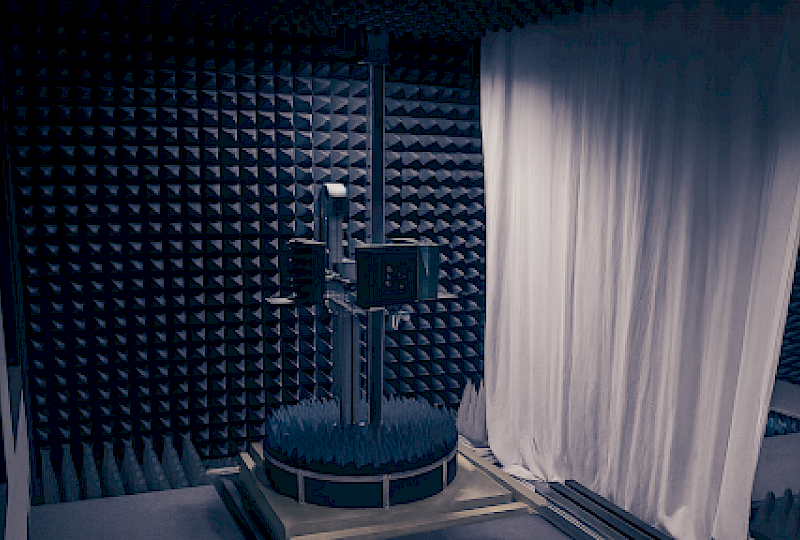
    Imagine having the advanced capabilities of an Over-the-Air (OTA) chamber inside of your office. We recently delivered a customized OTA chamber to a prominent European telecom company, marking a significant leap in testing convenience and efficiency.

    Save costs by optimizing your space

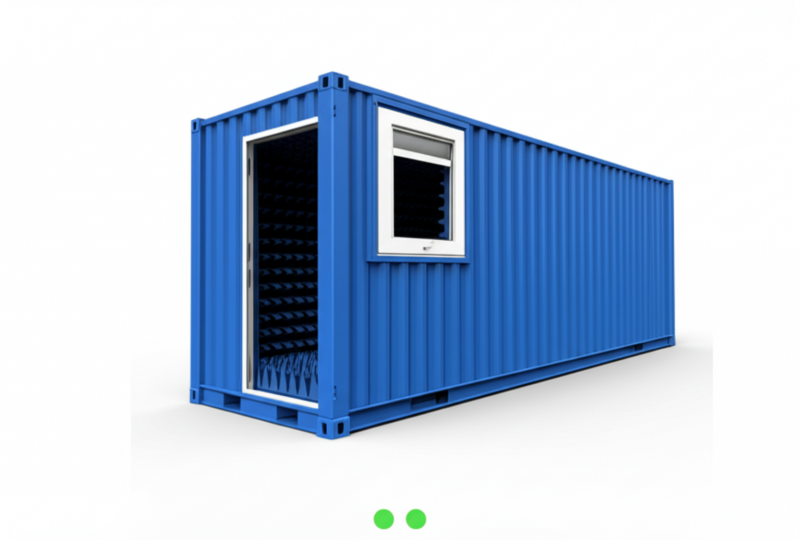
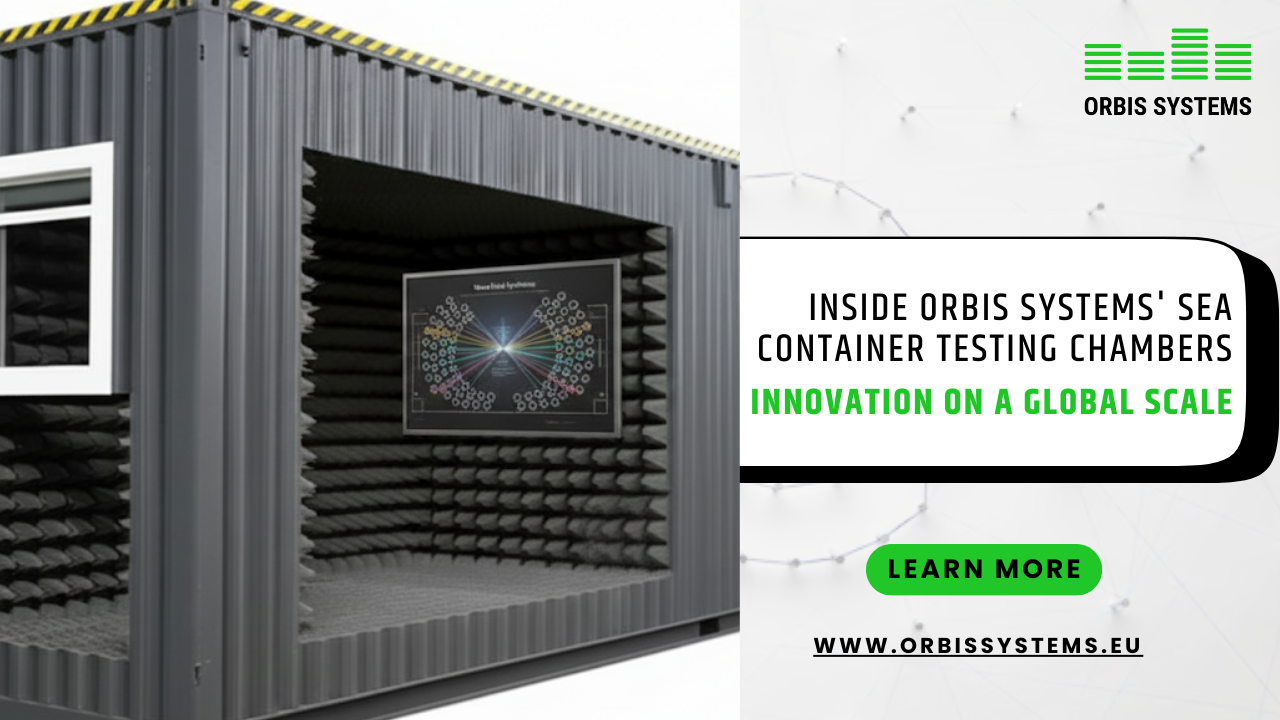
    Our latest project involved successfully delivering an OTA chamber for a leading telecom client in Germany, mirroring the features found in several meters’ long container chambers in customer test labs in two European countries. The challenge was to fit a container chamber into the limited space of an office building. Our solution? A cleverly designed container that fits seamlessly into office environments. This pioneering approach, a first in Europe, brings a new era of flexibility to testing procedures and we are looking forward to delivering more. Orbis Systems has capabilities for large scale chamber deliveries on a global scale.

    “We appreciated the excellent collaboration during the delivery and we are now fully utilizing the chamber and its features.”

    – Customer Program Manager

    Your trusted global partner

    With a history of successfully delivering nearly 150 OTA chambers and large-scale radio frequency (RF) walls, Orbis Systems is recognized for its expertise on a global scale. We prioritize collaborative solutions that transcend geographical boundaries, making us the preferred partner for tailored testing solutions worldwide.

    With our rich experience and demonstrated success, we stand ready to deliver customized solutions that perfectly match our customers’ needs, regardless of geographical limitations or the size of the OTA test environment. Orbis Systems is skilled at providing OTA Chambers that seamlessly fit into practically any confined space.

    Read about our OTA Chambers.

    Are you interested in learning more about Orbis Systems and our solutions? Feel free to contact us for further details.

    CONTACT US

    Categories
    All Stories

    Testing Made Efficient with Triple Testing Solutions

    Orbis Systems redefines testing efficiency with advanced positioners for three Devices Under Test and Base Stations. In just three months, our solutions bring automation, tilt simulation and enhanced safety to testing setups. Discover precision testing made easy with Orbis Systems.

    The practical challenge

    Orbis Systems faced an interesting challenge when a customer asked for a positioner that could handle three Devices Under Test (DUTs) with manual movements, and another one for three Base Stations. The goal was straightforward — improve test efficiency and cut down on test cycle time by allowing simultaneous testing of multiple components.

    Our steady response

    In just three months, Orbis Systems successfully developed the requested positioners, smoothly moving from the initial design to on-site implementation at the customer’s premises.

    Key features for streamlined testing

    The solution comes with a handy feature — automatic maneuvering of Devices Under Test (DUTs) and Base Stations through software commands. This functionality is easily accessible through our user-friendly interface (UI) or via API commands.

    For those aiming higher, the Triple Base Station positioner includes the ability to simulate tilt, enhancing the overall test setup for optimal performance.

    Safety at the core

    Safety is a top priority. The positioners integrate with the Orbis Safety System, ensuring an added layer of protection. If someone is detected within the testing chamber, the Safety System will automatically halt all movements, prioritizing a secure working environment.

    With Orbis Systems, you get practical solutions that enhance your testing process without unnecessary complications. Let’s make your testing experience more efficient and secure.

    Are you interested in learning more about Orbis Systems and our solutions? Feel free to contact us for further details.

    CONTACT US

    Categories
    Brochures

    Orbis Systems Products, Solutions and Services

    Orbis Systems’ cost-effective and tailored solutions enable our customers to verify and optimize the performance of their products and services. Our OTA Chambers, RF Signal Switching Units, Automated Positioners, Fixtures and Test Systems are highly customizable and available over a wide range of frequencies including sub-6GHz and mmWave. Furthermore, we are already developing testing solutions for 6G.

    This brochure provides an insightful overview of Orbis Systems’ offerings, within three main categories:

    1. Orbis Systems Products Offering
      1. Racks and Associated Plug-In Units
      2. RF Signal Switching Units
      3. Automated Positioners
    2. Orbis Systems Solutions Offering
      1. OTA Chambers
      2. RF Shielded Rooms
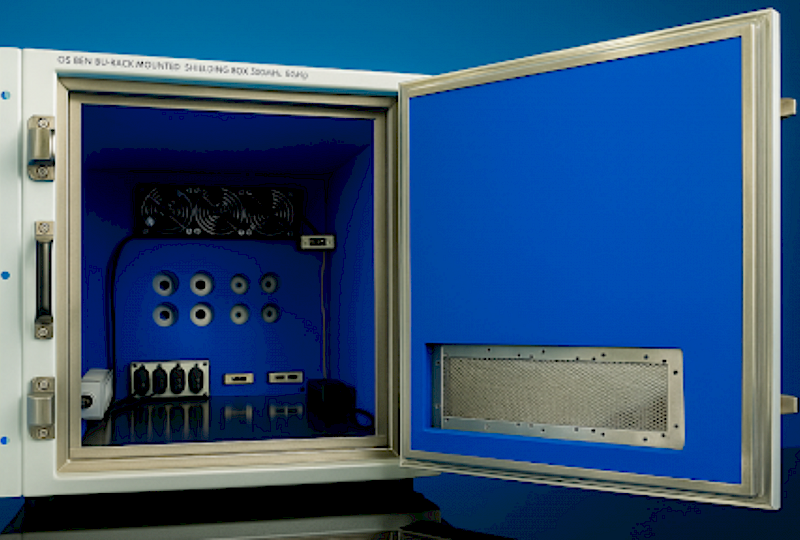
      3. RF Shielded Boxes
      4. Functional Test Systems and Fixtures
    3. Orbis Systems Services Offering
      1. Test Equipment Engineering Services
      2. Test Equipment Manufacturing Services
      3. Support Services

    Download the brochure by filling in the form below to get an insightful overview of Orbis Systems’ innovative and cost-effective products, solutions and services.


      By clicking 'Download' you accept our Privacy Policy.

      Are you interested in learning more about Orbis Systems? Feel free to contact us for further details.
      We are here for you!

      Contact us

      Categories
      Blogs

      Vision 2030: How Orbis Systems Is Preparing for the 6G Revolution

      Table of Contents

      1. Why 6G Demands a New Test Approach

      2. What makes 6G different from 5G

      3. Orbis Systems’ Vision 2030 for 6G Readiness

      • Role of the 6G Innovation Centre
      • Enhancing OTA Testing at High Frequencies
      • Modular test platforms for future flexibility

      4. Conclusion: Get Ready for 6G with Orbis

      5. Frequently Asked Questions

      As 6G technology moves from concept to reality, Orbis Systems is at the forefront. We are developing advanced test platforms and solutions that lay the foundation for tomorrow’s wireless networks. Explore how we’re turning Vision 2030 into action.

      Key Takeaways

      • Orbis Systems is developing advanced test infrastructure to support 6G technology, including FR3 and FR4 frequency ranges.
      • The 6G innovation centre is focused on AI-driven automation, advanced over-the-air (OTA) test chambers, and real-world simulation environments for high-frequency testing.
      • OTA wireless testing systems are being upgraded with robotic positioning, multi-antenna arrays, and thermal variation capabilities.
      • Modular test platforms allow clients to customize RF paths, switch configurations, and bandwidths based on evolving 6G requirements.
      • Vision 2030 outlines Orbis Systems’ long-term strategy to deliver scalable, intelligent, and real-world-ready validation systems for 6G devices and networks.

      Why 6G Demands a New Test Approach

      Understanding the potential of 6G begins with recognizing its unprecedented demands. With expected data rates surpassing 1 Tbps and latency dropping below 1 millisecond, 6G will unlock transformative capabilities that go far beyond today’s 5G networks.

      At Orbis Systems, our focus is on developing testing solutions purpose-built for the next generation of wireless communication, addressing the complex requirements of ultra-fast, ultra-low-latency, and ultra-reliable networks.

      The Orbis Systems 6G Innovation Centre is at the forefront of this evolution. By pushing the limits of RF testing, over-the-air (OTA) performance evaluation, and intelligent test automation, we are redefining the testing landscape to align with the disruptive potential of 6G.

      What makes 6G different from 5G

      6G, the sixth generation of wireless technology, will deliver ultra-high bandwidth and near-instantaneous data transmission. It will surpass 5G by enabling real-time extended reality (XR), holographic communication, and fully autonomous systems operating in FR3 (7–24 GHz) and even FR4+ (above 71 GHz) frequency bands.

      To meet these advanced demands, test systems must evolve. 6G requires intelligent, high-frequency-capable platforms that support over-the-air (OTA) testing and real-world environment simulation, making traditional testing methods obsolete.

      Orbis Systems is at the forefront of this transformation, developing cutting-edge OTA and RF test platforms engineered explicitly for the complexities of 6G.

      Orbis Systems’ Vision 2030 for 6G Readiness

      Orbis Systems’ Vision 2030 is a long-term vision developed to align with the anticipated requirements of 6 G technology. We are retooling and enhancing our test facilities to support the bandwidth, complexity, and flexibility required by 6G networks. From AI-powered calibration systems to FR3 and FR4 spectrum simulation, our test configurations are designed to provide accuracy, scalability, and repeatability.=

      Role of the 6G Innovation Centre

      Headquartered in Finland and supported by teams in the US, India, and China, the 6G innovation center leads R&D of Orbis Systems’ future-proof test solutions. The center focuses on creating advanced test software, high-frequency OTA chambers, and simulation-driven environments to support the evolving demands of 6G technology.

      The next-generation testbeds developed here are engineered to simulate real-world 6G environments, enabling early proof-of-concepts in areas such as compliance testing, beamforming validation, and terahertz-grade signal integrity. These platforms allow customers to accurately model and measure 6G performance in a controlled laboratory setting, well before field deployment.

      Enhancing OTA Testing at High Frequencies

      Orbis Systems is ramping up its OTA testing capability to support 6G-level requirements. These include robotic positioning for precise device orientation, hybrid absorbers to minimize signal reflection, and AI calibration for real-time tuning.

      The test chambers are now replicating real-world environmental conditions, including movement and temperature. Simulations are capable of testing devices under various heat and cold conditions, mimicking car and outdoor applications. These advancements provide reliability when 6G devices are exposed to harsh conditions in the real world.

      Modular test platforms for future flexibility

      Since 6G frequency standards are still under development, flexibility is absolutely essential. Orbis Systems has engineered its next-generation test platforms with a fully modular design, enabling customers to easily swap RF components, expand bandwidth, or transition between frequency ranges, from FR3 to FR5, without requiring a complete system redesign.

      Orbis Systems utilizes AI-driven automation in its modular test platforms to monitor signal paths, adjust test parameters, and optimize performance in real-time. These intelligent features help accelerate development, minimize manual intervention, and support iterative testing processes essential for 6G readiness.

      Conclusion: Get Ready for 6G with Orbis

      The 6G era is already taking shape, and Orbis Systems is actively developing the test solutions needed to support its rollout. From high-frequency OTA validation to AI-enabled automation and flexible, modular platforms, we’re helping innovators in telecom, electronics, and automotive prepare for what’s next. Vision 2030 reflects our long-term commitment to leading this transformation alongside our clients.

      If you’re ready to upgrade your lab, production line, or prototype for 6G, Orbis Systems can deliver the tools and expertise to validate your future technologies. Contact us today to explore tailored solutions for the 6G world.

      Frequently Asked Questions

      1. What is the contribution to 6G development?
      Test systems and environments are being developed to support next-generation frequencies such as FR3 and above, which are essential for enabling 6G. These include advanced OTA chambers, modular RF switch matrices, and AI-powered validation tools.

      2. How are companies contributing to 6G testing infrastructure?
      Organizations are building high-frequency test environments designed to support new spectrum bands critical for 6G. This includes precision-engineered OTA systems, modular switching architectures, and intelligent test automation platforms.

      3. Can early-stage 6G prototypes be tested effectively?
      Yes. Dedicated R&D support teams are collaborating with innovators to enable testing from the earliest phases including concept validation, first builds, NPI, and pre-production across wireless and automotive technologies.

      4. How do organizations collaborate on 6G testing?
      Partnerships often begin with direct engagement through global offices or digital platforms where solution architects and engineers co-create tailored 6G testing solutions based on specific development roadmaps.

      5. How is test automation evolving for 6G?
      AI-driven automation is reshaping the testing landscape by dynamically adjusting parameters like gain, frequency, and switching logic. This ensures high-speed, accurate RF testing while reducing manual intervention, accelerating the pace of 6G innovation.

      Categories
      Brochures

      Enhancing Modern Testing with RF Signal Switching Units

      Orbis Systems’ RF Signal Switching Units seamlessly integrate with automated laboratory systems, enabling swift and effective configuration changes. The modular system architecture, comprising a main case, controller and plug-in modules, empowers users to build extensive test systems.

      Automate and speed up your telecom testing with our RF Signal Switching Units, without the need to configure each test case manually. At Orbis Systems we offer 5 different categories of RF Signal Switching Units:

      1. Modular Signal Switching Unit
      2. Blocking Switch Matrix
      3. Variable Attenuator Matrix
      4. Phase Shifter Matrix
      5. Non-Blocking Switch Matrix

      Download the brochure by filling in the form below to learn the advantages of RF Signal Switching Units and see examples of the different solutions that we have delivered to our customers.


        By clicking 'Download' you accept our Privacy Policy.

        Are you interested in learning more about Orbis Systems? Feel free to contact us for further details.
        We are here for you!

        Contact us

        Categories
        Blogs

        How AI Is Powering the Future of Wireless Communication

        Table of Contents

        1. Why AI Matters in Wireless Communication Today
        2. Overview: wireless networks driven by AI
        3. AI’s Role in Driving Next-Gen Wireless Communication
        4. AI Automation in Wireless Networks
        5. Impact of AI on RF Testing in Wireless Systems
        6. The Future of Wireless Networks with 6G and Beyond
        7. Powering the Future of Wireless Communication with AI
        8. FAQs

        Key Points

        • Orbis Systems is actively working to integrate AI logic into future test platforms, enabling the automatic adjustment of critical parameters such as gain, frequency, and timing, thereby reducing the need for redundant calibration cycles. These AI-powered enhancements are expected to enable intelligent switching matrices, dynamic signal routing, and substantial reductions in test time.
        • By leveraging AI’s self-learning algorithms, Orbis aims to enhance the repeatability and stability of test processes. The goal is to minimize operator intervention and reduce error rates, especially in mass production environments where hundreds of devices under test (DUTs) must be validated per hour.
        • AI enables real-time spectrum monitoring and power analysis. These capabilities enable engineers to easily isolate interference, harmonics, and phase noise without requiring manual frequency sweeping.
        • Orbis test racks are readily capable of being transferred from R&D testing to production line testing with minimal or no changes. AI modules under development will help determine setup needs and configure them dynamically, aligning test plans with emerging standards and future-proofing operations.
        • From mmWave to terahertz testing, Orbis Systems’ test racks and OTA chambers are prepared for whatever 6G and beyond has in store. AI assists with managing the increasing complexity in beamforming and ultra-low latency demands.

        Why AI Matters in Wireless Communication Today

        In the evolving wireless world, artificial intelligence is becoming a revolutionary force, enabling wireless networks to operate faster, more responsively, and more efficiently. AI is no longer an afterthought; it’s at the core of how devices communicate with each other, how signals are tested, and how infrastructure is constructed to accommodate increasing demands.

        From mobile phones to Internet of Things (IoT) devices to mission-critical communications networks, the application of AI-based wireless communication has transformed the very core of testing and validation, particularly with companies such as Orbis Systems at the forefront of intelligent test automation.

        Overview: wireless networks driven by AI

        Orbis Systems, a leading provider of RF, 5G, and OTA test solutions, is actively exploring the integration of artificial intelligence into its scalable and modular platforms. The vision is to enable seamless automation across both lab and production environments through AI-driven capabilities.

        Their methodology is cutting-edge, utilizing AI to minimize human interaction, automate test processes in real-time, and ensure error-free execution even in high-throughput RF validation environments. The outcome? Wireless networks are not only faster and more efficient but also more robust.

        AI facilitates more advanced cognitive decision-making in wireless communication systems by analyzing vast amounts of data in milliseconds, making it ideal for applications such as signal analysis, spectrum monitoring, and predictive fault detection.

        AI’s Role in Driving Next-Gen Wireless Communication

        Artificial Intelligence performs several functions across the wireless communication life cycle, anything from planning and deployment to testing, diagnostics, and real-time optimization.

        Orbis Systems is actively developing AI-enabled test modules that are designed to respond intelligently to incoming signals and dynamically adjust to evolving test parameters.

        In dense RF test environments, AI provides the benefit of closed-loop learning systems. They learn in real-time, detect failures early on, and automate script updates, enabling quicker development without sacrificing test coverage.

        Future versions of Orbis test platforms aim to incorporate AI-based self-configuration capabilities, enabling the system to automatically adapt to the specific requirements of each Device Under Test (DUT). This innovation is designed to streamline testing for advanced wireless standards, such as 5G NR and Wi-Fi 6E, thereby minimizing the need for manual setup changes.

        AI Automation in Wireless Networks

        AI automation is transforming the management of wireless networks. Rather than using pre-configured settings, we are exploring AI-driven software logic that, in the future, could enable devices to learn and adapt from each test cycle, paving the way for more intelligent and autonomous test environments.

        For instance, during the testing of a 5G antenna module, AI processes signal feedback and environmental noise in real time, adjusting the output of the signal generator or RF path to ensure accuracy. Not only does it make it faster, but it also saves wastage on both time and resources.

        This automation also enables engineers to run simultaneous tests on multiple DUTs in parallel without compromising accuracy, thereby increasing production efficiency while ensuring compliance.

        Impact of AI on RF Testing in Wireless Systems

        AI transforms RF testing by enabling real-time adaptability and correlation of information. Traditional RF test systems are linear: configure, run, and report.

        When signal distortion is detected, AI algorithms in real-time diagnose the root causes—cable loss, impedance mismatch, or shielding leakage. Test parameters are adjusted in real-time, often with minimal human intervention.

        This assists in testing high-frequency modules, where even minor environmental fluctuations can skew results. With AI, the RF test environment is reliable, robust, and self-healing.

        The Future of Wireless Networks with 6G and Beyond

        AI will be at the center of the enabling technologies, such as 6G, IoT, and holographic communication in the future. Orbis Systems already provides the foundation for 6G test solutions by adding terahertz band validation support, beamforming accuracy, and ultra-low-latency testing.

        AI also makes energy efficiency possible in future wireless networks. By observing usage patterns and signal behaviors, AI can dictate power scaling and antenna tuning protocols.

        Moreover, with intelligent transportation systems and smart city deployments becoming a reality, real-time confirmation of diverse wireless environments is essential. AI enables test systems to simulate real-world conditions in controlled environments, making them a vital part of the wireless future.

        Powering the Future of Wireless Communication with AI

        AI is not only enhancing wireless networks; it’s transforming the way they’re designed, tested, and rolled out. Orbis Systems remains at the forefront with advanced RF and wireless test systems that leverage artificial intelligence.

        From building 5G networks and assigning IoT devices to planning for 6G upgrades, Orbis Systems provides a modular, AI-based platform to future-proof your operations.

        Don’t wait for the future to arrive; help create it. Contact Orbis Systems to discover how AI-enabled wireless communications testing can accelerate your innovation.

        FAQs

        1. What is the function of AI in wireless communication testing?

        AI facilitates adaptive test settings that automatically calibrate and adapt to real-time feedback. It minimizes manual intervention, enhances test accuracy, and accelerates the development process.

        2. How is Orbis Systems planning to use AI in future wireless test solutions?

        Orbis Systems is actively working toward incorporating AI into its testing solutions. The goal is to enable intelligent signal path optimization, real-time diagnostics, and parallel DUT testing through adaptive software algorithms that could dynamically adjust system configurations for diverse wireless applications.

        3. How are AI-based test systems superior to conventional test systems?

        AI-based systems are self-learning, adaptive, and more reliable. They reduce defects, handle intricate test situations, and significantly reduce test cycle times.

        4. What are the key benefits of using AI in wireless network management?

        AI helps automate complex network tasks, reduces human error, optimizes signal paths, enhances security protocols, and enables self-healing networks, resulting in more resilient and responsive wireless infrastructures.

        5. What is Orbis Systems gearing up for 6G?

        Their platforms are already terahertz and beamforming test-capable. AI enables them to accommodate the growing complexity and performance demands of future wireless technology.

        Categories
        Blogs

        Why Orbis Systems Leads in RF Test Automation

        Table of Contents

        • How RF Test Automation Works
        • Limitations of Manual RF Testing
        • Orbis Systems’ Automated RF Test Solutions
        • Smart Testing Tools and Software Integration
        • Why Choose Orbis for RF Test Automation
        • Frequently Asked Questions

        Key Points

        • RF test automation minimizes human error, speeds up validation cycles, and ensures consistent results in demanding test environments.
        • Orbis Systems delivers advanced RF test solutions by combining deep domain expertise, intelligent switching, modular hardware setups, and fully automated control systems.
        • RF test labs benefit from automation with faster turnaround times, improved reliability, and highly repeatable performance across test scenarios.
        • Integrated software platforms in Orbis RF test systems streamline data collection, automate reporting, and enable real-time system monitoring.
        • From telecommunications to defense, Orbis Systems provides scalable, end-to-end RF testing solutions tailored to evolving technical requirements and trusted by Tier-1 clients.

        Radio Frequency (RF) testing plays a central role in validating wireless systems across many industries. From 5G telecom modules to satellite communication devices and automotive sensors, precise RF testing ensures reliable signal behavior and compliance with international standards. A well-equipped RF test lab can simulate real-world signal conditions and verify whether a device will operate correctly across various frequencies and environments.

        The complexity of wireless systems continues to grow, and traditional RF testing methods struggle to keep up with rising demands. Speed, repeatability, and accuracy are critical in high-volume production and R&D environments. That’s why automation is no longer optional; it’s essential. Automated RF testing systems can help reduce test cycles, improve traceability, and allow teams to scale operations more efficiently than ever before.

        How RF Test Automation Works

        RF test automation integrates RF instruments, switching systems, DUT fixtures, and software platforms to create a complete, end-to-end automated test flow. At its core, it utilises hardware and software to execute test sequences with minimal human intervention. Typical setups include signal generators, analyzers, switching units, and control software that runs predefined test cases. These systems automatically collect and analyze data, reducing manual errors and speeding up results.

        Orbis Systems takes this a step further by engineering modular RF switching units, programmable test control interfaces, and custom rack integrations tailored to each client’s needs. Our systems route RF signals between instruments and the Device Under Test (DUT) seamlessly, using smart switching to eliminate cable handling. Combined with robust software platforms, this creates a repeatable, traceable, and high-speed test environment ideal for complex applications.

        Limitations of Manual RF Testing

        Manual testing methods still exist in small-scale or experimental environments, but they have serious limitations. Switching cables between tests can cause signal degradation, introduce errors, and slow down production timelines. In environments where precision is critical, such as an RF test lab validating telecom modules, manual steps increase the risk of inconsistent results.

        Other drawbacks include:

        • Low repeatability and reduced accuracy
        • Time-consuming setup and execution
        • High operator dependency and risk of human error
        • Limited scalability for large-scale testing
        • Difficulty in reproducing identical test conditions

        When teams rely on manual processes, the likelihood of human error increases, and efficiency decreases. In contrast, automated testing systems deliver consistent performance, reduce technician workload, and provide immediate data insights through built-in reporting tools.

        Orbis Systems’ Automated RF Test Solutions

        At Orbis Systems, we specialize in designing and deploying automated RF testing solutions for R&D and production environments. Whether you’re working with 5G components, IoT modules, or military-grade RF devices, our systems can be tailored to meet specific performance and throughput goals.

        Our modular switching units support a wide range of test setups, while our integrated software handles test control, execution, and result reporting. These custom-built environments help customers:

        • Speed up validation workflows
        • Reduce testing errors
        • Increase testing coverage
        • Improve time-to-market

        From lab environments to scalable production lines, Orbis RF automation is built for consistency and adaptability. We partner with each client to understand their goals and build RF testing systems that evolve alongside their technologies.

        Smart Testing Tools and Software Integration

        One of the major advantages of Orbis Systems’ approach is the integration of intelligent testing tools in software testing workflows. Our test environments aren’t just about hardware; they’re powered by smart software that handles scheduling, monitoring, and reporting automatically.

        These testing tools offer:

        • Centralized test case management
        • Real-time monitoring of test progress
        • Automatic result logging and traceability
        • Customizable dashboards for performance analysis

        By embedding smart tools into the test cycle, engineers gain more control, visibility, and consistency. Whether testing locally or remotely, users can launch, track, and evaluate RF tests with confidence, knowing that each result is generated under controlled, repeatable conditions.

        Why Choose Orbis for RF Test Automation

        The need for scalable, error-free, and fast RF testing has never been greater. Whether you’re validating a new telecom module, calibrating a radar system, or developing next-gen connectivity devices, Orbis Systems provides the expertise and infrastructure to make RF test automation seamless.

        We don’t just offer tools, we deliver tailored test environments that align with your industry, product, and business goals. Our combination of intelligent switching hardware, user-friendly software, and end-to-end integration makes us a trusted partner for companies worldwide.

        Are you considering upgrading your RF test setup? Whether you’re running a full-scale RF test lab or launching a new product line, Orbis Systems can help you move faster, smarter, and more reliably.

        Frequently Asked Questions

        1. What is RF test automation?

        RF test automation is the process of utilizing software-controlled systems and automated hardware to perform radio frequency (RF) measurements, including signal power, frequency response, and modulation accuracy, without requiring manual intervention. It helps improve speed, accuracy, repeatability, and scalability when testing wireless and RF-enabled devices, particularly in high-frequency applications such as 5G, Wi-Fi 6E, satellite, and radar systems.

        2. What are the benefits of RF test automation over manual testing?

        Automation improves speed, accuracy, repeatability, and scalability. It reduces human error and accelerates product validation, which is particularly beneficial in high-throughput environments.

        3. What tools are used in RF test automation?

        RF test automation uses a combination of hardware and software tools. Standard test equipment includes vector network analyzers (VNA), power meters, power sensors, spectrum analyzers, and oscilloscopes. On the software side, automation platforms such as LabVIEW, NI TestStand, and MATLAB are utilised to control tests, manage data, and generate reports. These tools work together to create a reliable and efficient RF testing environment.

        4. How can I automate my existing RF test lab?

        To automate an existing RF test lab, start by adding key components, such as RF switching systems, programmable test controllers, and automation software, to manage signal routing and test sequences. These upgrades reduce manual intervention, improve test speed, and ensure consistent results. Orbis Systems can help by integrating these solutions with your current setup, offering tailored automation that fits your specific testing needs.

        5. Which industries benefit most from RF test automation?

        RF test automation is widely used in industries that require speed, accuracy, and high-volume testing. These include telecommunications, defense, automotive, and electronics manufacturing. It’s also essential in R&D labs, IoT device testing, industrial automation, and consumer electronics, where frequent testing and quick iterations are critical for product development and quality assurance.

        Categories
        Blogs

        AI-Driven Test Equipment Design for Smarter RF Automation

        Key Takeaways

        • AI automation is transforming RF testing by bringing intelligence to all layers of the test infrastructure. It’s not merely quicker speeds, it’s wiser decision-making that improves accuracy, consistency, and flexibility. Multifunction testers simplify setup by combining instruments into a unified platform with lower complexity and better synchronization.
        • At the forefront of it all is the Testing setup. A discipline in which Orbis Systems takes the lead by creating highly tailorable, modular solutions that respond to actual testing demands. For OTA, RF, or high-frequency applications alike, their systems deliver the adaptability and sophistication needed for today’s production environments.
        • The shift to AI-powered test automation isn’t a passing trend; it’s a fundamental evolution. Businesses that leap today will be better equipped to tackle tomorrow’s testing challenges with greater confidence and lower costs

        Why AI Automation Matters in RF Testing

        AI automation is revolutionizing RF testing through clever testing system design that improves speed, scalability, and accuracy. Read on to learn why it’s the future of wireless validation.

        In today’s wireless development, AI automation is not a choice; it’s a requirement. With 5G and IoT, high-speed automotive, the need for precise, scalable, and speedy RF testing has never been greater. Legacy systems just can’t handle today’s sophisticated test environments. That’s where AI automation comes in, providing data-driven, responsive solutions that flex in real time.

        At its heart is AI, and as a result, AI-based testing setup guarantees quicker decision-making, self-tuning test parameters, and less human intervention. A pioneer in this revolution is Orbis Systems, a company known for an accurate testing solution optimized for RF and OTA test environments.

        What Is AI-Driven Test Equipment Design?

        AI-powered test equipment design incorporates artificial intelligence into the software and hardware of test systems, which replaces static test scripts with intelligent logic that learns and adjusts to real-time changes. It eliminates the stiffness of pre-programmed conditions and substitutes them with workflows that are based on learning.

        Practically, this translates into a test system being able to track frequency stability, identify rogue signal behaviors, and adjust its own measurement parameters programmatically. Consequently, fewer faults evade manufacturing, and test cycles are much faster. Orbis Systems applies this methodology within its modular configurations by coupling AI-driven algorithms with mechanical and electrical accuracy to create more intelligent testing infrastructures.

        Role of AI Automation in Boosting Test Efficiency

        AI automation speeds up workflows and refines them. In a conventional testing lab, engineers manually set up instruments, code test sequences, and dig through raw logs to identify failures. With AI, these repetitive tasks are supplanted by smart logic.

        The AI monitors the Device Under Test (DUT), flags anomalies when generating signals, and automatically corrects in real time. For example, when RF levels vary, the AI reroutes the test along different signal paths through RF matrix systems so that data flow continues uninterruptedly without sacrificing accuracy.

        In addition, AI enhances traceability. Rather than gathering infinite logs, it recognizes patterns and forms usable insights. When used in production lines, this means repeatable results, reduced downtime, and enhanced test throughput.

        The Power of a Multifunction Tester in Automated RF Systems

        The integration of multifunction testers into AI-based systems significantly enhances testing efficiency. Rather than relying on separate instruments like power sensors, signal generators, and network analyzers, a multifunction tester consolidates these capabilities into a single, unified platform.

        This consolidation offers several key benefits. First, it streamlines test configuration by reducing the number of individual devices to manage. Second, it minimizes the overall hardware footprint, a critical advantage in compact production environments. Most importantly, it enables synchronized control, allowing AI to manage complete test cycles through a single interface.

        Orbis Systems seamlessly integrates multifunction testers into its test racks, ensuring smooth communication between instruments and the Device Under Test (DUT). This approach enables faster testing, easier maintenance, and greater flexibility to accommodate new test requirements without overhauling existing infrastructure.

        Orbis Systems: Scalable RF Automation Solutions

        Orbis Systems is the epitome of what intelligent RF testing should be. Their capabilities in designing test equipment span the whole lifecycle of a test system, from conceptual mechanical structures to embedded control electronics and full rack configuration.

        Their automation offerings are modular, making them scalable for different phases of product development, from R&D to mass production. These systems frequently contain custom RF switch units, AI-based software layers, and OTA test enclosures, ideal for wireless device validation.

        Orbis also accommodates container-based RF test environments, providing deployment flexibility. Indoor and remote site testing, wherever you need to test, these mobile platforms deliver repeatable, shielded test conditions optimized for AI automation.

        In addition, their automation approach emphasizes software-defined instrumentation. This supports remote updates, rapid integration of new protocols (such as 6G), and easy test management. The ultimate objective is a system that improves with your product roadmap, not one that constrains it.

        Conclusion: Build Smarter with Orbis Systems

        The future of RF testing is in smarter, more intelligent systems that react to real-time feedback and minimize manual configuration. With AI-driven automation and multifunction testers at the core, test cycles become faster, more accurate, and highly reliable.

        Orbis Systems is at the forefront of this evolution. Whether you’re scaling up production or validating next-generation wireless technologies, Orbis delivers the innovation and tailored solutions needed to keep you ahead of the curve.

        Is your RF test environment ready for the future?

        Contact Orbis Systems today and discover how AI-powered automation can revolutionize your testing infrastructure.

        Frequently Asked Questions

        1. What is AI-driven test equipment design?

        It’s applying artificial intelligence in the design and functioning of test systems so that they can modify test parameters, optimize measurements, and identify anomalies in real time without humans having to do it.

        2. How does AI automation enhance RF testing?

        AI automation enhances RF testing by eliminating manual calibrations and static test scripts. It enables faster, more efficient test cycles through real-time fault detection, adaptive signal routing, and intelligent decision-making. As a result, test systems achieve higher accuracy, improved repeatability, and greater uptime all critical for modern, high-throughput test environments.

        3. What does a multifunction tester accomplish in an automated test environment?

        It integrates several measurement and generation capabilities, such as spectrum analysis, power testing, and signal routing, into one AI-driven unit that eliminates complexity and streamlines testing.

        4. How adaptable are Orbis Systems’ test solutions?

        Orbis Systems offers flexible and scalable test systems that can be adapted to a customer’s unique production or laboratory needs. This includes rack-based configurations, switch units, and AI-based control layers for adaptive testing.

        5. Are these test systems ready for the upcoming wireless technologies?

        Yes. Orbis Systems makes its automation platforms upgradeable. Their solutions are built to support emerging wireless technologies, including new frequency bands, evolving test protocols, and advanced performance standards such as 6G, mmWave, and OTA. This ensures long-term value and compatibility as industry requirements evolve.