
We are creative, ambitious and ready for challenges!

Categories
Blogs

Vision 2030: How Orbis Systems Is Preparing for the 6G Revolution

Table of Contents

1. Why 6G Demands a New Test Approach

2. What makes 6G different from 5G

3. Orbis Systems’ Vision 2030 for 6G Readiness

  • Role of the 6G Innovation Centre
  • Enhancing OTA Testing at High Frequencies
  • Modular test platforms for future flexibility

4. Conclusion: Get Ready for 6G with Orbis

5. Frequently Asked Questions

As 6G technology moves from concept to reality, Orbis Systems is at the forefront. We are developing advanced test platforms and solutions that lay the foundation for tomorrow’s wireless networks. Explore how we’re turning Vision 2030 into action.

Key Takeaways

  • Orbis Systems is developing advanced test infrastructure to support 6G technology, including FR3 and FR4 frequency ranges.
  • The 6G innovation centre is focused on AI-driven automation, advanced over-the-air (OTA) test chambers, and real-world simulation environments for high-frequency testing.
  • OTA wireless testing systems are being upgraded with robotic positioning, multi-antenna arrays, and thermal variation capabilities.
  • Modular test platforms allow clients to customize RF paths, switch configurations, and bandwidths based on evolving 6G requirements.
  • Vision 2030 outlines Orbis Systems’ long-term strategy to deliver scalable, intelligent, and real-world-ready validation systems for 6G devices and networks.

Why 6G Demands a New Test Approach

Understanding the potential of 6G begins with recognizing its unprecedented demands. With expected data rates surpassing 1 Tbps and latency dropping below 1 millisecond, 6G will unlock transformative capabilities that go far beyond today’s 5G networks.

At Orbis Systems, our focus is on developing testing solutions purpose-built for the next generation of wireless communication, addressing the complex requirements of ultra-fast, ultra-low-latency, and ultra-reliable networks.

The Orbis Systems 6G Innovation Centre is at the forefront of this evolution. By pushing the limits of RF testing, over-the-air (OTA) performance evaluation, and intelligent test automation, we are redefining the testing landscape to align with the disruptive potential of 6G.

What makes 6G different from 5G

6G, the sixth generation of wireless technology, will deliver ultra-high bandwidth and near-instantaneous data transmission. It will surpass 5G by enabling real-time extended reality (XR), holographic communication, and fully autonomous systems operating in FR3 (7–24 GHz) and even FR4+ (above 71 GHz) frequency bands.

To meet these advanced demands, test systems must evolve. 6G requires intelligent, high-frequency-capable platforms that support over-the-air (OTA) testing and real-world environment simulation, making traditional testing methods obsolete.

Orbis Systems is at the forefront of this transformation, developing cutting-edge OTA and RF test platforms engineered explicitly for the complexities of 6G.

Orbis Systems’ Vision 2030 for 6G Readiness

Orbis Systems’ Vision 2030 is a long-term vision developed to align with the anticipated requirements of 6 G technology. We are retooling and enhancing our test facilities to support the bandwidth, complexity, and flexibility required by 6G networks. From AI-powered calibration systems to FR3 and FR4 spectrum simulation, our test configurations are designed to provide accuracy, scalability, and repeatability.=

Role of the 6G Innovation Centre

Headquartered in Finland and supported by teams in the US, India, and China, the 6G innovation center leads R&D of Orbis Systems’ future-proof test solutions. The center focuses on creating advanced test software, high-frequency OTA chambers, and simulation-driven environments to support the evolving demands of 6G technology.

The next-generation testbeds developed here are engineered to simulate real-world 6G environments, enabling early proof-of-concepts in areas such as compliance testing, beamforming validation, and terahertz-grade signal integrity. These platforms allow customers to accurately model and measure 6G performance in a controlled laboratory setting, well before field deployment.

Enhancing OTA Testing at High Frequencies

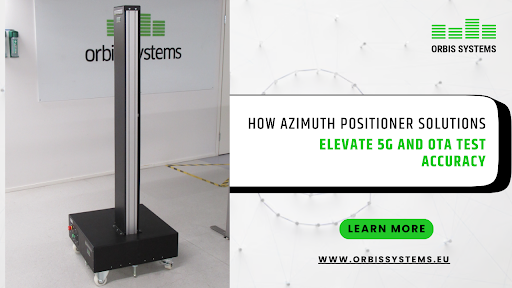
Orbis Systems is ramping up its OTA testing capability to support 6G-level requirements. These include robotic positioning for precise device orientation, hybrid absorbers to minimize signal reflection, and AI calibration for real-time tuning.

The test chambers are now replicating real-world environmental conditions, including movement and temperature. Simulations are capable of testing devices under various heat and cold conditions, mimicking car and outdoor applications. These advancements provide reliability when 6G devices are exposed to harsh conditions in the real world.

Modular test platforms for future flexibility

Since 6G frequency standards are still under development, flexibility is absolutely essential. Orbis Systems has engineered its next-generation test platforms with a fully modular design, enabling customers to easily swap RF components, expand bandwidth, or transition between frequency ranges, from FR3 to FR5, without requiring a complete system redesign.

Orbis Systems utilizes AI-driven automation in its modular test platforms to monitor signal paths, adjust test parameters, and optimize performance in real-time. These intelligent features help accelerate development, minimize manual intervention, and support iterative testing processes essential for 6G readiness.

Conclusion: Get Ready for 6G with Orbis

The 6G era is already taking shape, and Orbis Systems is actively developing the test solutions needed to support its rollout. From high-frequency OTA validation to AI-enabled automation and flexible, modular platforms, we’re helping innovators in telecom, electronics, and automotive prepare for what’s next. Vision 2030 reflects our long-term commitment to leading this transformation alongside our clients.

If you’re ready to upgrade your lab, production line, or prototype for 6G, Orbis Systems can deliver the tools and expertise to validate your future technologies. Contact us today to explore tailored solutions for the 6G world.

Frequently Asked Questions

1. What is the contribution to 6G development?
Test systems and environments are being developed to support next-generation frequencies such as FR3 and above, which are essential for enabling 6G. These include advanced OTA chambers, modular RF switch matrices, and AI-powered validation tools.

2. How are companies contributing to 6G testing infrastructure?
Organizations are building high-frequency test environments designed to support new spectrum bands critical for 6G. This includes precision-engineered OTA systems, modular switching architectures, and intelligent test automation platforms.

3. Can early-stage 6G prototypes be tested effectively?
Yes. Dedicated R&D support teams are collaborating with innovators to enable testing from the earliest phases including concept validation, first builds, NPI, and pre-production across wireless and automotive technologies.

4. How do organizations collaborate on 6G testing?
Partnerships often begin with direct engagement through global offices or digital platforms where solution architects and engineers co-create tailored 6G testing solutions based on specific development roadmaps.

5. How is test automation evolving for 6G?
AI-driven automation is reshaping the testing landscape by dynamically adjusting parameters like gain, frequency, and switching logic. This ensures high-speed, accurate RF testing while reducing manual intervention, accelerating the pace of 6G innovation.

Categories
Blogs

How AI Is Powering the Future of Wireless Communication

Table of Contents

  1. Why AI Matters in Wireless Communication Today
  2. Overview: wireless networks driven by AI
  3. AI’s Role in Driving Next-Gen Wireless Communication
  4. AI Automation in Wireless Networks
  5. Impact of AI on RF Testing in Wireless Systems
  6. The Future of Wireless Networks with 6G and Beyond
  7. Powering the Future of Wireless Communication with AI
  8. FAQs

Key Points

  • Orbis Systems is actively working to integrate AI logic into future test platforms, enabling the automatic adjustment of critical parameters such as gain, frequency, and timing, thereby reducing the need for redundant calibration cycles. These AI-powered enhancements are expected to enable intelligent switching matrices, dynamic signal routing, and substantial reductions in test time.
  • By leveraging AI’s self-learning algorithms, Orbis aims to enhance the repeatability and stability of test processes. The goal is to minimize operator intervention and reduce error rates, especially in mass production environments where hundreds of devices under test (DUTs) must be validated per hour.
  • AI enables real-time spectrum monitoring and power analysis. These capabilities enable engineers to easily isolate interference, harmonics, and phase noise without requiring manual frequency sweeping.
  • Orbis test racks are readily capable of being transferred from R&D testing to production line testing with minimal or no changes. AI modules under development will help determine setup needs and configure them dynamically, aligning test plans with emerging standards and future-proofing operations.
  • From mmWave to terahertz testing, Orbis Systems’ test racks and OTA chambers are prepared for whatever 6G and beyond has in store. AI assists with managing the increasing complexity in beamforming and ultra-low latency demands.

Why AI Matters in Wireless Communication Today

In the evolving wireless world, artificial intelligence is becoming a revolutionary force, enabling wireless networks to operate faster, more responsively, and more efficiently. AI is no longer an afterthought; it’s at the core of how devices communicate with each other, how signals are tested, and how infrastructure is constructed to accommodate increasing demands.

From mobile phones to Internet of Things (IoT) devices to mission-critical communications networks, the application of AI-based wireless communication has transformed the very core of testing and validation, particularly with companies such as Orbis Systems at the forefront of intelligent test automation.

Overview: wireless networks driven by AI

Orbis Systems, a leading provider of RF, 5G, and OTA test solutions, is actively exploring the integration of artificial intelligence into its scalable and modular platforms. The vision is to enable seamless automation across both lab and production environments through AI-driven capabilities.

Their methodology is cutting-edge, utilizing AI to minimize human interaction, automate test processes in real-time, and ensure error-free execution even in high-throughput RF validation environments. The outcome? Wireless networks are not only faster and more efficient but also more robust.

AI facilitates more advanced cognitive decision-making in wireless communication systems by analyzing vast amounts of data in milliseconds, making it ideal for applications such as signal analysis, spectrum monitoring, and predictive fault detection.

AI’s Role in Driving Next-Gen Wireless Communication

Artificial Intelligence performs several functions across the wireless communication life cycle, anything from planning and deployment to testing, diagnostics, and real-time optimization.

Orbis Systems is actively developing AI-enabled test modules that are designed to respond intelligently to incoming signals and dynamically adjust to evolving test parameters.

In dense RF test environments, AI provides the benefit of closed-loop learning systems. They learn in real-time, detect failures early on, and automate script updates, enabling quicker development without sacrificing test coverage.

Future versions of Orbis test platforms aim to incorporate AI-based self-configuration capabilities, enabling the system to automatically adapt to the specific requirements of each Device Under Test (DUT). This innovation is designed to streamline testing for advanced wireless standards, such as 5G NR and Wi-Fi 6E, thereby minimizing the need for manual setup changes.

AI Automation in Wireless Networks

AI automation is transforming the management of wireless networks. Rather than using pre-configured settings, we are exploring AI-driven software logic that, in the future, could enable devices to learn and adapt from each test cycle, paving the way for more intelligent and autonomous test environments.

For instance, during the testing of a 5G antenna module, AI processes signal feedback and environmental noise in real time, adjusting the output of the signal generator or RF path to ensure accuracy. Not only does it make it faster, but it also saves wastage on both time and resources.

This automation also enables engineers to run simultaneous tests on multiple DUTs in parallel without compromising accuracy, thereby increasing production efficiency while ensuring compliance.

Impact of AI on RF Testing in Wireless Systems

AI transforms RF testing by enabling real-time adaptability and correlation of information. Traditional RF test systems are linear: configure, run, and report.

When signal distortion is detected, AI algorithms in real-time diagnose the root causes—cable loss, impedance mismatch, or shielding leakage. Test parameters are adjusted in real-time, often with minimal human intervention.

This assists in testing high-frequency modules, where even minor environmental fluctuations can skew results. With AI, the RF test environment is reliable, robust, and self-healing.

The Future of Wireless Networks with 6G and Beyond

AI will be at the center of the enabling technologies, such as 6G, IoT, and holographic communication in the future. Orbis Systems already provides the foundation for 6G test solutions by adding terahertz band validation support, beamforming accuracy, and ultra-low-latency testing.

AI also makes energy efficiency possible in future wireless networks. By observing usage patterns and signal behaviors, AI can dictate power scaling and antenna tuning protocols.

Moreover, with intelligent transportation systems and smart city deployments becoming a reality, real-time confirmation of diverse wireless environments is essential. AI enables test systems to simulate real-world conditions in controlled environments, making them a vital part of the wireless future.

Powering the Future of Wireless Communication with AI

AI is not only enhancing wireless networks; it’s transforming the way they’re designed, tested, and rolled out. Orbis Systems remains at the forefront with advanced RF and wireless test systems that leverage artificial intelligence.

From building 5G networks and assigning IoT devices to planning for 6G upgrades, Orbis Systems provides a modular, AI-based platform to future-proof your operations.

Don’t wait for the future to arrive; help create it. Contact Orbis Systems to discover how AI-enabled wireless communications testing can accelerate your innovation.

FAQs

1. What is the function of AI in wireless communication testing?

AI facilitates adaptive test settings that automatically calibrate and adapt to real-time feedback. It minimizes manual intervention, enhances test accuracy, and accelerates the development process.

2. How is Orbis Systems planning to use AI in future wireless test solutions?

Orbis Systems is actively working toward incorporating AI into its testing solutions. The goal is to enable intelligent signal path optimization, real-time diagnostics, and parallel DUT testing through adaptive software algorithms that could dynamically adjust system configurations for diverse wireless applications.

3. How are AI-based test systems superior to conventional test systems?

AI-based systems are self-learning, adaptive, and more reliable. They reduce defects, handle intricate test situations, and significantly reduce test cycle times.

4. What are the key benefits of using AI in wireless network management?

AI helps automate complex network tasks, reduces human error, optimizes signal paths, enhances security protocols, and enables self-healing networks, resulting in more resilient and responsive wireless infrastructures.

5. What is Orbis Systems gearing up for 6G?

Their platforms are already terahertz and beamforming test-capable. AI enables them to accommodate the growing complexity and performance demands of future wireless technology.

Categories
Blogs

Why Orbis Systems Leads in RF Test Automation

Table of Contents

  • How RF Test Automation Works
  • Limitations of Manual RF Testing
  • Orbis Systems’ Automated RF Test Solutions
  • Smart Testing Tools and Software Integration
  • Why Choose Orbis for RF Test Automation
  • Frequently Asked Questions

Key Points

  • RF test automation minimizes human error, speeds up validation cycles, and ensures consistent results in demanding test environments.
  • Orbis Systems delivers advanced RF test solutions by combining deep domain expertise, intelligent switching, modular hardware setups, and fully automated control systems.
  • RF test labs benefit from automation with faster turnaround times, improved reliability, and highly repeatable performance across test scenarios.
  • Integrated software platforms in Orbis RF test systems streamline data collection, automate reporting, and enable real-time system monitoring.
  • From telecommunications to defense, Orbis Systems provides scalable, end-to-end RF testing solutions tailored to evolving technical requirements and trusted by Tier-1 clients.

Radio Frequency (RF) testing plays a central role in validating wireless systems across many industries. From 5G telecom modules to satellite communication devices and automotive sensors, precise RF testing ensures reliable signal behavior and compliance with international standards. A well-equipped RF test lab can simulate real-world signal conditions and verify whether a device will operate correctly across various frequencies and environments.

The complexity of wireless systems continues to grow, and traditional RF testing methods struggle to keep up with rising demands. Speed, repeatability, and accuracy are critical in high-volume production and R&D environments. That’s why automation is no longer optional; it’s essential. Automated RF testing systems can help reduce test cycles, improve traceability, and allow teams to scale operations more efficiently than ever before.

How RF Test Automation Works

RF test automation integrates RF instruments, switching systems, DUT fixtures, and software platforms to create a complete, end-to-end automated test flow. At its core, it utilises hardware and software to execute test sequences with minimal human intervention. Typical setups include signal generators, analyzers, switching units, and control software that runs predefined test cases. These systems automatically collect and analyze data, reducing manual errors and speeding up results.

Orbis Systems takes this a step further by engineering modular RF switching units, programmable test control interfaces, and custom rack integrations tailored to each client’s needs. Our systems route RF signals between instruments and the Device Under Test (DUT) seamlessly, using smart switching to eliminate cable handling. Combined with robust software platforms, this creates a repeatable, traceable, and high-speed test environment ideal for complex applications.

Limitations of Manual RF Testing

Manual testing methods still exist in small-scale or experimental environments, but they have serious limitations. Switching cables between tests can cause signal degradation, introduce errors, and slow down production timelines. In environments where precision is critical, such as an RF test lab validating telecom modules, manual steps increase the risk of inconsistent results.

Other drawbacks include:

  • Low repeatability and reduced accuracy
  • Time-consuming setup and execution
  • High operator dependency and risk of human error
  • Limited scalability for large-scale testing
  • Difficulty in reproducing identical test conditions

When teams rely on manual processes, the likelihood of human error increases, and efficiency decreases. In contrast, automated testing systems deliver consistent performance, reduce technician workload, and provide immediate data insights through built-in reporting tools.

Orbis Systems’ Automated RF Test Solutions

At Orbis Systems, we specialize in designing and deploying automated RF testing solutions for R&D and production environments. Whether you’re working with 5G components, IoT modules, or military-grade RF devices, our systems can be tailored to meet specific performance and throughput goals.

Our modular switching units support a wide range of test setups, while our integrated software handles test control, execution, and result reporting. These custom-built environments help customers:

  • Speed up validation workflows
  • Reduce testing errors
  • Increase testing coverage
  • Improve time-to-market

From lab environments to scalable production lines, Orbis RF automation is built for consistency and adaptability. We partner with each client to understand their goals and build RF testing systems that evolve alongside their technologies.

Smart Testing Tools and Software Integration

One of the major advantages of Orbis Systems’ approach is the integration of intelligent testing tools in software testing workflows. Our test environments aren’t just about hardware; they’re powered by smart software that handles scheduling, monitoring, and reporting automatically.

These testing tools offer:

  • Centralized test case management
  • Real-time monitoring of test progress
  • Automatic result logging and traceability
  • Customizable dashboards for performance analysis

By embedding smart tools into the test cycle, engineers gain more control, visibility, and consistency. Whether testing locally or remotely, users can launch, track, and evaluate RF tests with confidence, knowing that each result is generated under controlled, repeatable conditions.

Why Choose Orbis for RF Test Automation

The need for scalable, error-free, and fast RF testing has never been greater. Whether you’re validating a new telecom module, calibrating a radar system, or developing next-gen connectivity devices, Orbis Systems provides the expertise and infrastructure to make RF test automation seamless.

We don’t just offer tools, we deliver tailored test environments that align with your industry, product, and business goals. Our combination of intelligent switching hardware, user-friendly software, and end-to-end integration makes us a trusted partner for companies worldwide.

Are you considering upgrading your RF test setup? Whether you’re running a full-scale RF test lab or launching a new product line, Orbis Systems can help you move faster, smarter, and more reliably.

Frequently Asked Questions

1. What is RF test automation?

RF test automation is the process of utilizing software-controlled systems and automated hardware to perform radio frequency (RF) measurements, including signal power, frequency response, and modulation accuracy, without requiring manual intervention. It helps improve speed, accuracy, repeatability, and scalability when testing wireless and RF-enabled devices, particularly in high-frequency applications such as 5G, Wi-Fi 6E, satellite, and radar systems.

2. What are the benefits of RF test automation over manual testing?

Automation improves speed, accuracy, repeatability, and scalability. It reduces human error and accelerates product validation, which is particularly beneficial in high-throughput environments.

3. What tools are used in RF test automation?

RF test automation uses a combination of hardware and software tools. Standard test equipment includes vector network analyzers (VNA), power meters, power sensors, spectrum analyzers, and oscilloscopes. On the software side, automation platforms such as LabVIEW, NI TestStand, and MATLAB are utilised to control tests, manage data, and generate reports. These tools work together to create a reliable and efficient RF testing environment.

4. How can I automate my existing RF test lab?

To automate an existing RF test lab, start by adding key components, such as RF switching systems, programmable test controllers, and automation software, to manage signal routing and test sequences. These upgrades reduce manual intervention, improve test speed, and ensure consistent results. Orbis Systems can help by integrating these solutions with your current setup, offering tailored automation that fits your specific testing needs.

5. Which industries benefit most from RF test automation?

RF test automation is widely used in industries that require speed, accuracy, and high-volume testing. These include telecommunications, defense, automotive, and electronics manufacturing. It’s also essential in R&D labs, IoT device testing, industrial automation, and consumer electronics, where frequent testing and quick iterations are critical for product development and quality assurance.

Categories
Blogs

AI-Driven Test Equipment Design for Smarter RF Automation

Key Takeaways

  • AI automation is transforming RF testing by bringing intelligence to all layers of the test infrastructure. It’s not merely quicker speeds, it’s wiser decision-making that improves accuracy, consistency, and flexibility. Multifunction testers simplify setup by combining instruments into a unified platform with lower complexity and better synchronization.
  • At the forefront of it all is the Testing setup. A discipline in which Orbis Systems takes the lead by creating highly tailorable, modular solutions that respond to actual testing demands. For OTA, RF, or high-frequency applications alike, their systems deliver the adaptability and sophistication needed for today’s production environments.
  • The shift to AI-powered test automation isn’t a passing trend; it’s a fundamental evolution. Businesses that leap today will be better equipped to tackle tomorrow’s testing challenges with greater confidence and lower costs

Why AI Automation Matters in RF Testing

AI automation is revolutionizing RF testing through clever testing system design that improves speed, scalability, and accuracy. Read on to learn why it’s the future of wireless validation.

In today’s wireless development, AI automation is not a choice; it’s a requirement. With 5G and IoT, high-speed automotive, the need for precise, scalable, and speedy RF testing has never been greater. Legacy systems just can’t handle today’s sophisticated test environments. That’s where AI automation comes in, providing data-driven, responsive solutions that flex in real time.

At its heart is AI, and as a result, AI-based testing setup guarantees quicker decision-making, self-tuning test parameters, and less human intervention. A pioneer in this revolution is Orbis Systems, a company known for an accurate testing solution optimized for RF and OTA test environments.

What Is AI-Driven Test Equipment Design?

AI-powered test equipment design incorporates artificial intelligence into the software and hardware of test systems, which replaces static test scripts with intelligent logic that learns and adjusts to real-time changes. It eliminates the stiffness of pre-programmed conditions and substitutes them with workflows that are based on learning.

Practically, this translates into a test system being able to track frequency stability, identify rogue signal behaviors, and adjust its own measurement parameters programmatically. Consequently, fewer faults evade manufacturing, and test cycles are much faster. Orbis Systems applies this methodology within its modular configurations by coupling AI-driven algorithms with mechanical and electrical accuracy to create more intelligent testing infrastructures.

Role of AI Automation in Boosting Test Efficiency

AI automation speeds up workflows and refines them. In a conventional testing lab, engineers manually set up instruments, code test sequences, and dig through raw logs to identify failures. With AI, these repetitive tasks are supplanted by smart logic.

The AI monitors the Device Under Test (DUT), flags anomalies when generating signals, and automatically corrects in real time. For example, when RF levels vary, the AI reroutes the test along different signal paths through RF matrix systems so that data flow continues uninterruptedly without sacrificing accuracy.

In addition, AI enhances traceability. Rather than gathering infinite logs, it recognizes patterns and forms usable insights. When used in production lines, this means repeatable results, reduced downtime, and enhanced test throughput.

The Power of a Multifunction Tester in Automated RF Systems

The integration of multifunction testers into AI-based systems significantly enhances testing efficiency. Rather than relying on separate instruments like power sensors, signal generators, and network analyzers, a multifunction tester consolidates these capabilities into a single, unified platform.

This consolidation offers several key benefits. First, it streamlines test configuration by reducing the number of individual devices to manage. Second, it minimizes the overall hardware footprint, a critical advantage in compact production environments. Most importantly, it enables synchronized control, allowing AI to manage complete test cycles through a single interface.

Orbis Systems seamlessly integrates multifunction testers into its test racks, ensuring smooth communication between instruments and the Device Under Test (DUT). This approach enables faster testing, easier maintenance, and greater flexibility to accommodate new test requirements without overhauling existing infrastructure.

Orbis Systems: Scalable RF Automation Solutions

Orbis Systems is the epitome of what intelligent RF testing should be. Their capabilities in designing test equipment span the whole lifecycle of a test system, from conceptual mechanical structures to embedded control electronics and full rack configuration.

Their automation offerings are modular, making them scalable for different phases of product development, from R&D to mass production. These systems frequently contain custom RF switch units, AI-based software layers, and OTA test enclosures, ideal for wireless device validation.

Orbis also accommodates container-based RF test environments, providing deployment flexibility. Indoor and remote site testing, wherever you need to test, these mobile platforms deliver repeatable, shielded test conditions optimized for AI automation.

In addition, their automation approach emphasizes software-defined instrumentation. This supports remote updates, rapid integration of new protocols (such as 6G), and easy test management. The ultimate objective is a system that improves with your product roadmap, not one that constrains it.

Conclusion: Build Smarter with Orbis Systems

The future of RF testing is in smarter, more intelligent systems that react to real-time feedback and minimize manual configuration. With AI-driven automation and multifunction testers at the core, test cycles become faster, more accurate, and highly reliable.

Orbis Systems is at the forefront of this evolution. Whether you’re scaling up production or validating next-generation wireless technologies, Orbis delivers the innovation and tailored solutions needed to keep you ahead of the curve.

Is your RF test environment ready for the future?

Contact Orbis Systems today and discover how AI-powered automation can revolutionize your testing infrastructure.

Frequently Asked Questions

1. What is AI-driven test equipment design?

It’s applying artificial intelligence in the design and functioning of test systems so that they can modify test parameters, optimize measurements, and identify anomalies in real time without humans having to do it.

2. How does AI automation enhance RF testing?

AI automation enhances RF testing by eliminating manual calibrations and static test scripts. It enables faster, more efficient test cycles through real-time fault detection, adaptive signal routing, and intelligent decision-making. As a result, test systems achieve higher accuracy, improved repeatability, and greater uptime all critical for modern, high-throughput test environments.

3. What does a multifunction tester accomplish in an automated test environment?

It integrates several measurement and generation capabilities, such as spectrum analysis, power testing, and signal routing, into one AI-driven unit that eliminates complexity and streamlines testing.

4. How adaptable are Orbis Systems’ test solutions?

Orbis Systems offers flexible and scalable test systems that can be adapted to a customer’s unique production or laboratory needs. This includes rack-based configurations, switch units, and AI-based control layers for adaptive testing.

5. Are these test systems ready for the upcoming wireless technologies?

Yes. Orbis Systems makes its automation platforms upgradeable. Their solutions are built to support emerging wireless technologies, including new frequency bands, evolving test protocols, and advanced performance standards such as 6G, mmWave, and OTA. This ensures long-term value and compatibility as industry requirements evolve.

Categories
Blogs

Impact of Terahertz technology in India by 2040

AD_4nXeuzW4AiEA852HfQCRafDUIFIBgQnmnmKBYSQuvufobt76NYVYfrjQWudA92I7rW9B04cvB0HDpGsbLCYmL3S4tx3J6RFOx_8MH3xYbN1tLDiFxOMkzq77Vjsjqg99qOS9J6486vQ?key=wiOyZ5lOCV_o24GDorTfoQ

Key Points

  • Terahertz (THz) frequencies offer ultra-high-speed data transfer capabilities, making them ideal for short-range, high-performance communication systems.
  • India is steadily advancing in terahertz technology research, focusing on applications in defense, data security, and next-generation communication.
  • Despite current limitations, India’s Vision 2040 roadmap outlines a clear strategy to enable THz communication systems nationwide.
  • Terahertz imaging and communication have the potential to revolutionize sectors such as health, security, and aerospace.

What Is Terahertz Technology?

Terahertz (THz) technology uses electromagnetic waves in the frequency range between 0.1 to 10 terahertz. This falls between the microwave and infrared spectrum, essentially bridging the gap between electronics and photonics. So, what is terahertz technology used for? Primarily, it’s applied in ultra-fast communication, high-resolution imaging, and material analysis.

The unique properties of THz waves, such as the ability to see through certain materials without harmful radiation, make terahertz imaging ideal for medical diagnostics, security screening, and industrial inspection.

Challenges Facing Terahertz Adoption

There are a few core limitations to wide-scale THz deployment:

1) High Atmospheric Absorption

Terahertz waves suffer from significant attenuation due to atmospheric water vapor, which greatly limits their effective transmission range in open environments.

2) Material Obstruction & Scattering

THz signals are easily blocked or scattered by common materials such as walls, fog, dust, and even clothing, making them suitable only for line-of-sight or short-range applications.

3) High Equipment Costs

THz systems are costly to manufacture, calibrate, and maintain, primarily due to the complexity of THz sources, detectors, and optics, which are still in the early stages of commercialization.

4) Lack of Scalable Manufacturing Infrastructure

There is no mature, large-scale manufacturing ecosystem for THz components like chips, antennas, or waveguides—especially in developing economies, limiting widespread deployment.

5) Absence of Standardized Protocols

The lack of internationally accepted standards and protocols for THz communications hinders interoperability and coordination across vendors, delaying commercial deployment.

AD_4nXfsPLxXcabj0pmaS55h0qS6KxTszxs8aSDZT__UmAF605aGZ56sog8QQduIxSjh6Uj-NcZFHlmXvKmjKW1GRKnU1ksRKgBtyvPh6SZWHNm_q56BYW83wxKIozKtdVOQPjsGfFqw?key=wiOyZ5lOCV_o24GDorTfoQ

Vision 2040: India’s Roadmap for Terahertz Development

India’s Vision 2040 plan sets a detailed path to make THz communication systems a national reality. Here’s how the roadmap unfolds:

  • Phase 1 (2020–2025)
    • Develop high-power THz sources and detectors.
    • Begin testing hardware like modulators, waveguides, and amplifiers.
  • Phase 2 (2025–2035)
    • Create working prototypes using photonic-electronic integration.
    • Commercial-grade THz chipsets and modules development in India
  • Phase 3 (2035–2040)
    • Deploy short-range THz links for defense, aerospace, and industry.
    • Incorporate quantum key distribution for ultra-secure communications.

The roadmap emphasizes a shift from theoretical work to functional THz systems, with a push toward smart manufacturing and defense applications.

Key Benefits and Use Cases of Terahertz Technology

  • Key Benefits of Terahertz Technology

One of the standout advantages of terahertz technology is its ability to deliver ultra-fast data speeds. With capabilities ranging from 100 gigabits per second to over a terabit, THz systems have the potential to support data-heavy operations like next-gen wireless networks, AI-driven analytics, and cloud-based automation. These high-speed links are especially valuable in scenarios where traditional fiber-optic or RF connections are impractical or too slow.

Additionally, terahertz waves offer high-frequency operation with lower interference, resulting in cleaner, more efficient data transmission. Another major benefit is energy efficiency, since THz systems can transmit large volumes of data over short distances without needing significant power. Together, these advantages make terahertz communication an attractive option for industries looking to increase throughput while minimizing latency, especially in research, defense, and smart manufacturing environments.

  • Use Cases of Terahertz Technology in India

i) In Aerospace and defense: Detecting cracks, delamination, or foreign materials in composite structures.

ii) In Biomedical Imaging and Cancer Detection: Early-stage cancer diagnosis, burn assessment, and tooth decay imaging

iii) In Next-Generation Wireless Communication (6G and beyond): High-speed, short-range wireless data transmission.

iv) Indian pharmaceutical companies and research labs use THz for ensuring uniformity and quality.

Why It Matters

As India positions itself as a global tech and defense leader, terahertz technology could become a critical tool for high-speed, secure, and efficient data handling. The terahertz technology market worldwide is expected to expand rapidly over the next two decades, and India is taking early steps to claim a share.

Real-world terahertz systems in India may first appear in defense sectors, where the stakes around speed and security are highest. But with the right infrastructure, commercial use could also become viable by 2040.

Looking to stay ahead in high-speed communication? Orbis Systems continues to support advanced wireless technologies with custom test services designed to meet future-ready standards.

Frequently Asked Questions

1. What is terahertz technology?

It refers to the use of electromagnetic waves in the 0.1 to 10 terahertz range for high-speed data transmission, imaging, and sensing applications.

3. What is the terahertz technology market expected to look like?

The Terahertz (THz) technology market is poised for exponential growth, driven by advancements in 6G communications, next-generation imaging systems, and the rise of smart manufacturing. In India, the next 5 to 10 years will be crucial for transitioning from research-centric efforts to real-world deployment and commercialization. Strategic investments, policy support, and indigenous technology development will play a key role in unlocking THz’s transformative potential across sectors

4. How does terahertz imaging work?

THz imaging uses non-ionising waves to see through materials like plastic or fabric. It’s useful for non-invasive scanning in security and healthcare.

5. Can India achieve terahertz communication by 2040?

Yes, India can achieve Terahertz communication by 2040 provided it sustains momentum in research and development, invests in indigenous manufacturing capabilities, actively participates in global standardization efforts, and establishes a robust regulatory and testing ecosystem. With coordinated action across academia, industry, and government, India is well-positioned to be a significant player in the global 6G and beyond landscape.

Categories
Blogs

What Can We Learn From Open RAN?

ORAN, O-RAN, Open RAN. An emerging technical concept and business paradigm which is riding on such huge trends as virtualization and generic processing platforms, cloud native and open source, just to mention a few. It brings benefits that are diverse ranging from healthy business environment and optimized radio network performance to enhanced customer experience and vertical-specific applications. That is what you see in the media.

Yet, the takeoff seems to take more time than envisioned in the early phases of Open RAN introduction. One may ask why if the advantages are so lucrative? At this stage it is not possible to rigourously analyze or measure the claimed benefits, let alone prove them correct. However it is becoming evident that wide scale deployment of Open RAN is not as easy as one could hope.

First, there is the business domain. Open RAN appears to be somewhat late for 5G, particularly in developed markets, where initial 5G investments and deployments have already been made. This is not to say that 5G is ready, quite the contrary, as we will see it evolving through the 2020’s. Nevertheless, it is unlikely that the existing equipment will be replaced by Open RAN technology. Thus, the viable opportunity could be the so called greenfield markets. Examples include private networks, small cells, possibly on higher Frequency Range 2 bands and Fixed Wireless Access (FWA). And of course there are the less developed regions where 5G remains unopened. The challenge herein lies in the fact, that the business cases are more or less uncertain, perhaps excluding FWA in the more affluent countries.

Related to business prospects, there are open questions regarding the Open RAN ecosystem. Evidently and quite openly, one of the goals is to break the current dominance of a few mobile network vendors. New aspirants include companies from all walks of communication industry. Some of them have their background in wireless and hardware development while others have focused around core networks and software. And naturally current second tier network vendors are interested in the opportunity.

Here one cannot avoid stepping slightly into the technology field. Physical layer processing of wireless signals is calling for heavy-duty real-time processing which appears somewhat challenging for general purpose computing platforms. Subsequently some hardware acceleration is probably necessary. This leads to the need to avoid lock-in to a single or few processor vendors. And one cannot avoid the question of necessary learning curve for companies from the software domain.

Role of the system integrator

Open RAN also creates a completely new role: The system integrator. This is the party that brings components from different vendors together, verifies their functionality as an integrated network, and validates the performance. This is not a simple task requiring significant laboratory investment and disputes around responsibilities may be expected if something goes wrong in a live network. Therefore, system integrator is not necessarily the most attractive role in the ecosystem, albeit a critical one.

Lastly, for Open RAN to fulfil its promise on performance, technical challenges must be taken seriously. Throughout the evolution of mobile networks from one generation to the next one, enhanced capabilities, performance and efficiency have been the central goals. The price for this has been the ever increasing complexity of basic technologies, network protocols and components as well as the whole network as a system.

5G itself has introduced a new dimension to consider: Beam processing. This, combined with the move towards higher radio frequencies and wider signal bandwidths, means that building and verifying Open RAN functionality is not enough. One must also ensure that the network performance is on par with or better than with the traditional monolithic RAN approach. A new network component, the RAN Intelligent Controller, is being promoted as the tool for this but the jury is still out on this topic.

Conclusion

Having said all that, is there something we can conclude? Perhaps we can agree that Open RAN will assume a role in the 5G world. At the same time, we can speculate that this will not happen overnight but through a learning process of some years. We also come across an interesting question: What will this mean from 6G perspective.

Standardization of 6G will likely start in 2025 or 2026, ITU will decide on guidelines for 6G frequency bands in 2027 and commercial 6G networks are expected towards the end of this decade. This looks like a feasible time frame to absorb the learnings from 5G Open RAN. Bearing in mind the trends stated in the beginning, perhaps openness of RAN technology and business will be among the guidelines for 6G. This could then be the direction in standardization, regulation and business creation from early on.

So in summary one could ask: Perhaps 5G Open RAN is a prototype of 6G?


Harri Posti
PhD Telecommunications
Business Development Manager
Orbis Systems

Are you interested in learning more about Orbis Systems? Feel free to contact us for further details.

Contact us

Categories
Blogs

Showcasing Innovation: Orbis Systems at Japan Expo 2025

AD_4nXcxBzwlAewEY2t-xOEKksOVyjJKl3N3ul2Rjs0kYdT1VnCdeNwDy6NR4nTZp1QiNDwNx70cWLLi_Jppt5X7DtVGdyGhYLKfltL0FO7UrwpUF2bZEvDeDIMFE7CabQ1SUt32zEfSzA?key=RUIVJEex7Vxp0HxTL8LMdg

Key Points

  • Orbis Systems participated in Wireless Japan and Expo 2025 Osaka, showcasing advanced wireless test solutions and reinforcing its leadership role in future-ready infrastructure across the global technology landscape.
  • Expo 2025 Osaka offered Orbis Systems valuable visibility among global technology leaders, allowing them to align with international innovation themes and connect with tech companies seeking scalable testing solutions.
  • At the Nordic Pavilion, Orbis Systems shared Vision 2030 through expert sessions, and strategic dialogue, highlighting their commitment to sustainable, collaborative growth in next-generation wireless ecosystems.
  • Through keynotes and active engagement, Orbis Systems sparked new partnerships with Kyushu University and Nogata City, laying the foundation for future research, development, and deployment of advanced test technologies.

When global technology leaders gather, opportunities for meaningful innovation follow. That’s exactly what unfolded as Orbis Systems participated in two key events in Japan, Wireless Japan in Tokyo and the Expo 2025 Osaka. Both platforms helped spark new conversations, deepen partnerships, and highlight the company’s role in shaping the future of wireless test solutions.

Why Expo 2025 Osaka Matters to Tech Companies

Expo 2025 Osaka is more than a world event; it’s a hub where over 150 nations, global technology pioneers, and millions of visitors come together. For tech companies, it offers unmatched visibility and the chance to align with visionary themes like “Designing Future Society for Our Lives.” Orbis Systems, representing Finland in the Nordic Pavilion, is using this stage to show how wireless test solutions can help create smarter, more connected futures.

How Orbis Systems Benefits from Participating

Joining Expo 2025 Osaka enables Orbis Systems to demonstrate its long-term commitment to future-ready infrastructure and collaborative innovation. Their presence isn’t just about visibility; it’s about impact. From presenting in Tokyo to engaging new contacts in Osaka, Orbis has extended its reach in Asia and laid the groundwork for ongoing partnerships.

Building Momentum: From Tokyo to Osaka

The journey started at Wireless Japan in Tokyo, where Orbis Systems delivered a well-received presentation at Birth Lab. With a full room and enthusiastic engagement, the team had productive conversations with new and existing partners. This momentum carried over to Expo 2025 Osaka, where Orbis continued to showcase its capabilities and strengthen its presence among global technology leaders.

Highlighting Innovation in the Nordic Pavilion

At the Nordic Pavilion in Osaka, Orbis Systems took center stage. Antti Laitala’s keynote speech drew attention, including interest from Kyushu University. These moments weren’t just symbolic, they were stepping stones toward deeper collaborations, including potential initiatives in Nogata City.

A Strategic Approach to Tech Showcases

AD_4nXf62Vm785gQ2bJJgCOuLtt_Jg8Jq7NlJ4sdUHg9fP00HH5cjpvZO5lN3_widRlPHNiSFyIjIGa8mOCBFKB8CUkkQa8A4KgPrCvQvTngIdxlvMmouSC7UY_ZdqZ70uuuCuDqm6rTUw?key=RUIVJEex7Vxp0HxTL8LMdg

Expo 2025 Osaka gives tech companies the space to do more than display products; it’s about dialogue and direction. Orbis Systems used this opportunity to:

  • Demonstrate joint technology innovation with Japanese partners
  • Offer interactive demos of wireless test systems
  • Translate its Vision 2030 into real-world applications

These sessions created a hands-on experience that showcased how scalable and sustainable testing environments are key to the future of global connectivity.

Why Orbis Systems Stands Out

Orbis Systems is not just showing up at events; it’s shaping the narrative. The company’s ability to turn meetings into partnerships, presentations into opportunities, and vision into action sets it apart. Expo 2025 Osaka serves as a clear marker of Orbis’s place among global technology innovators and forward-thinking tech companies.

Final Thoughts

Expo 2025 Osaka is a critical point of connection for tech companies operating in today’s global technology landscape. For Orbis Systems, it’s a chance to show what’s possible when innovation meets purpose. From Tokyo’s technical presentations to Osaka’s strategic showcases, Orbis continues to pave the way for smarter, more connected systems, today and tomorrow.

Frequently Asked Questions

1. What events did Orbis Systems attend in Japan?

Orbis participated in Wireless Japan (Tokyo) and Expo 2025 Osaka (Nordic Pavilion).

2. Who represented Orbis Systems?

Antti Laitala, Yoko Keränen, Mr. Inagaki-san, and Mr. Hashimoto-san, as part of the Business Oulu delegation.

3. What were the key outcomes?

The team built new connections, deepened existing relationships, and gained strong leads through demos and discussions.

4. What theme was highlighted at Expo 2025 Osaka?

Orbis aligned with “Designing Future Society for Our Lives” and focused on wireless innovation and Vision 2030 goals.

5. What future opportunities emerged?

Early-stage conversations with Kyushu University and Nogata City hint at future partnerships in research and tech deployment.

Categories
Blogs

Reducing Time-To-Market with Advanced Telecom Test Systems

AD_4nXcXZmxvKrgo5ChDV_czOAoyQv60KkkCf-vUyxnQSNSiFoti6bScRSXjfiJ-1n8Gqqs_t91rd6-dsINLLpxNPJuSHxvkGVRusu4d9xZoXSVmSpDrA4-39aMcFO6tKwzVsuFkssQL?key=hR8dfBtUNGZudJDO6EmD9Q

Key Points

  • Telecommunication test equipment helps reduce time-to-market by accelerating validation cycles for telecom networks and connected devices.
  • Advanced telecom testing solutions improve precision, minimize the need for retesting, and support emerging technologies such as 5G, IoT, and future wireless standards.
  • Orbis Systems delivers detailed telecom testing services to support various stakeholders in the telecom ecosystem.
  • Advanced telecom testing solutions improve precision, minimize the need for retesting, and support emerging technologies such as 5G, IoT, and future wireless standards.

Rapid telecom advancements demand equally fast and reliable testing. Whether it’s for 5G networks, IoT integration, or antenna validation, getting products to market faster requires smarter solutions. Orbis Systems provides accurate, effective, and scalable testing services to telecom companies by utilizing our state-of-the-art telecommunication test equipment. Our goal is simple: to reduce time-to-market without compromising on quality.

The Growing Demand for Faster Telecom Testing

Operators, device makers, and R&D teams are facing increased challenges due to the rollouts of 5G, the expansion of IoT ecosystems, and constant updates in wireless technologies. These companies must test more products in less time while keeping up with rapidly shifting standards.

Traditional testing methods can’t keep up with this pace. They are slow, resource-intensive, and often inconsistent. To meet these modern demands, businesses need reliable, efficient, and scalable testing services. Orbis Systems meets this need by providing advanced testing systems and expert services that help clients reduce time-to-market without compromising on quality.

How Telecommunication Test Equipment Supports Rapid Testing

Telecommunication test equipment encompasses a range of tools, software, and hardware used to evaluate the performance, reliability, and functionality of telecom products and networks. This includes everything from signal switching units and RF chambers to automated controllers and test management software.

Our testing service helps simulate real-world conditions to verify that devices or network components perform as expected under stress, load, and variability. This level of testing precision is essential for reducing retesting, eliminating errors, and bringing telecom products to market faster.

AD_4nXdtJ3ZLP-n7FnsbfNynm95cAxRvrKhhuTj3lU33MtzkViw6NZBypNF-iO7X-iJwE6eBmWDAaG6Vd556CbNUkpwqJN6NHIIMgqy4raphs0hUsQrGShlrrgSeZhYxDDpDxc4pqwMxmg?key=hR8dfBtUNGZudJDO6EmD9Q

Why Manual Testing Slows You Down

While useful in the early stages of development, manual testing processes have significant limitations when speed and accuracy are crucial.

Here’s why manual testing can slow your product down:

  • Time-Consuming: Manual setups and executions take significantly longer, slowing down overall development cycles.
  • Human Error: Inconsistent results and missed errors are common with human-led testing.
  • Low Repeatability: Reproducing test results with precision is difficult without automation.
  • Delayed Feedback: Slow turnaround increases costs and pushes back release timelines.

As telecom networks grow more complex, relying solely on manual testing is no longer sufficient. To stay competitive, businesses need testing systems that deliver speed, scalability, and consistency without sacrificing accuracy

Benefits of Using Advanced Telecom Testing Equipment

Our telecom testing services are designed to offer measurable advantages for companies developing or operating in complex telecom environments. When you leverage advanced telecom solutions through Orbis, you gain access to

  • Faster Test Cycles: Automated systems run tests continuously, significantly reducing turnaround time.
  • High Accuracy: Sophisticated tools catch performance issues early and minimize false positives or missed faults.
  • Scalability: When testing one device or thousands at once, our testing systems can handle the load without additional time or cost.
  • Cost Reduction: Automation and streamlined workflows reduce manual labor, minimize errors, and cut operational expenses.

How Orbis Systems Delivers Testing Solutions

Orbis Systems provides end-to-end telecom testing services powered by proprietary, state-of-the-art test equipment. Unlike traditional hardware vendors, we focus on delivering fully managed, flexible, and scalable testing solutions tailored to each client’s needs.

Our testing environments include modular setups that can be customized per project. Using automated signal switching units, RF testing chambers, and programmable logic controllers, we simulate real-world telecom network conditions. This enables us to validate everything from antenna performance to system interoperability and 5G signal integrity.

Partner with Orbis Systems for Faster Market Readiness

Reducing time-to-market is not just about faster testing; it’s about smarter testing. Partnering with Orbis Systems means gaining a reliable ally equipped with cutting-edge telecommunication test equipment, deep expertise, and scalable systems to accelerate the testing, validation, and deployment of your telecom solutions.

Whether you’re developing new devices, expanding your network capabilities, or validating the performance of excess telecom equipment, we deliver precise, reliable, and scalable results.

Frequently Asked Questions

1. What is telecommunication test equipment?

Telecommunication test equipment refers to the specialized tools, devices, and software used to evaluate, measure, and verify the performance, reliability, and functionality of telecom networks, devices, and systems

2. How do your services reduce time-to-market?

Our systems reduce manual labor, eliminate human errors, and provide rapid, scalable testing. This process helps reduce delays and allows you to launch faster.

3. Can you test 5G, IoT, or other modern technologies?

Yes. Our testing environments are fully equipped to handle 5G, Wi-Fi 6, and other emerging telecom technologies.

4. What types of telecom networks can you test?

We support testing for a wide range of telecom networks, including 4G, 5G, LTE, and Wi-Fi. Our systems can simulate complex network conditions to ensure your equipment performs reliably in real-world environments.

5. Do I need technical knowledge to work with Orbis Systems?

No. We work with technical teams, but our process is collaborative and transparent. Whether you’re in R&D or project management, we’ll guide you through every step of the testing process with clear communication and support.

Categories
Blogs

Why Automated Testing Is Essential for Modern Telecom Networks

AD_4nXf34mS3pPy6fU8STkCLSyG0yOFdTti6IShQnLHMR3TbHjY0Dnwzj8qxohr1BmM_BMD5mh9jP4R-qbagtol5yU7hAKmWAEnyL-MhZKIXCWOtucG02NqQxla9lVMdV73k9jcw1yzHUg?key=vJ9EJ5T30FciRQJCaG-gFg

Key Points

  • Automated testing ensures faster, more reliable telecom validation, which is ideal for evolving technologies like 5G and IoT.
  • Manual testing can’t match automation’s speed, consistency, or scalability in modern telecom environments.
  • Orbis Systems delivers advanced automated testing solutions for accurate, real-world testing of wireless products and networks.
  • Smart tools streamline test setup, execution, and reporting, making every test efficient, traceable, and repeatable.
  • Automation reduces costs, boosts test coverage, and accelerates time-to-market for telecom manufacturers and operators.

Automated testing is revolutionizing telecom validation with fast, accurate, and repeatable results. As wireless technologies evolve, automation helps operators, manufacturers, and engineers meet growing demands while ensuring performance and reliability. Orbis Systems delivers advanced solutions that boost quality, cut costs, and speed up time to market.

The Growing Need for Smarter Testing in Telecom

Telecom networks are evolving rapidly with 5G, IoT, and increasingly complex wireless ecosystems. These advancements demand fast, reliable, and scalable testing—something manual methods can no longer deliver. Automated testing meets this challenge by enabling high-speed validation that keeps pace with technological change.

By minimizing human error, reducing setup time, and ensuring consistent real-world testing, automated solutions empower telecom operators, device manufacturers, and R&D teams to accelerate innovation, improve quality, and stay competitive in a fast-moving industry.

Orbis delivers fully managed telecom testing services using the best telecom testing equipment that uses automation to deliver consistent, scalable, and accurate results for all types of wireless products.

How Automated Testing Works in Telecom

Automated telecom testing replaces manual tasks with smart tools and software. These tools are designed to run repeatable tests on systems, designs, or networks. The process starts with setting up test cases, triggering automated actions, collecting data, and analyzing results. Everything from RF performance to 5G signal quality can be measured using automated testing setups.

At Orbis Systems, automated testing solutions often include custom-designed test environments, intelligent switching units, and automated control systems capable of running tests around the clock. This approach delivers speed, precision, and flexibility, no matter how complex the telecom product or network under evaluation.

Why Manual Testing Is Not Enough

Manual testing still has a place in early-stage development. But when speed, scale, and accuracy matter, manual methods fall short.

Here are the key problems with manual testing:

  • It’s time-consuming and labor-intensive
  • Results vary based on the tester’s skill
  • It’s hard to repeat tests consistently
  • It delays time-to-market

In contrast, automated testing eliminates these problems. It gives teams faster feedback, ensures test reliability, and improves testing coverage. For modern telecommunications networks, automation is no longer a luxury. It’s a must.

AD_4nXdecU2UKMyBQrkIY_F7YLx_IUBmzt8lAyZjFWlbqiJNgO22B29Hfq6w36Xn9BfgPWa-gQXVidYkGCzpf2-IUhCCUjdslDOXrqf06feAxqCDK0Pvgqb41LOsPmO0-sKH3VSjadC9GQ?key=vJ9EJ5T30FciRQJCaG-gFg

How Orbis Systems Supports Automated Testing

At Orbis Systems, we specialize in advanced automated testing solutions for the telecom industry, combining cutting-edge equipment with custom-built environments to test RF signals, 5G connectivity, and wireless devices under real-world conditions—ensuring fast, reliable, and scalable validation across all stages of development. Our modular switching units allow for seamless rerouting and customization of complex test cases without rebuilding the entire setup. We also use proprietary test management tools to oversee scheduling, monitoring, and reporting, ensuring a smooth, transparent testing process managed entirely by our skilled team.

Streamlining the Testing Process Using Smart Tools

To make testing more efficient and easily manageable, we integrate smart test management tools to our automated setups. These tools provide clients with real-time updates on test progress, enable seamless scheduling of test cases, and automatically generate detailed reports for easy review. This workflow saves time and ensures that every test is fully documented and traceable. Whether testing locally or remotely, these tools keep the entire process smooth and reliable for all stakeholders involved.

Ready for the Next Step?

Telecom technology is growing fast, and manual testing methods simply can’t keep up. Whether you’re building next-gen networks, launching new devices, or improving quality, automated testing gives you the edge. At Orbis Systems, we help you move faster with smarter testing services. From RF testing to 5G OTA, we deliver reliable, flexible solutions using our telecom testing equipment.

Frequently Asked Questions

1. What is automated telecom testing?

Automated telecom testing uses specialized software and equipment to consistently evaluate networks, devices, and systems—testing RF, 5G performance, hardware reliability, and compliance without manual effort.

2. What components can be tested using automation?

Automation can help with testing of RF signals, 5G connectivity, latency, data throughput, device interoperability, antenna performance, and network behavior.

3. Does automated testing support 5G and IoT?

Yes. Automated testing is best for modern telecom technologies like 5G, Wi-Fi 6, and IoT. It supports flexible, rapid, and accurate testing at scale.

4. How do I get started with Orbis Systems?

Simply reach out to the Orbis team. We’ll collaborate with you to understand your testing goals and develop customized solutions tailored to your specific needs.

Categories
Blogs

Sea Container Vs. Traditional OTA Chambers: Which One Fits Your Needs?

Key Points

  • Sea container-based OTA chambers offer mobility and flexibility, making them ideal for remote or temporary over-the-air (OTA) signal testing scenarios. These modular setups are especially well-suited for field deployments or dynamic testing environments.
  • In contrast, traditional OTA test chambers deliver higher precision and measurement consistency, making them the preferred choice for controlled, high-volume lab environments. Their robust infrastructure supports rigorous, repeatable testing ideal for long-term validation and certification processes.
  • When it comes to cost and scalability, sea container solutions have the edge. They are often more affordable and easier to deploy, making them attractive to startups and companies with evolving OTA testing requirements.
  • While traditional chambers demand more infrastructure investment, they ensure reliable, repeatable results and are optimal for organizations with stable, long-term OTA testing needs.
  • Choosing the right OTA chamber depends on factors such as flexibility, budget, testing volume, and your product’s wireless communication performance requirements

When it comes to testing wireless devices, getting accurate results is super important. That’s where OTA (Over-the-Air) testing comes in. It checks how well devices like phones, routers, or sensors perform without needing cables. But there’s a big question to answer: should you go for a traditional OTA chamber or a sea container-based one? Both have their pros and cons, and choosing the right one can save you time, money, and headaches down the road.

If you’re unsure which setup best fits your testing needs, we’ve got you covered. In this blog, we’ll break down the differences in a simple, clear way so you can make a smart choice. Whether you’re new to OTA testing or looking to upgrade, this guide will help you pick the right path.

Understanding OTA Testing

OTA (Over-the-Air) testing evaluates a device’s ability to send and receive wireless signals in a controlled environment that simulates real-world conditions. This includes measuring performance across cellular, Wi-Fi, Bluetooth, and other wireless communication standards. The goal is to replicate live usage scenarios while isolating the device from external interference, allowing for accurate monitoring of its over-the-air signal transmission and reception capabilities.

Inside an OTA Performance Test System

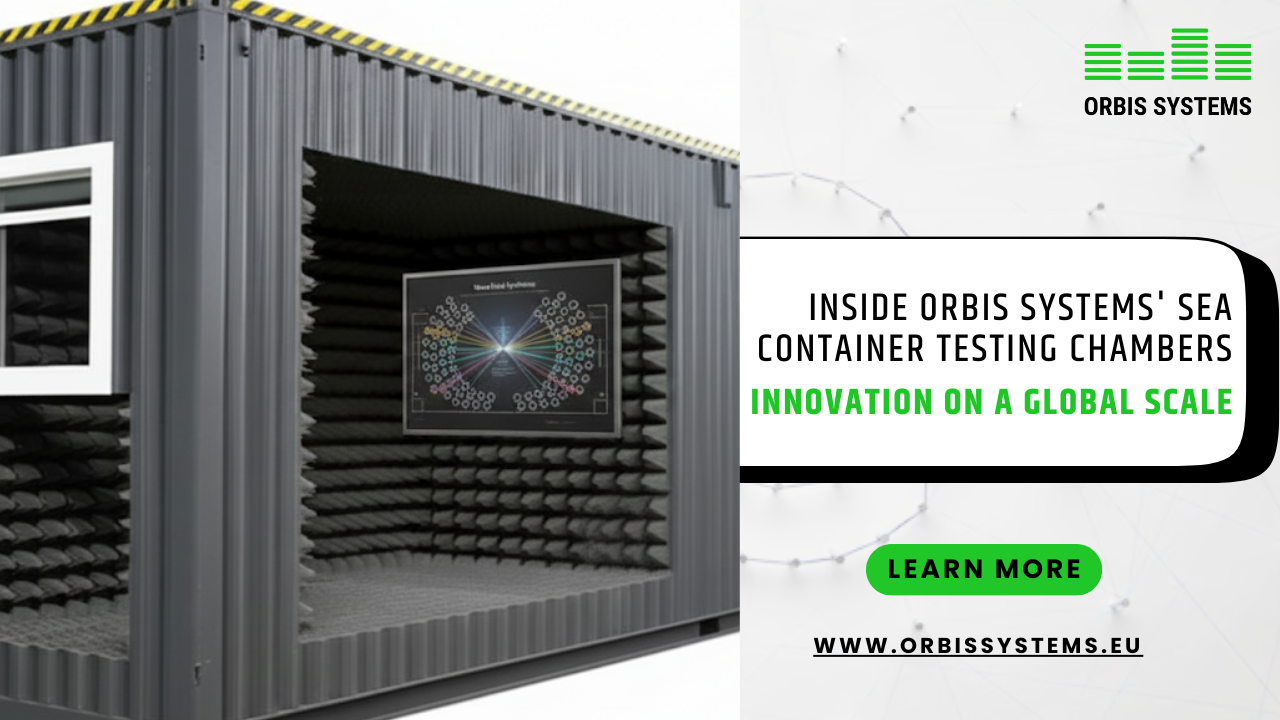
An OTA performance test system typically consists an RF-shielded chamber, signal generators, measurement instruments, and software to manage testing scenarios. These systems enable manufacturers and engineers to evaluate device behavior under various conditions, including signal fade, latency, and frequency shifts.

Whether for R&D or regulatory compliance, a reliable OTA wireless testing setup is essential to meet today’s industry standards and ensure device performance in real-world environments.

Sea Container-Based Solutions Explained

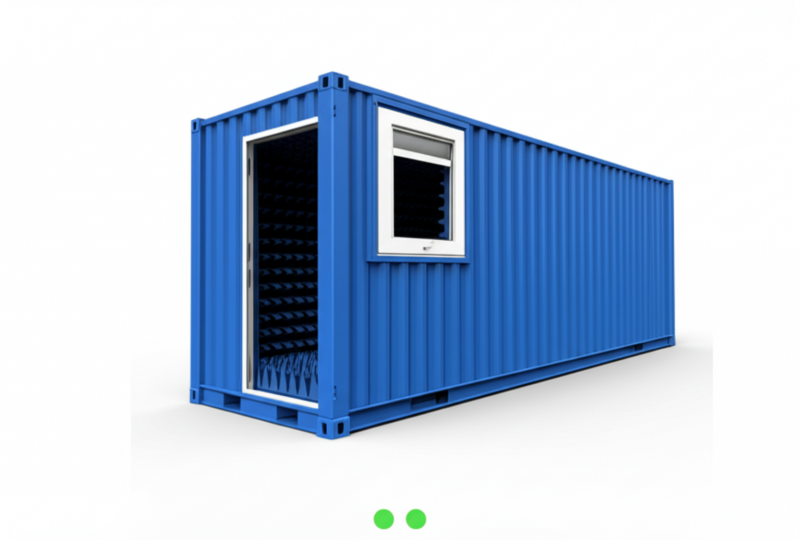
Sea container-based OTA test systems are portable chambers build inside shipping containers. These units are fully RF-shielded, equipped with integrated test equipment, and designed for plug-and-play deployment.

Their key advantage is mobility, allowing businesses to relocate the testing facility based on production needs, field testing requirements, or temporary projects. This makes them ideal for organizations seeking flexibility without the burden of heavy infrastructure costs.

Traditional OTA Chambers: The Standard Approach

Traditional OTA performance test systems are fixed installations built into controlled lab environments. These chambers are often larger and can handle more complex test scenarios. They’re ideal for companies with high-volume testing needs or for those working on advanced device development.

While these chambers offer high precision and powerful capabilities, they require dedicated facilities, longer setup times, and a larger initial investment.

Comparing Costs and Deployment

Sea Container-Based Systems

  • Lower initial investment
  • Faster setup (weeks, not months)
  • Easily relocatable
  • Ideal for flexible or remote operations

Traditional OTA Chambers

  • Higher capital cost
  • Requires permanent space and build-out
  • Limited mobility
  • Suited for continuous, high-capacity testing

Scalability and Adaptability

Sea container OTA wireless test systems are built to scale with your evolving needs. Need more capacity? Simply add another container. Planning to test emerging standards like 6G in the future? You can upgrade the existing container without overhauling your entire setup.

In contrast, traditional test systems offer less flexibility and are more challenging to scale once installed. Upgrades usually involve significant modifications to the existing infrastructure.

Show less

Key Considerations for Choosing the Right Solution

  • Mobility: Need to move your test site? Choose sea container-based systems.
  • Budget: Looking to minimize upfront costs? Containers offer better value.
  • Volume: Testing thousands of units daily? Traditional chamber may be best.
  • Space: Limited lab space? Sea containers provide an efficient solution
  • Technology upgrades: Expect frequent changes in test parameters? Containers offer greater flexibility.

Who Benefits From Each Option

Sea Container-Based Test Systems

  • Startups or R&D labs requiring mobility
  • Defense and field engineers
  • Small to mid-sized manufacturing operations
  • Remote 5G or telecom infrastructure deployment

Which OTA Testing Solution is Right for You?

Your testing priorities, resources, and operational flexibility ultimately determine the choice between a sea container and a traditional OTA performance test system. Sea container-based chambers offer a compact, mobile, and cost-effective option, perfect for businesses seeking rapid deployment, remote testing capabilities, or scalable setups without the need for extensive infrastructure. On the other hand, traditional OTA chambers remain the gold standard for large-scale testing facilities, delivering unmatched precision, stability, and throughput for organizations with long-term, high-volume testing requirements.

Both systems are engineered to ensure optimal performance in OTA over-the-air testing, reliably capturing data from real-world wireless conditions. By aligning your choice with your specific goals, be it R&D, field testing, certification, or mass production, you can invest in a solution that not only meets today’s standards but is also future-ready. Regardless of the route you take, the right OTA wireless test environment is essential to delivering products that perform reliably in the real world.

Frequently Asked Questions

1. What does an OTA performance test system do?

An OTA (Over-the-Air) performance test system evaluates how well wireless devices send and receive signals under conditions that simulate real-world environments. This enables manufacturers to ensure their devices operate reliably and meet industry standards without the need for physical cables, accurately reflecting true user experiences.

2. What’s the difference between OTA over-the-air and cabled testing?

An OTA (Over-the-Air) performance test system evaluates how well wireless devices send and receive signals under conditions that simulate real-world environments. This enables manufacturers to ensure their devices operate reliably and meet industry standards without the need for physical cables, accurately reflecting true user experiences.

3. Are container-based test systems as accurate as traditional chambers?

Yes, when designed and shielded properly, they can match the performance of traditional systems while offering more flexibility.

4. Can I upgrade a sea container OTA system?

Absolutely. Sea container OTA systems are modular by design, enabling easy expansion, upgrades, or reconfiguration as your testing requirements evolve. This built-in flexibility makes them ideal for adapting to emerging technologies or increasing testing capacity over time.

5. What factors affect over-the-air signal testing accuracy?

Shielding quality, chamber calibration, antenna positioning, and environmental controls are key elements in both container-based and traditional systems.