We are creative, ambitious and ready for challenges!

Categories
Blogs

Adapting to Change: Modular RF Chambers for Future-Ready Labs

Table of Contents

  1. Why Modern Labs Need Flexible RF Test Setups
  2. Understanding Modular Chamber Design
  3. Benefits of Adaptable Testing Environments
  4. Supporting Lab Scalability Solutions
  5. Readiness for 6G and Future Technologies
  6. Frequently Asked Questions

Why Modern Labs Need Flexible RF Test Setups

Wireless technology continues to accelerate. Devices are becoming more complex, and frequency bands are expanding into mm Wave and emerging sub-THz ranges. As a result, laboratories must adjust their RF chamber testing setups more often than before. Traditional fixed chambers can limit flexibility and increase upgrade costs. Therefore, many organizations are adopting modular chamber design to create adaptable testing environments that can evolve with changing requirements.

A future-ready laboratory must support emerging standards, advanced antenna architectures, and higher frequency operation while maintaining measurement accuracy and repeatability. Modular approaches provide practical lab scalability solutions by using standardized shielding panels, absorber systems, and configurable layouts. This allows laboratories to expand or reconfigure test setups without reconstructing entire facilities.
Adapting to Change: Modular RF Chambers for Future-Ready Labs

Key Takeaways

  • Modular chamber design allows laboratories to adjust layouts and capabilities without full structural reconstruction.
  • Adaptable testing environments improve flexibility, reduce downtime, and maintain measurement consistency.
  • Lab scalability solutions enable smooth expansion from research to production.
  • Modular RF chambers support automation and integration with manufacturing and integration systems.
  • Structured modular architecture helps laboratories prepare for 6G and future technologies.

Understanding Modular Chamber Design

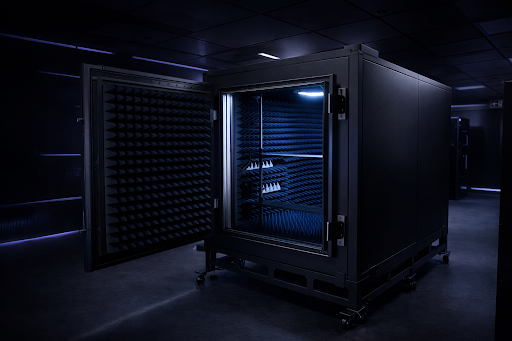
Modular chamber design refers to constructing RF test chambers using standardized shielding panels, absorber modules, and configurable positioning systems that can be assembled according to specific test requirements. Unlike monolithic enclosures with fixed dimensions, modular systems allow expansion, reconfiguration, or targeted upgrades while maintaining shielding integrity and absorber performance.

For example, absorber materials can be replaced to support new frequency ranges, and shielded panel structures can be extended to accommodate larger devices or test distances. 

Positioning systems may also be upgraded to support different antenna orientations or multi-axis motion required for advanced OTA measurements. This modular architecture provides a controlled electromagnetic environment while enabling gradual modification as requirements evolve.

In addition, standardized modular designs promote consistency across multiple installations. When similar chambers are deployed across different laboratories, measurement conditions remain comparable, improving repeatability from early development through production validation.

Benefits of Adaptable Testing Environments

Adaptable testing environments provide both operational and technical advantages. Modular components can be upgraded or replaced individually, reducing downtime compared with full chamber reconstruction. This approach also lowers long-term costs by enabling incremental investment aligned with evolving requirements.

Key advantages include reconfigurable layouts that accommodate different device sizes, antenna patterns, and test distances; consistent shielding effectiveness across configurations; precision positioning systems for repeatable OTA measurements; and integration capabilities with automated test systems via standard control interfaces.

In addition, adaptable environments enable laboratories to respond quickly to updated regulatory or certification requirements. Modules can be modified or upgraded without major disruption, helping maintain development schedules. Modular architecture also supports clear configuration documentation and traceability, which are essential for quality assurance, compliance, and multi-site testing consistency.

Supporting Lab Scalability Solutions

Laboratories often begin with a small development setup and later expand into production testing. For this reason, lab scalability solutions are critical. Modular RF chambers allow gradual growth without replacing existing infrastructure.

In early development stages, a compact chamber may be sufficient for antenna validation and basic RF chamber testing. However, when product volumes increase, additional chambers can be installed using the same modular architecture. This ensures similar electromagnetic performance across all units.

Key aspects that support scalability include:

  • Parallel chamber deployment with identical module configurations
  • Automation readiness for integration with manufacturing integration systems
  • Standardized positioning platforms for high throughput testing

Modular RF chambers support scalable laboratory growth by enabling replication of electrically equivalent test environments across development and production stages. During early R&D, a compact chamber may suffice for antenna validation and basic RF testing. As product volumes increase, additional chambers can be deployed using identical modular configurations, ensuring consistent shielding effectiveness, quiet zone characteristics, and measurement correlation.

Scalability is further supported by automation-ready positioning systems and standardized control interfaces such as SCPI and REST APIs, allowing seamless integration with manufacturing execution systems and automated test equipment. This modular architecture simplifies phased facility expansion, reduces planning risk, and enables controlled budget allocation while maintaining consistent test workflows from R&D to full-scale manufacturing.

Readiness for 6G and Future Technologies

The transition from 5G to 6G introduces new frequency ranges including mmWave extensions and emerging sub-THz bands, along with significantly higher performance requirements. Laboratories must therefore prepare for future technologies without repeated structural reconstruction. Modular chamber design provides this flexibility.

By selecting absorber materials and shielding systems that support wide frequency coverage, laboratories can accommodate both current and emerging standards. If requirements evolve, specific modules can be upgraded while the primary chamber structure remains intact.

Adaptable testing environments also support advances in antenna technology. As beamforming, massive MIMO, and advanced array systems become more prevalent, positioning systems must deliver precise and repeatable motion control for accurate OTA measurements. Modular chambers allow these motion systems to be upgraded or replaced as needed.

This flexibility helps organizations protect long-term investments while remaining ready for 6G research, validation, and future wireless technologies, supporting sustainable scalability aligned with long-term technology roadmaps.

Frequently Asked Questions

What is modular chamber design in RF testing?

Modular chamber design is a method of constructing RF chambers using standardized and configurable components. These components include shielding panels, absorber systems, and positioning systems. Because the system is modular, laboratories can expand or reconfigure the chamber as requirements change. This approach maintains controlled electromagnetic conditions while allowing flexibility.

How do adaptable testing environments improve efficiency?

Adaptable testing environments allow laboratories to adjust layouts and hardware without full reconstruction. As a result, upgrade cycles are shorter and operational downtime is reduced. In addition, standardized modules maintain consistent shielding performance and repeatable measurement conditions.

Can modular RF chambers support manufacturing and integration needs?

Yes. Modular RF chambers can be integrated with automated test equipment and control systems. Interfaces such as REST APIs and SCPI enable communication between chamber control systems, positioning equipment, RF instruments, and laboratory software platforms.

How do modular chambers help with lab scalability solutions?

Modular chambers allow gradual expansion. Laboratories can start with a single chamber and later deploy additional units using identical modules. Because configurations remain consistent, measurement results stay comparable across multiple test stations.

Are modular chambers suitable for 6G testing?

Modular chambers can be configured to support wide frequency ranges, including bands associated with 5G and emerging 6G research. When new frequency requirements arise, absorber materials or positioning systems can be upgraded. Consequently, laboratories can prepare for future technologies without rebuilding their facilities.
Categories
Blogs

How Full-Scale Manufacturing Accelerates Deployment of Test Infrastructure

Table of Contents

  1. Why Reliable Wireless Testing Matters
  2. What Test Infrastructure Deployment Means
  3. The Importance of RF Chamber Manufacturing
  4. Elements of Turnkey Test Solutions
  5. Automation and Positioning in Modern Testing
  6. Planning Deployment for R&D Production
  7. Building a Reliable Testing Environment
  8. Frequently Asked Questions

Why Reliable Wireless Testing Matters

Wireless products are becoming more advanced every year. Devices now support higher data speeds, multiple antennas, and complex radio features. Because of this, companies must invest in proper test infrastructure deployment to ensure their products perform as expected. A well-planned testing environment allows engineers to measure performance accurately and repeat results with confidence. It also helps reduce delays during product validation.

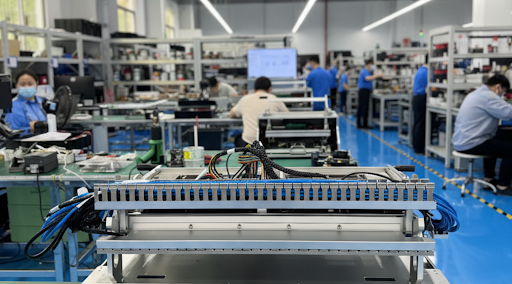
Test infrastructure deployment involves more than placing equipment in a lab. It includes RF chamber manufacturing, precision positioning systems, and complete turnkey test solutions that work together as one system. When these parts are carefully integrated, teams can test devices under controlled conditions without interference. As a result, measurements remain stable and reliable across repeated tests.

How Full-Scale Manufacturing Accelerates Deployment of Test Infrastructure

Key Takeaways

  • Test infrastructure deployment ensures accurate and repeatable wireless measurements.
  • RF chamber manufacturing creates controlled environments minimizes external interference
  • Turnkey test solutions integrate chambers, instrumentation, and automation into one system.
  • Precision positioning systems improve measurement consistency and alignment accuracy.
  • Careful planning supports both R&D flexibility and production efficiency.

What Test Infrastructure Deployment Means

Test infrastructure deployment refers to the complete setup of a wireless testing environment. It covers planning, installation, integration, and validation of all required hardware and software. The goal is to create a controlled space where over-the-air measurements can be performed accurately.

The environment must provide high shielding effectiveness to attenuate external radio signals and prevent interference. Second, the system must support the precise movement of the device under test. Third, the entire setup should allow automated control for consistent measurements. Therefore, successful deployment ensures that results are repeatable and comparable over time.

In addition, proper planning helps avoid integration issues later. When systems are configured correctly from the beginning, engineers can focus on product performance instead of troubleshooting equipment.

The Importance of RF Chamber Manufacturing

RF chamber manufacturing is a critical part of any wireless test lab. An RF chamber isolates the device under test from external signals. It uses shielding materials and absorber lining to reduce reflections and minimize multipath effects within the chamber.

Many facilities also invest in custom anechoic chambers to meet specific frequency ranges, size requirements, and measurement standards. These chambers are designed to match precise testing objectives while maintaining high isolation performance.

A well-manufactured chamber provides high isolation. Consequently, engineers can measure antenna patterns, radiated power, sensitivity, and, when integrated with network emulation systems, wireless throughput without environmental disturbances. This improves measurement accuracy and ensures consistency.

Furthermore, chamber size and configuration must match the testing requirements. Some applications require compact chambers for small devices. Others need larger setups for more complex systems. In both cases, careful RF chamber manufacturing supports stable testing conditions and dependable data.

Elements of Turnkey Test Solutions

Turnkey test solutions combine all required components into one integrated system. Instead of assembling each element separately, teams receive a pre-integrated solution that is ready for operation after installation.

These solutions generally include:

  • Shielded RF chambers for controlled testing
  • Integrated instrumentation for signal generation and analysis
  • Precision positioning systems for accurate DUT alignment
  • Automation interfaces for test control

Because everything is configured to work together, commissioning time is reduced. In addition, system compatibility issues are minimized. Therefore, engineers can begin testing sooner and maintain a consistent workflow.

Turnkey test solutions also support both Sub 6 GHz and mmWave testing requirements. As wireless standards evolve, scalable infrastructure ensures long-term usability. This makes turnkey integration a practical approach for modern labs.

Automation and Positioning in Modern Testing

Automation plays a major role in effective test infrastructure deployment. Manual testing can introduce variability and increase the risk of human error. However, automated systems provide consistent control over measurements and device movement.

For example, modern systems support API-based or network control interfaces, enabling integration with external software platforms.

.As a result, laboratories can connect testing workflows with internal management tools. This improves efficiency and traceability.

Positioning systems are equally important. They enable precise multi-axis movement of antennas and devices. Accurate positioning ensures repeatable orientation during antenna pattern measurements and beam testing. In addition, high-resolution sensors maintain alignment even after power interruptions.

Together, automation and positioning systems enhance reliability. They ensure that each test follows the same procedure and produces dependable data.

Planning Deployment for R&D Production

Different environments have different needs. Research and development labs require flexibility. Engineers often change configurations and test parameters. Therefore, modular setups are valuable in R&D settings.

On the other hand, production environments prioritize speed and repeatability. Systems must handle higher test volumes while maintaining consistent results. For this reason, structured deployment planning is essential.

Key considerations include:

  • Chamber size and scalability
  • Integration of instrumentation
  • Automation compatibility
  • Space and safety requirements

By addressing these factors early, organizations avoid costly modifications later. Moreover, well structured deployment supports future expansion as technology evolves.

Building a Reliable Testing Environment

Reliable wireless testing depends on structured planning and careful integration. Test infrastructure deployment brings together RF chamber manufacturing, positioning systems, and turnkey test solutions into one coordinated setup. When each element is properly implemented, engineers achieve accurate, repeatable, and efficient measurements.

Moreover, scalable design and automation ensure long-term usability. When supported by end-to-end manufacturing, organizations benefit from consistent quality control across design, fabrication, integration, and validation stages. By investing in well-planned deployment, organizations create a stable foundation for validating current and future wireless technologies.

Frequently Asked Questions

1. What is test infrastructure deployment in wireless testing?

Test infrastructure deployment refers to the complete setup of a wireless testing environment. It includes installation of RF chambers, positioning systems, measurement equipment, and automation software. The purpose is to create a controlled environment for reliable over-the-air measurements.

2. Why is RF chamber manufacturing important?

RF chamber manufacturing ensures that testing takes place in a shielded space. The chamber blocks external signals and reduces reflections. This improves accuracy and ensures that measurements are not influenced by environmental noise.

3. What are turnkey test solutions?

Turnkey test solutions are pre-integrated systems that combine chambers, instrumentation, positioning systems, and automation interfaces. Because all components are configured to work together, installation and commissioning are simplified. This allows faster transition from setup to testing.

4. How do positioning systems improve testing accuracy?

Positioning systems allow precise control of device orientation. During antenna pattern or beam measurements, even small changes in angle can affect results. Therefore, controlled multi-axis movement ensures repeatability and accurate performance evaluation.

5. Can one deployment support both R&D and production testing?

Yes. A well-planned deployment can support both environments. Modular configurations allow flexibility for research testing, while automation and structured workflows support production throughput. Proper design ensures scalability for future requirements.

Categories
Blogs

How Tailored Positioners Improve Efficiency in Automated Test Setups

Table of Contents

Introduction

Why Positioning Is Critical in RF Testing

Efficiency Gains from Tailored Positioning Solutions

Integration with Modular Test Chambers and Anechoic Environments

Measuring Performance Improvements

Frequently Asked Questions

Introduction

Wireless devices are evolving rapidly, with operating frequencies expanding into FR1 and FR2 bands. As a result, test requirements have become significantly more stringent, particularly for over-the-air (OTA) performance validation. To meet these demands, laboratories increasingly rely on automated test systems to achieve higher throughput and consistency. However, automation alone cannot guarantee accurate results.

The physical position of the device under test (DUT) has a direct and often critical impact on RF measurements. Even minor variations in orientation, alignment, or distance can significantly alter radiation patterns, signal strength, and overall performance metrics. Without precise and repeatable positioning, measurement uncertainty increases, and test results may become unreliable.

Tailored positioning solutions address this challenge by providing controlled multi-axis motion, precise alignment, and highly repeatable positioning. When integrated with RF test automation, these systems enable structured, unattended testing while maintaining measurement integrity. By minimizing manual intervention and setup variability, tailored positioners significantly enhance both test accuracy and operational efficiency.

In modern automated test environments, tailored positioners are not merely mechanical accessories. They are essential components that ensure reliable, repeatable, and high-quality measurement outcomes.

How Tailored Positioners Improve Efficiency in Automated Test Setups

Key Takeaways

  • Automated test setups require precise and repeatable motion control.
  • Tailored positioning solutions improve alignment and reduce variability.
  • RF test automation benefits from synchronized motion and measurement.
  • Modular test chambers and anechoic chamber integration require stable and compact positioners.
  • Measurable improvements include faster setup and higher throughput

Why Positioning Is Critical in RF Testing

In RF testing, the orientation of the device under test (DUT) directly determines how signals are transmitted and received. Incorrect positioning can lead to measurement variability, forcing engineers to repeat tests and increasing overall test time.

Automated test setups require precise and consistent motion control. Without accurate positioners, manual adjustments introduce unwanted variation. Tailored positioning solutions, however, move the DUT in precise angular increments, ensuring that each measurement is performed under controlled and repeatable conditions.

Repeatability is particularly critical in high-frequency testing, especially at millimetre-wave (mmWave) bands, where even small positional deviations can significantly affect results. A system capable of returning to the exact same position repeatedly ensures high data integrity and reliable validation.

Furthermore, RF test automation depends on tight synchronization between measurement instruments and motion systems. When positioning is automated and programmable, tests can run faster with minimal operator intervention. As a result, laboratories can significantly increase throughput while maintaining confidence in measurement accuracy.

Efficiency Gains from Tailored Positioning Solutions

Efficiency in automated test setups depends on accuracy, speed, and seamless system integration. Tailored positioning solutions enhance these factors in practical and measurable ways.

Improved Accuracy and Repeatability

Tailored positioners are designed to accommodate specific DUT sizes, shapes, and weights, ensuring optimal mechanical stability during motion. This stability enables precise angular positioning across repeated test cycles.

Accurate motion control provides several key benefits:

  • Reduced measurement uncertainty
  • Stable alignment for antenna pattern evaluation
  • Consistent data during regression testing

With improved repeatability, engineers can confidently compare results across multiple test sessions without concerns about setup variability. This reduces the need for repeated measurements, shortens validation time, and improves overall test efficiency.

Faster Setup and Reduced Manual Intervention

Tailored positioning solutions significantly reduce manual setup time in automated test environments. With preconfigured motion sequences, the system can automatically move the device under test (DUT) to required orientations, eliminating the need for engineers to manually adjust hardware for each measurement.

This automation provides several operational benefits:

  • Shorter preparation time before testing
  • Faster switching between different test scenarios
  • Increased daily testing capacity

By minimizing manual interaction, the likelihood of positioning errors is also reduced. As a result, testing becomes more consistent, efficient, and reliable, leading to higher overall productivity.

Reliable Support for RF Test Automation

Tailored positioners play a vital role in enabling structured RF test automation. Motion commands can be precisely synchronized with measurement triggers, ensuring that data acquisition occurs only when the device under test (DUT) reaches the intended position.

This synchronization makes automated scanning procedures more efficient, accurate, and predictable. In addition, complex motion trajectories can be preprogrammed, allowing the system to execute sophisticated test routines without manual intervention. As a result, testing becomes highly consistent across different projects and operating conditions.

By integrating seamlessly with automated measurement systems, tailored positioners help laboratories achieve reliable, repeatable results while maximizing test throughput.

Integration with Modular Test Chambers and Anechoic Environments

Controlled environments are essential for accurate wireless validation. Modular test chambers offer flexibility to accommodate different frequency ranges, device sizes, and testing requirements. When tailored positioning solutions are specifically designed for these chambers, installation becomes efficient, stable, and space optimized.

Integration within anechoic chambers is particularly critical for over-the-air (OTA) measurements. These chambers absorb electromagnetic reflections and isolate the device under test (DUT) from external interference. Motion systems operating inside such environments must therefore function without disturbing the chamber’s electromagnetic characteristics.

Tailored positioners are engineered to fit within chamber dimensions while maintaining precise alignment with reference antennas. This specialized integration provides several benefits:

  • Stable motion with minimal mechanical vibration
  • Consistent electromagnetic conditions during movement
  • Efficient utilization of available chamber space

As a result, automated test setups can deliver accurate measurements while supporting complex dynamic motion requirements.

Measuring Performance Improvements

To fully evaluate the benefits of tailored positioning solutions, key performance indicators should be monitored. Clear, quantifiable metrics help determine whether automated test setups are operating more efficiently after implementation.

Important indicators include:

  • Reduction in setup time
  • Increase in total tests completed per day
  • Lower variation between repeated measurements
  • Decrease in re-testing caused by alignment errors

Improvements in these metrics demonstrate that precise positioning enhances both measurement accuracy and operational flow.

In production environments, time savings directly translate into increased output and reduced costs. Optimized motion control not only improves measurement reliability but also streamlines workflows, enabling laboratories to operate more efficiently while maintaining high data quality

Conclusion

Accurate positioning is fundamental to wireless device validation. Automated test setups depend on controlled motion to ensure consistent and repeatable measurement results. Without precise alignment, data quality may degrade, and testing time can increase due to rework and variability.

Tailored positioning solutions deliver the required precision and repeatability while supporting structured RF test automation workflows. They integrate seamlessly with modular test chambers and maintain stable operation within anechoic environments, preserving electromagnetic conditions during motion.

By reducing manual adjustments and minimizing positional variation, tailored positioners enhance both operational efficiency and measurement integrity. As wireless technologies continue to evolve into higher frequencies and more complex architectures, precise motion systems remain essential for reliable, scalable, and future-ready testing operations

Frequently Asked Questions

1. Why are tailored positioning solutions important in automated test setups?

Tailored positioning solutions ensure accurate and repeatable placement of the DUT, reducing measurement variation and enabling reliable validation across multiple test cycles. This improves both data quality and testing efficiency.

2. How do tailored positioners improve RF test automation?

They enable programmable motion sequences synchronized with automated measurement triggers. This coordination minimizes manual intervention, improves consistency, and increases overall test efficiency.

3. What is the role of repeatability in wireless testing?

Repeatability ensures that the same DUT position can be reproduced across multiple tests. High repeatability enables reliable data comparison, reduces measurement uncertainty, and supports long-term validation accuracy.

4. How do modular test chambers support automated testing?

Modular test chambers provide adaptable environments for different device sizes, configurations, and frequency ranges. When combined with tailored positioning solutions, they enable efficient, stable, and scalable automated testing conditions.

5. Why is anechoic chamber integration necessary for OTA measurements?

Integration with anechoic chambers ensures that motion systems operate without disturbing the controlled electromagnetic environment. This preserves reflection-free conditions and maintains measurement accuracy during automated OTA testing.

Categories
Blogs

Why Advanced AZ Positioners Are Critical for Accurate OTA Measurements

Table of Contents

  1. Introduction: Why Positioning Is Important in OTA Testing
  2. What an AZ Positioner Does
  3. How Advanced Positioning Systems Support OTA Measurement Accuracy
  4. Key Features That Improve Test Reliability
  5. Why RF Measurement Automation Matters
  6. Where These Systems Are Used
  7. How to Choose the Right AZ Positioner
  8. Frequently Asked Questions
  9. Conclusion: Ensuring Reliable OTA Results

Introduction: Why Positioning Is Important in OTA Testing

Over-the-air (OTA) testing evaluates the real-world performance of wireless devices without direct RF connections. As wireless technologies become more advanced, measurement accuracy and repeatability become increasingly critical. In any OTA setup, the position and orientation of the device under test (DUT) must be precisely controlled, since even small angular deviations can significantly affect measured radiation characteristics.

Advanced positioning systems provide precise and stable control of DUT movement. They enable controlled rotation with high repeatability, ensuring consistent measurement conditions across test cycles. As a result, the reliability and comparability of measurement data are greatly improved.

OTA measurement accuracy depends not only on RF instrumentation but also on mechanical positioning precision. Therefore, a high-quality azimuth (AZ) positioner is an essential component of a professional OTA test chamber. This becomes especially important for devices that must meet stringent performance requirements for modern wireless technologies, including 5G.

Why Positioning Is Important in OTA Testing

Key Takeaways

  • Advanced positioning systems are essential for reliable OTA testing.
  • Accurate azimuth control directly affects OTA measurement accuracy.
  • Stable mechanical construction improves repeatability.
  • RF measurement automation increases efficiency and consistency.
  • Careful system selection supports long-term test reliability.

What an AZ Positioner Does

An AZ positioner rotates the device under test around the vertical axis. This movement is called azimuth rotation. It allows a full 360-degree sweep so that engineers can measure signal performance from every direction.

During antenna pattern testing, the device must be turned step by step. Each step must be accurate. If the rotation is not correct, the radiation pattern will not reflect the real performance of the device.

In addition, AZ positioners are often used together with elevation systems. However, azimuth movement remains one of the most important motions in OTA testing. Because of this, advanced positioning systems must deliver smooth and precise control.

How Advanced Positioning Systems Support OTA Measurement Accuracy

OTA measurement accuracy depends strongly on the precise alignment of the device under test (DUT). If the DUT is not positioned at the exact intended angle, the measured gain, beam direction, or radiation pattern may shift, causing the results to deviate from the device’s true performance.

Advanced positioning systems address this challenge in several ways. First, they provide fine angular resolution, enabling movement in very small incremental steps. Second, they ensure high repeatability, meaning the system can return to the same angular position with minimal deviation across multiple measurements.

In addition, robust mechanical construction minimizes vibration and unintended motion. Mechanical stability is critical because any movement during measurement can distort the received signal and introduce errors. Consequently, precise azimuth positioning plays a direct role in maintaining OTA measurement accuracy.

When tests are repeated over time, consistent positioning ensures that results remain comparable and reliable. This is particularly important for modern wireless devices that rely on directional antennas and advanced beamforming techniques, where small angular errors can significantly affect measured performance.

Key Features That Improve Test Reliability

Several mechanical and control features are essential for dependable OTA testing.Important mechanical characteristics include:

  • High angular accuracy for precise orientation control
  • Low backlash to minimize positioning errors during direction changes
  • A strong, rigid structure to ensure stable and vibration-free rotation
  • Adequate payload capacity to support devices of varying sizes and weights

Control and integration capabilities are equally important:

  • Programmable motion sequences for automated test procedures
  • High-precision position feedback for monitoring and verification
  •  Compatibility with chamber control and test automation systems

By incorporating these features, advanced positioning systems significantly reduce measurement uncertainty. As a result, engineers can rely on the accuracy and repeatability of the collected data. In some applications, custom positioning solutions may also be required to accommodate specific device dimensions or chamber configurations.

Why RF Measurement Automation Matters

In modern laboratories, RF measurement automation is widely used to improve test efficiency and consistency. Automation integrates the motion control system with RF test instruments, enabling the positioner and measurement equipment to operate in a coordinated manner.

With automated control, predefined test sequences can run without manual intervention. The system rotates the device under test (DUT) to a specified angle, allows the motion to settle, and then automatically triggers the measurement. After completion, the positioner moves to the next programmed angle, repeating the process across the entire scan range.

This approach improves efficiency while reducing human error. Automated data logging also ensures that each measurement is accurately associated with its corresponding angular position. As a result, OTA measurement accuracy improves because motion control and RF data acquisition are synchronized.

Automation further enables repeatable testing under identical conditions. When test cycles are repeated, the system follows the same programmed trajectory and timing sequence, making results easier to compare, validate, and reproduce.

Where These Systems Are Used

In modern laboratories, RF measurement automation is widely used to improve test efficiency and consistency. Automation integrates the motion control system with RF test instruments, enabling the positioner and measurement equipment to operate in a coordinated manner.

With automated control, predefined test sequences can run without manual intervention. The system rotates the device under test (DUT) to a specified angle, allows the motion to settle, and then automatically triggers the measurement. After completion, the positioner moves to the next programmed angle, repeating the process across the entire scan range.

This approach improves efficiency while reducing human error. Automated data logging also ensures that each measurement is accurately associated with its corresponding angular position. As a result, OTA measurement accuracy improves because motion control and RF data acquisition are synchronized.

Automation further enables repeatable testing under identical conditions. When test cycles are repeated, the system follows the same programmed trajectory and timing sequence, making results easier to compare, validate, and reproduce.

How to Choose the Right AZ Positioner

Selecting the correct AZ positioner requires careful review of technical needs. First, determine the level of angular precision required for the measurement task. Next, evaluate the maximum weight of the device under test.

In addition, confirm that the system supports the required control interfaces for RF measurement automation. The positioner should integrate smoothly with existing chamber equipment.

Long-term stability should also be considered. Durable mechanical design ensures consistent performance over extended test cycles.

By reviewing these factors carefully, organizations can select advanced positioning systems that match their OTA testing goals. 

Conclusion: Ensuring Reliable OTA Results

Reliable wireless testing depends on both accurate RF instrumentation and precise mechanical positioning. Advanced positioning systems provide the controlled motion required for consistent azimuth rotation, while integration with RF measurement automation enhances efficiency, synchronization, and repeatability.

High-quality AZ positioners are therefore fundamental components of modern OTA chambers. By ensuring precise orientation and stable operation, they help maintain measurement accuracy and support dependable wireless device validation across research, compliance, and production environments.

Frequently Asked Questions

1. Why is azimuth rotation critical in OTA testing?

Azimuth rotation allows engineers to measure device performance from all horizontal angles. Accurate control ensures that radiation patterns are captured correctly. Without precise azimuth positioning, OTA measurement accuracy can decrease and lead to incorrect conclusions.

2. How do advanced positioning systems improve repeatability?

They use precise motion control and strong mechanical structures. As a result, the device can return to the same angle with minimal variation. This repeatability ensures that repeated measurements remain consistent across test sessions.

3. What role does RF measurement automation play in OTA testing?

RF measurement automation links motion commands with measurement triggers. Therefore, each angle position is matched with the correct data capture. This coordination reduces manual errors and improves overall reliability.

4. Can small positioning errors affect millimetre wave testing?

Yes. At higher frequencies, even small angular shifts can change measured beam direction or gain. Therefore, precise azimuth positioning is essential to maintain dependable OTA measurement accuracy.

5. What should be checked before selecting an AZ positioner?

Key factors include angular accuracy, payload capacity, mechanical stability, and compatibility with automation systems. Reviewing these points ensures that the selected system supports precise and repeatable OTA testing.

Categories
Events

Meet Orbis Systems at IMS 2026

Meet Orbis Systems at IMS 2026

Exhibit & Sponsor IMS 2026 | Reach 8,000+ Attendees | Boston

Join us at the world’s leading microwave and RF industry event. We look forward to connecting, collaborating, and exploring how we can support your testing and shielding challenges.

Date: 9–11 June 2026
Secure your meeting slot between 11:00 AM – 4:00 PM (EDT, UTC −4)

What Orbis Systems Is Bringing to IMS 2026

    • Learn about our expertise in providing customized solutions to help your business thrive in today’s dynamic market.
    • Advanced RF and EMC shielding solutions

    • Custom test environments

    • High-performance isolation systems

    • Tailored engineering solutions for demanding applications

    • Hear about Orbis Systems’ solution portfolio, from our popular OTA Chambers with automated positioners to our highly sought-after RF Signal Switching Units.

    • Discover the range of services we provide to support your organization’s growth and success.

Let’s Connect at IMS 2026

Categories
Blogs Resources

Next-Generation RF Shielding: Designing Rooms for Precision and Repeatability

Table of Contents

  1. Introduction to RF Shielding for Accurate Testing
  2. Why Precision and Repeatability Matter
  3. Core Elements of a Shielded Room
  4. Precision Positioners and Measurement Control
  5. Automation and Test Efficiency
  6. Design Needs for 5G and mmWave
  7. Commissioning and Verification
  8. FAQs

Introduction to RF Shielding for Accurate Testing

Accurate wireless testing requires a stable and controlled environment. A well-designed shielded room provides that environment by attenuating external RF interference and, when combined with appropriate absorber materials, controlling internal reflections.

Strong isolation also improves RF testing precision and supports repeatable results across many test cycles. In addition, properly constructed EMC shielded enclosures protect sensitive instruments from unwanted signals. 

Therefore, careful room design is a basic requirement for research, development, and production testing of modern wireless systems. These environments are often supported by modular shielding solutions that allow flexible expansion as testing needs grow.

Next-Generation RF Shielding: Designing Rooms for Precision and Repeatability

Key Takeaways

  • A shielded room creates a controlled environment for accurate RF testing
  • Strong shielding and absorber placement reduce interference and reflections
  • Precision positioners improve repeatability and measurement stability
  • Automation increases efficiency while maintaining data quality
  • 5G and mmWave testing require careful material and mechanical design

Regular verification preserves long-term performance

Why Precision and Repeatability Matter

Accuracy refers to how close a measurement is to the true value, while precision describes how consistent repeated measurements are. Repeatability means achieving the same result under identical conditions. Both are necessary for dependable RF testing.

When measurements vary from one test to another, it becomes difficult to trust the data. As a result, engineers may make incorrect decisions about device performance. A stable shielded room removes many external variables. It blocks stray electromagnetic signals and reduces reflections that distort readings.

Because of this stability, engineers can compare results with confidence. Accurate EMC shielded enclosures also support compliance testing by providing consistent test conditions. Furthermore, strong RF testing precision improves development speed because teams can rely on steady and repeatable measurements.

Core Elements of a Shielded Room

An effective shielded room depends on several connected design features that maintain measurement stability.

First, shielding materials must provide strong isolation. Conductive wall panels create the main barrier against external signals. However, panels alone are not enough. Doors, seams, and joints require tight conductive seals to prevent leakage. Even small gaps can weaken shielding performance, especially at higher frequencies.

Second, absorber placement controls reflections inside the room. RF absorbers are strategically placed on interior surfaces to reduce reflections, standing waves, and multipath propagation

Proper absorber design and layout help approximate free-space conditions within the quiet zone. Because of this layout, antenna and over-the-air measurements become more accurate.

Third, signal entry points must preserve enclosure integrity. Filtered feedthroughs allow power and communication lines to pass without reducing isolation. At the same time, a stable grounding system provides a clear electrical reference. Together, these elements help the shielded room maintain long-term performance and support reliable testing. 

Precision Positioners and Measurement Control

RF measurement accuracy depends not only on instrumentation and shielding, but also on precise and repeatable device positioning within the test volume.

Precision positioners provide controlled movement and repeatable placement of the device under test.

With automated positioning systems, engineers can set exact angles and distances. Therefore, every test follows the same configuration. This consistency removes operator variation and improves repeatability. Multi-axis positioners support detailed antenna scans and pattern measurements. 

In addition, programmed motion allows automated testing sequences. When combined with a stable shielded room, Precision positioners reduce geometric variability, thereby lowering overall measurement uncertainty and improving repeatability.

Automation and Test Efficiency

Modern RF laboratories often manage large testing workloads. For this reason, automation systems are important for efficient operation. Integrated control systems connect instruments, chambers, and positioning equipment.

Automation reduces manual setup steps and standardizes procedures. As a result, engineers spend less time preparing tests and more time analyzing results. Scheduled and unattended test runs increase equipment use.

At the same time, Stable EMC shielded enclosures provide a controlled electromagnetic environment that preserves measurement consistency and reduces environmental uncertainty during automated testing.

Controlled environments protect sensitive signals from interference. Therefore, automation and shielding together improve both efficiency and data quality.

Design Needs for 5G and mmWave

Testing at 5G and mmWave frequencies introduces additional technical requirements. Higher frequencies are more sensitive to material behavior and mechanical accuracy. These factors are especially important in advanced 5G and mmWave applications where precision testing is critical.

Absorber materials must maintain low reflectivity across the target frequency band, particularly at short wavelengths used in mmWave testing.

Therefore, careful material selection is necessary. Mechanical stability and tight positioning tolerances are critical, as even small alignment errors can introduce measurable variation in high-frequency antenna and beamforming measurements

In addition, antenna systems used in 5G and mmWave testing require precise positioning for accurate beam evaluation.

A carefully engineered shielded room supports these needs by maintaining a predictable electromagnetic environment. Because of this stability, engineers can test advanced wireless devices with confidence.

Commissioning and Verification

After installation, every shielded room requires formal verification. Commissioning confirms that the enclosure meets performance expectations.

Engineers measure shielding effectiveness across the operating frequency range to establish baseline values. Verification procedures confirm the proper operation and alignment of positioning systems, while instrument calibration ensures traceability and measurement accuracy.. Clear documentation records environmental conditions and test setups for future reference.

Over time, periodic verification ensures that performance remains stable. If changes occur, early detection prevents inaccurate measurements. Therefore, Regular verification preserves shielding integrity, maintains baseline performance, and ensures continued compliance with applicable EMC and RF test standards.

Frequently Asked Questions

1. What is the main function of a shielded room in RF testing? 

A shielded room isolates the testing environment from external electromagnetic signals. This isolation prevents interference that could affect measurements. At the same time, absorber materials reduce reflections inside the space. Together, these features create a stable environment for accurate and repeatable testing.

2. How do EMC shielded enclosures improve test reliability? 

EMC shielded enclosures block outside noise and prevent signal leakage. Because of this protection, measurement systems operate in a controlled environment. Engineers can therefore collect cleaner and more consistent data.

3. Why are precision positioners important for antenna measurements? 

Precision positioners control the exact orientation and placement of the device under test. This consistency removes human variation and supports repeatable results. Accurate positioning is especially important for antenna pattern evaluation.

4 How often should a shielded room be verified?

Verification schedules depend on laboratory use and performance needs. Many facilities perform checks once or twice each year. Additional verification is recommended after equipment upgrades or structural changes.

5 What makes testing at 5G and mmWave more complex? 

Higher frequency testing requires absorbers and materials that perform well at short wavelengths. Mechanical stability and accurate positioning are also critical. These factors ensure dependable evaluation of advanced wireless systems.


Categories
Blogs Resources

Designing Custom Anechoic Chambers for Next-Gen 5G and mmWave Testing

Table of Contents

  1. Introduction to Modern RF Test Environments
  2. Understanding Custom Anechoic Chambers
  3. Core Anechoic Chamber Specifications
  4. Design Needs for mmWave Testing Chambers
  5. Integration with 5G OTA Testing Solutions
  6. Practical Design and Planning Guidelines
  7. Building Reliable Foundations for Advanced RF Testing
  8. Frequently Asked Questions

Designing Custom Anechoic Chambers for Next-Gen 5G and mmWave Testing

Introduction to Modern RF Test Environments

Wireless systems are moving quickly toward higher speeds and higher frequencies. As a result, engineers need test environments that can deliver stable and repeatable measurements. Custom chambers built around clear anechoic chamber specifications create a controlled space where radio signals behave in a predictable way. These chambers support accurate measurements for antennas, modules, and full devices that operate in advanced wireless bands.

At the same time, modern laboratories focus on Next-gen RF testing that supports both research and production. For this reason, chambers must also work with 5G OTA testing solutions and advanced mmWave testing chambers. A well-designed chamber removes reflections, blocks outside noise, and supports automation. Therefore, it becomes a central part of any professional RF test setup.

Key Takeaways

  • Custom chambers are essential tools for accurate wireless testing
  • Clear anechoic chamber specifications define performance and reliability. 
  • Specialized mmWave testing chambers address the challenges of high-frequency signals. 
  • Strong integration with 5G OTA testing solutions enables efficient automated workflows. 
  • Finally, structured planning and maintenance protect long-term measurement quality.

Understanding Custom Anechoic Chambers

A custom anechoic chamber is a shielded enclosure designed to provide electromagnetic isolation from external interference while minimizing internal reflections. Structurally like advanced RF shielded rooms, it incorporates RF absorber materials on interior surfaces to reduce reflected energy and suppress multipath propagation. By lowering chamber reflectivity within a defined quiet zone, the system approximates free-space conditions for controlled RF measurements.

This controlled electromagnetic environment enables engineers to accurately measure antenna radiation patterns, gain, beam characteristics, and overall RF performance with minimal environmental distortion.

Custom anechoic chambers are engineered for specific frequency ranges and measurement objectives. Some designs are optimized for sub-6 GHz applications, where absorber depth and chamber dimensions must support longer wavelengths. Others are tailored for mm Wave operation, where shorter wavelengths demand tighter mechanical tolerances, specialized absorber materials, and enhanced surface precision.

When the chamber design aligns with the intended frequency band, device size, and test methodology, it supports reliable next-generation RF testing and provides a robust foundation for 5G OTA testing solutions. Careful definition of anechoic chamber specifications—including frequency range, shielding effectiveness, quiet zone performance, and mechanical stability—ensures consistent long-term measurement accuracy and repeatability.

Core Anechoic Chamber Specifications

Defining the right technical parameters is essential before construction begins. These parameters affect accuracy, repeatability, and long-term usability.

First, the frequency range and absorber performance must match the target bands. Absorbers should provide low reflectivity across sub-6 GHz and mm Wave frequencies. Proper absorber performance improves quiet zone quality and reduces internal signal reflections.

Second, chamber size and layout must support the required test distance. Adequate space is needed for antennas, fixtures, and device mounts. Proper spacing helps maintain valid measurement conditions.

Third, shielding effectiveness protects the chamber from outside interference. Doors, seams, and cable entries must maintain strong shielding across the operating band.

Fourth, access ports and cable feedthroughs should be placed carefully. They must allow instrument connections without disturbing the absorber field.

Finally, mechanical stability and environmental control support consistent results. Stable structures and controlled temperature conditions improve measurement reliability.

Design Needs for mmWave Testing Chambers

mmWave testing chambers require special attention because high frequencies behave differently from lower bands. Small surface gaps or uneven absorber placement can cause noticeable reflections. Therefore, absorber geometry must be precise and uniform.

Accurate alignment is also critical. Positioning systems must hold tight tolerances so that angular measurements remain correct. In addition, thermal stability is important because temperature variation can influence DUT RF performance, phase stability, and measurement repeatability

Material selection plays another role. Structural materials and surface finishes should minimize unintended scattering and reflection within the quiet zone. When these design factors are handled correctly, the chamber can meet demanding anechoic chamber specifications and support reliable mmWave measurements.

Integration with 5G OTA Testing Solutions

A chamber does not work alone. It must operate as part of a complete 5G OTA testing solution environment that supports modern automated test setups. Integration begins with automated positioners that move the device under test and antennas in a controlled way. Automation improves repeatability and reduces manual errors.

Test instruments such as network analyzers and signal sources connect through shielded feedthroughs.RF switching and routing hardware enable configurable measurement topologies for MIMO and beamforming validation.. In addition, software coordinates equipment control and test sequencing.

These automated systems create efficient workflows for 5G NR and future wireless validation. They allow laboratories to scale from development testing to higher volume validation. A chamber designed for integration can adapt to changing test needs while maintaining performance.

Practical Design and Planning Guidelines

Successful chamber projects follow clear engineering steps. Early definition of goals helps avoid costly redesign. Teams should agree on frequency coverage, device size, and expected throughput before final design.

Prototype validation can confirm absorber performance and layout choices. Regular calibration plans protect long-term accuracy. Designers should also allow room for upgrades so that the chamber can support future technologies.

Careful planning keeps the chamber aligned with the required anechoic chamber specifications and ensures steady performance throughout its service life.

Building Reliable Foundations for Advanced RF Testing

Modern wireless development depends on an electromagnetically controlled and repeatable measurement environment. Custom chambers built for 5G NR (FR1/FR2) and future wireless validation

Provide the controlled conditions needed for the accurate evaluation of advanced devices.

When engineers focus on absorber performance, shielding quality, and system integration, the resulting environment supports Repeatable and traceable measurement results

A carefully designed chamber becomes a lasting foundation for 5G and mmWave innovation.

Frequently Asked Questions

  1. What frequency coverage is typical for a chamber used in 5G and mmWave work?

A chamber for 5G and mmWave testing usually supports sub-6 GHz bands and extends into higher mmWave ranges such as 24 GHz to 40 GHz. The exact coverage depends on project goals and device requirements. Engineers choose absorber materials and shielding methods that maintain stable performance across this span. Broader coverage allows one chamber to support multiple test programs.

  1. How do absorber materials influence measurement accuracy?

Absorber materials reduce reflections inside the chamber. High-quality absorbers create a quieter environment and approximate free-space boundary conditions more closely. This improvement leads to more accurate antenna and signal measurements. Consistent absorber performance across the frequency range is important for repeatable results.

  1. Why is chamber size important for antenna testing?

    Chamber size determines the available distance between antennas and the device under test. Adequate spacing is needed to achieve correct measurement conditions. For very large arrays or mm Wave systems, compact ranges or near-field scanning may also be used. Proper sizing supports valid far-field measurements and stable test geometry.
  2. What role does automation play in modern RF chambers?

Automation controls positioners, instruments, and test sequences. It improves repeatability and reduces human error. Automated systems also increase test efficiency and support complex measurement routines. As a result, laboratories can handle higher workloads without sacrificing accuracy.

  1. How often should a chamber be checked or calibrated?

Regular inspection and calibration protect measurement quality. Many facilities perform checks every six to twelve months, depending on usage. Calibration verifies absorber condition and shielding performance. Scheduled maintenance helps ensure that the chamber continues to meet technical requirements.

Categories
News

How Orbis Systems Turned Climate Targets into a Success Story

How Orbis Systems Turned Climate Targets into a Success Story

In 2023, a clear requirement was set. Greenhouse gas emissions needed to be reduced by 50 percent by 2030, with 2019 as the reference year. It was an ambitious target aligned with evolving customer sustainability expectations. It called for more than good intentions. It required discipline, transparency and long-term thinking.

The journey toward this target began earlier. In 2021, a key customer strengthened its sustainability strategy. In 2022, suppliers were requested to begin reporting emissions through the CDP framework. By 2023, the formal 50 percent reduction target was communicated, with 2019 as the baseline.

At Orbis Systems, we did not see this as just another requirement. It felt like the right direction. Sustainability was already part of our conversations, our engineering decisions and our way of working. The message was simple. Measure properly. Act consistently. Improve continuously.

We started CDP reporting in 2022 and have expanded and improved it each year since. Today, several years ahead of schedule, we have achieved a 50 percent reduction in Scope 1 and Scope 2 emissions. What may have started alongside customer expectations has grown into something that reflects who we are as a company.

A Commitment Built on Measurement

Real progress begins with understanding where you stand.

For this reason, Orbis Systems reports its greenhouse gas emissions annually through the CDP framework. This includes Scope 1 emissions from direct operations, Scope 2 emissions from purchased electricity and heating, and Scope 3 emissions across the wider value chain.

Each year, our reporting has become more detailed and more accurate. Maintaining a consistent structure allows us to compare results year on year and see clearly where improvements are happening. Transparency is not only about sharing numbers. It is about learning from them and making better decisions.

Practical Improvements with Real Impact

Some of the most meaningful changes were not dramatic. They were practical and focused. At our Oulu facility in Finland, a lighting renovation project reduced electricity consumption by 24 percent. It may sound like a simple upgrade, but the impact was real. Lower consumption meant lower emissions and improved efficiency in daily operations.

In 2024, renewable electricity supplied by the landlord reduced electricity related emissions to zero. This was an important milestone in reducing Scope 2 emissions.

Heating, a significant factor in Nordic operations, was also addressed through an emission free district heating clause in our lease agreement. This allows Finland’s Scope 2 emissions to be brought close to zero.

These steps were not taken just to meet expectations. They were practical decisions that made sense for our business and for the environment. When responsibility and efficiency align, progress becomes natural.

Delivering the Target Ahead of Time

Orbis Systems Finland had the highest emissions, so actions were primarily focused there. At the same time, improvements have also been made at other Orbis Systems sites, and the reduction in emissions from 292 tonnes to 120 tonnes is a joint achievement of the entire company.

But behind the numbers are consistent efforts. Infrastructure upgrades. Smarter energy sourcing. Thoughtful agreements. Continuous monitoring. Small improvements that added up over time.

Instead of waiting for one large transformation, we focused on steady progress. Sustainability became part of everyday decision making rather than a separate initiative.

The Next Chapter Scope 3

While Scope 1 and Scope 2 emissions show strong progress, our attention is now turning towards Scope 3. These emissions come from purchased goods and services, manufacturing processes, transport and supplier activities across the value chain.

This next phase is more complex. It requires closer collaboration with suppliers and stronger data integration. Ideally, emission information will be linked directly to materials and components within ERP systems, giving us clearer visibility across suppliers and product codes.

We are also exploring the use of EN 16258 to strengthen transport related reporting. Standardised methods improve transparency and allow better comparisons across the supply chain.

More Than a Target

Achieving a 50 percent reduction ahead of schedule shows that sustainability and operational excellence can move forward together. More importantly, it shows that climate responsibility at Orbis Systems is not just about responding to external expectations. It is about how we choose to operate. It influences how we plan investments, how we negotiate agreements and how we improve our facilities.

Turning a climate target into a success story required clarity, consistency and commitment from across the organisation. The milestone we have reached is significant, but it is not the end of the journey. With Scope 3 now in focus and collaboration across the value chain strengthening, the work continues. At Orbis Systems, sustainability is not defined only by a deadline. It is defined by the progress we make every day.

Contact us

Categories
Blogs Resources

What Is a Twin Shield Box? A Practical Guide for High-Throughput RF Testing

Table of Contents

  1. The Need for Faster RF Testing
  2. Key Takeaways
  3. What Is a Twin Shield Box
  4. How a Dual RF Shield Box Enables High-Throughput RF Testing
  5. Why Parallel RF Testing Is Used in Modern Test Setups
  6. Important Features of a Twin Shield Box
  7. Using Twin Shield Boxes in Lab and Production Testing
  8. Achieving Faster RF Testing with Consistent Results
  9. Frequently Asked Questions

The Need for Faster RF Testing

RF testing is required to check how wireless devices perform before they are released or produced in large numbers. These devices include IoT modules, wireless sensors, communication units, and other RF-based products. Each device must be tested in a controlled RF environment to make sure the results are accurate.

However, as product volumes increase, testing one device at a time becomes slow. It also creates delays in development and production schedules. Because of this, many test teams look for ways to increase speed without reducing accuracy.

A dual RF shield box, often called a twin shield box, is one solution. It allows two devices to be tested at the same time while keeping both tests isolated. As a result, teams can achieve high-throughput RF testing without changing their test methods.

What Is a Twin Shield Box? A Practical Guide for High-Throughput RF Testing

Key Takeaways

  • A twin shield box contains two RF-isolated test chambers
  • A dual RF shield box supports parallel RF testing
  • Parallel testing reduces total test time without reducing accuracy
  • Proper shielding and absorber materials are critical

Twin shield boxes are suitable for lab and production use

What is a Twin Shield Box

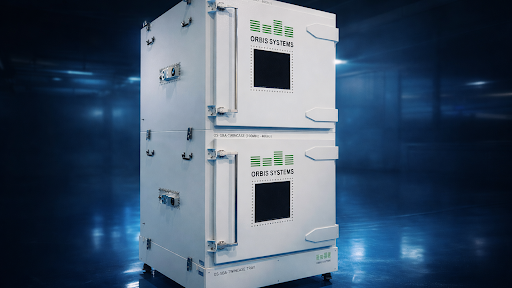
A twin shield box is an RF enclosure that contains two separate test chambers inside a single structure. Each chamber is individually RF-shielded. This prevents RF signals from entering or leaving the chamber during testing.

Each chamber works independently. It has its own shielding, absorber material, and connection points. Because of this design, two devices under test can be measured at the same time without interference.

Twin shield boxes are used for:

  • RF functional testing
  • Over-the-air measurements
  • Wireless performance validation

Since both chambers are isolated, test results remain stable and repeatable.

How a Dual RF Shield Box Enables High-Throughput RF Testing

The main purpose of a dual RF shield box is to reduce total test time. Instead of running the same test twice in sequence, both tests are run at the same time. This process is known as parallel RF testing.

When test steps are identical, running them in parallel cuts testing time almost in half. Therefore, high-throughput RF testing becomes possible without adding more test stations.

This is achieved through:

  • Separate RF shielding for each chamber
  • Independent signal paths
  • Consistent internal test conditions

Because of this separation, one test does not affect the other. Measurement quality stays the same, even when both chambers are used together.

Why Parallel RF Testing Is Used in Modern Test Setups

Parallel RF testing is widely used because it improves efficiency in a simple way. Instead of expanding lab space or buying more enclosures, teams can test more devices within the same setup.

As a result, several benefits are seen:

  • Faster completion of test batches
  • Better use of test equipment
  • Reduced waiting time between tests

In addition, operators do not need to change test procedures. The same test logic is applied to both chambers.

Because accuracy is not compromised, twin shield boxes are suitable for both development testing and production testing.

Important Features of a Twin Shield Box

Choosing the right twin shield box requires attention to a few technical details. These details affect test quality and long-term use.

RF Shielding and Isolation

Good shielding is essential. The enclosure must block outside RF signals and contain signals generated by the device under test. High isolation ensures that the two chambers do not interfere with each other.

Absorber Material Inside the Chamber

Absorber material reduces reflections inside the chamber. This creates a stable RF environment. Because of this, over-the-air measurements become more consistent.

Feed-Through Connections

Feed-throughs allow cables to pass into the chamber without breaking the shielding. These usually include:

  • RF connectors
  • Power lines
  • Data and control interfaces

Proper feed-through design helps maintain signal integrity.

Mechanical Stability

Devices must be placed in the same position for every test. Stable fixtures help achieve this. As a result, measurement repeatability improves.

Using Twin Shield Boxes in Lab and Production Testing

Twin shield boxes can be used in different stages of the product lifecycle. However, setup practices differ slightly depending on the environment.

Use in Development Labs

In development, engineers focus on performance and reliability. Twin shield boxes allow two prototypes to be tested under the same conditions. This makes comparison easier. It also saves time during repeated test cycles.

Use in Production Environments

In production environments, twin shield boxes are often integrated with test systems as part of RF shield box automation, helping reduce manual steps and maintain consistent test flow.

When combined with automated systems, test flow becomes smoother.

To maintain reliable results:

  • Cable paths should be clearly defined
  • Calibration should be checked at regular intervals
  • Chamber conditions should be verified before testing

Following these steps helps ensure stable operation over long test runs.

Achieving Faster RF Testing with Consistent Results

As testing demands increase, teams need solutions that improve speed without adding complexity. A dual RF shield box allows two devices to be tested at the same time while keeping both tests isolated. Through parallel RF testing, teams can reach higher throughput without sacrificing accuracy.

When used correctly, twin shield boxes support reliable testing in both lab and production environments. They help teams meet testing goals while maintaining clear and consistent results.

Frequently Asked Questions

1. What devices are typically tested in a twin shield box

Twin shield boxes are used to test wireless modules, IoT devices, communication units, and other RF-enabled products. The device must fit within the chamber and operate within the supported frequency range.

2. Does parallel RF testing affect test accuracy

No. When the chambers are properly isolated, each test runs independently. Because of this, measurement accuracy remains unchanged.

3. Can different devices be tested at the same time

Yes. Different devices can be tested in parallel if their test requirements are compatible with the chamber configuration. However, test planning is important to avoid signal conflicts.

4. Why is absorber material necessary inside the chamber

Absorber material reduces internal reflections. This helps create a controlled RF environment and improves consistency in over-the-air measurements.

5. How does a twin shield box improve repeatability

Repeatability improves because test conditions stay consistent. Shielding, device position, and internal layout remain the same across test runs.

Categories
Blogs Resources

Why IoT Devices Require RF Shield Boxes During Validation


Table of Contents

  1. Key Takeaways
  2. Why Controlled RF Testing Is Necessary
  3. What Is an RF Shield Box?
  4. How RF Shield Boxes Support Wireless Device Validation
  5. Applications of RF Shield Boxes in Testing
  6. How to Choose the Right RF Shield Box
  7. Best Practices for RF Isolation Testing
  8. The Importance of RF Shield Boxes in IoT Validation
  9. Frequently Asked Questions

IoT devices are now part of daily life. They are used in homes, offices, hospitals, factories, and smart cities. These devices depend on wireless signals to communicate with networks and with each other. Because of this, their performance must be tested very carefully before they are released into the market.

However, wireless signals do not travel in empty space. They move through environments that are already full of radio frequency signals and electromagnetic emissions. Wi-Fi routers, mobile phones, Bluetooth devices, and even industrial machines continuously produce radio signals. When testing is done in such open environments, these signals mix with the signals of the device being tested. As a result, the measurements become unreliable.

This is where RF shield boxes become important. An RF shield box creates a closed space that blocks outside radio signals. It allows engineers to test a device in a clean and controlled environment. In IoT device testing, this control is essential because it helps ensure that results are accurate and repeatable.

Moreover, RF shield boxes are a key part of wireless device validation. They help confirm that a device works correctly under stable conditions before it is tested in real-world environments. They are also vital for RF isolation testing, which checks how well a device performs without interference.

Companies such as Orbis Systems design RF shielding solutions that support precise RF and OTA measurements. Their focus is on controlled testing environments that help engineers obtain reliable and repeatable results.

In this blog, we will explain why RF shield boxes are needed, how they work, and how they improve the overall quality of IoT device validation.

Why IoT Devices Require RF Shield Boxes During Validation

Key Takeaways

  • RF shield boxes protect test setups from outside radio interference.
  • They improve the accuracy of IoT device testing.
  • They support stable and repeatable wireless device validation.
  • They are essential for effective RF isolation testing.
  • They help engineers trust their measurement results and reduce testing errors.

Why Controlled RF Testing Is Necessary

Wireless communication is sensitive by nature. Even a small change in the surrounding environment can affect signal strength and quality. Therefore, testing in an uncontrolled area often leads to unstable results.

For example, a nearby Wi-Fi router can increase background noise. A mobile phone tower can introduce strong signals. Even office equipment can create interference. Because of this, test readings may change from one moment to another.

As a result, engineers may find it difficult to understand whether a problem comes from the device itself or from the environment. This makes product development slower and less reliable.

In IoT device testing, stable conditions are needed to measure:

  • Signal strength
  • Sensitivity
  • Data speed
  • Antenna performance
  • Communication stability

Without control, these measurements cannot be trusted. Therefore, controlled RF environments become a basic requirement.

An RF shield box provides this control. It blocks external signals and creates a stable space for testing. Because of this, test results become consistent and meaningful.

Furthermore, when engineers perform RF isolation testing, they need to be certain that no outside signals affect the device. Only then can they properly evaluate how the device behaves on its own.

What Is an RF Shield Box?

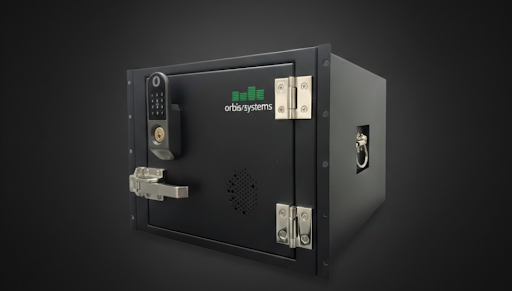
An RF shield box is a closed enclosure designed to block radio frequency signals. It is built using conductive materials that stop electromagnetic waves from passing through.

The main purpose of an RF shield box is simple:

  • Prevent outside signals from entering
  • Prevent signals from the device from escaping

This two-way protection creates a clean RF environment.

RF shield boxes are tested for their shielding effectiveness. This is measured in decibels (dB). A higher value means better isolation.

They also include:

  • RF connectors
  • Power and data feedthroughs
  • Special sealing systems
  • Absorbing materials inside

These features allow devices to be tested while still being connected to test instruments.

RF shield boxes come in many sizes. Some are small and used for single devices. Others are larger and support automated test setups.

Orbis Systems provides RF shielded enclosures that are used for RF and OTA testing applications. Their solutions are designed to support stable, repeatable, and controlled measurement environments.

How RF Shield Boxes Support Wireless Device Validation

Wireless device validation is the process of confirming that a device meets performance and quality standards. This includes testing its radio performance, connection stability, and data transfer ability.

Without isolation, validation becomes unreliable. Outside signals can hide problems or create false issues.

RF shield boxes help by:

  • Removing external RF noise
  • Creating a repeatable test environment
  • Supporting fair comparison between devices
  • Improving confidence in test results 

When a device is tested inside an RF shield box, engineers know that any change in measurement is caused by the device itself. This makes troubleshooting easier and faster.

In addition, RF shield boxes allow tests to be repeated under the same conditions. This is essential when comparing different versions of a product or checking consistency across production batches.

As a result, wireless device validation becomes more structured and reliable.

Applications of RF Shield Boxes in Testing

RF shield boxes are used in many stages of testing. Some of the most common applications include:

Antenna Testing

Antennas are very sensitive to nearby signals. Even small disturbances can change their measured performance. A shielded environment ensures that functional antenna performance measurements remain accurate and stable

Throughput and Sensitivity Testing

Data speed and signal sensitivity must be tested in a quiet RF environment. Shield boxes make this possible by removing unwanted noise.

OTA Performance Testing

OTA testing requires stable radio conditions. RF shield boxes provide a consistent space for evaluating real wireless behavior.

Pre-Compliance Testing

Before devices are sent to official test laboratories, they are often checked internally. Shield boxes help detect RF issues early. All these applications rely on proper RF isolation testing to ensure clean and accurate results.

How to Choose the Right RF Shield Box

Choosing the correct RF shield box depends on the testing needs.

Important points to consider include:

  • Size of the Device- The box must be large enough for the device and its test setup.
  • Shielding Performance- Higher shielding ensures less interference and cleaner measurements.
  • Frequency Coverage- The box should work across all frequency bands used by the device.
  • Connectivity- It must allow cables to pass without breaking the shielding.
  • Repeatability- The box should provide consistent results over time.

Orbis Systems offers RF shielded solutions designed to support controlled RF testing and OTA measurement environments. These solutions are built to maintain stable testing conditions.

Best Practices for RF Isolation Testing

To get the best results from RF shield boxes, engineers should follow certain practices:

  • Calibrate all instruments regularly
  • Keep the test setup unchanged between measurements
  • Record test parameters and conditions
  • Check the condition of seals and connectors
  • Avoid unnecessary movement of cables

These steps improve accuracy and maintain the quality of RF isolation testing.

The Importance of RF Shield Boxes in IoT Validation

As IoT technology grows, reliable testing becomes even more important. Devices are expected to work in complex and busy wireless environments. Therefore, their performance must be tested carefully before release.

RF shield boxes provide the foundation for this process. They create controlled conditions that remove uncertainty from measurements.


  • In IoT device testing, they ensure accurate results.
  • In wireless device validation, they ensure repeatability.
  • In RF isolation testing, they ensure clean and stable signals.

By using RF shield boxes, engineers gain confidence in their data and reduce the risk of product failure.

Orbis Systems supports this approach by providing RF shielded solutions that align with professional RF testing requirements.

Frequently Asked Questions

1. Why are RF shield boxes important for IoT device testing?

RF shield boxes block outside radio signals that can disturb measurements. Without them, test results may change every time a test is performed. With shielding, engineers can trust that results reflect only the device’s real performance.

2. How do RF shield boxes improve wireless device validation?

They provide a stable test environment. This makes it possible to repeat tests under the same conditions. As a result, validation data becomes reliable and useful for design decisions.

3. What is the difference between RF isolation testing and normal RF testing?

Normal RF testing may be affected by the surrounding RF environment. RF isolation testing performs the same measurements inside a shielded space to eliminate external interference, ensuring clean, controlled, and repeatable results.

4. Can RF shield boxes be used in automated testing systems?

Yes. Many RF shield boxes are designed to work with automated equipment. They include ports and connectors that allow smooth integration into test systems.

5. Do RF shield boxes replace official certification testing?

No. They are used before official testing. They help identify issues early so that devices are more likely to pass formal certification tests.