Table of Contents
- Introduction: A New Stage in Wireless Testing
- Why Wireless Validation Is Becoming More Demanding
- How the RF Testing Chamber Is Changing
- Why OTA Chamber Testing Has Become Essential
- Better RF Measurement Systems for Future Technologies
- Ready for the Next Generation of Wireless Testing
- Frequently Asked Questions
Key Takeaways
- An RF testing chamber is becoming more important as wireless devices become more advanced.
- 5G Advanced testing and 6G testing require accurate and repeatable measurements.
- OTA chamber testing helps engineers evaluate the performance of complete wireless devices.
- FR3 testing supports research into future wireless frequency ranges.
- Reliable RF measurement systems improve wireless device validation and support accurate antenna testing.
- Orbis Systems continues to focus on controlled RF environments that support dependable wireless testing.
Introduction: A New Stage in Wireless Testing
Wireless technology is changing faster than ever. Devices are expected to do more, connect faster, and work across different frequency bands. Because of this, testing has also become more demanding. An RF testing chamber is no longer used only to check basic wireless performance.
Today, it supports 5G Advanced testing, early 6G testing, OTA chamber testing, FR3 testing, antenna testing, and complete wireless device validation. At the same time, reliable RF measurement systems help engineers produce accurate and repeatable results. As wireless technology moves forward, testing environments must also improve to keep pace.
Why Wireless Validation Is Becoming More Demanding
Wireless devices have become much more advanced over the last few years. A single product may now include several antennas, support different wireless standards, and operate across multiple frequency bands. Therefore, engineers need more detailed testing before a product reaches the market.
At the same time, 5G Advanced testing brings new challenges. Features such as beamforming and advanced antenna systems require stable measurement conditions. Looking ahead, 6G testing is expected to introduce even more demanding requirements as new frequency ranges and wireless technologies continue to develop.
Because of these changes, testing is no longer only about confirming that a device works. Engineers also need to understand how the complete device performs under controlled conditions. This is why a modern RF testing chamber has become an important part of product development.
How the RF Testing Chamber Is Changing
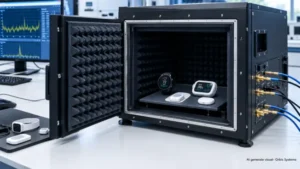
The purpose of an RF testing chamber remains the same. It creates a controlled environment by reducing outside interference and limiting unwanted reflections. However, the way these chambers are used has changed as wireless technology has become more complex.
For example, modern devices often include multiple antennas that work together. These antenna systems need accurate measurements throughout development. Even a small change in the testing environment can affect the results.
Therefore, engineers need stable and repeatable conditions every time they test a device. This is also why RF chamber testing has become an important part of validating modern wireless products. Another reason for this change is the growing interest in FR3 testing. As wireless research expands into new frequency ranges, testing environments must support accurate measurements across a wider spectrum. This helps engineers compare designs with confidence and improve product performance before release.
In addition, development cycles are becoming shorter. Companies need testing environments that fit easily into faster validation processes while still delivering dependable measurement results.
Why OTA Chamber Testing Has Become Essential
Many wireless products now use built-in antennas. Because of this, testing through direct cable connections is often not enough. Instead, engineers rely on OTA chamber testing to understand how the complete device performs during wireless communication.
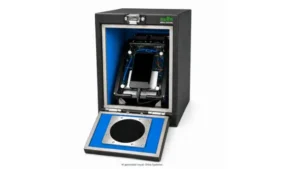
This method allows engineers to measure the performance of the entire product inside a controlled RF environment using an OTA test chamber. As a result, engineers can better understand how the device performs in real wireless conditions.
Today, OTA chamber testing is widely used for:
- Smartphones and mobile devices
- IoT products
- Connected vehicles
- Industrial wireless equipment
- Communication modules
In addition, OTA chamber testing supports accurate antenna testing by helping engineers measure antenna behaviour, beamforming performance, and overall wireless operation. Since the testing environment remains controlled, the results are easier to repeat and compare.
Better RF Measurement Systems for Future Technologies
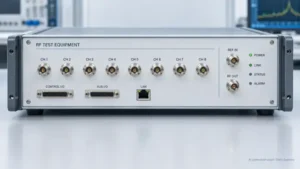
As wireless technologies continue to develop, testing equipment must also improve. Reliable RF measurement systems help engineers collect consistent data throughout the validation process. They also reduce differences between repeated tests, making results easier to compare.
At the same time, wireless device validation now covers more than basic RF performance. Engineers need to evaluate antenna efficiency, signal quality, and overall device behaviour across different operating conditions.
Depending on the application, different testing environments may be required. For example, a radar anechoic chamber is commonly used for radar system measurements where accurate signal isolation and low reflection levels are essential.
Modern testing environments are now designed to support:
- Accurate RF testing chamber measurements
- Reliable wireless device validation
- Efficient 5G Advanced testing
- Future-focused 6G testing
- Consistent FR3 testing
- High-quality antenna testing
As wireless technology continues to move forward, controlled RF environments will remain an important part of reliable testing. Orbis Systems continues to share technical knowledge about testing environments that help engineers achieve accurate and repeatable wireless measurements. Their focus reflects the industry’s growing need for dependable validation methods. As new wireless standards emerge, Orbis Systems also highlights the value of controlled measurement environments for future testing requirements.
Ready for the Next Generation of Wireless Testing
Wireless testing will continue to change as communication technologies move forward. Better antennas, new frequency bands, and higher performance expectations all require more reliable validation methods. Therefore, a modern RF testing chamber has become an essential part of 5G Advanced testing, 6G testing, OTA chamber testing, FR3 testing, antenna testing, and complete wireless device validation.
At the same time, dependable RF measurement systems help engineers produce accurate and repeatable results throughout every stage of development. As testing requirements continue to grow, Orbis Systems remains focused on the importance of controlled RF environments that support consistent and reliable wireless measurements.
Frequently Asked Questions
1. Why are traditional RF testing chambers not enough for 5G Advanced and 6G testing?
Traditional testing chambers were built for earlier wireless technologies with simpler antenna designs and lower frequency ranges. However, 5G Advanced testing and future 6G testing involve beamforming, multiple antennas, and new spectrum bands. Because of this, testing environments must provide higher measurement accuracy and more stable conditions to produce reliable results.
2. Why is OTA chamber testing becoming more important for wireless devices?
Many modern devices have built-in antennas, so engineers cannot fully test them using cable connections alone. OTA chamber testing measures how the complete device performs over the air. This gives a clearer picture of antenna performance, wireless coverage, and overall device behaviour under controlled conditions.
3. How does FR3 testing support the development of future wireless technologies?
FR3 testing focuses on the emerging frequency range between sub-6 GHz and millimeter wave bands. It helps engineers study how devices and antennas perform at these frequencies. This work supports the development of future wireless technologies and prepares testing laboratories for upcoming communication standards.
4. What makes accurate RF measurement systems important during wireless device validation?
Reliable RF measurement systems help engineers collect the same results every time a device is tested. This makes it easier to compare different designs, identify performance issues, and confirm that a product meets its testing goals before moving to the next stage of development.
5. What should engineers look for in an RF testing chamber for future wireless validation?
An RF testing chamber should provide strong RF isolation, stable measurement conditions, and support for technologies such as OTA chamber testing, antenna testing, 5G Advanced testing, and FR3 testing. It should also deliver repeatable results so engineers can validate wireless device performance with confidence as testing requirements continue to grow.