Table of Contents
- Why Modern RF Testing Requires Broader Frequency Coverage
- What Multi-Band RF Shielding Means
- Why Single-Band Shielding Can Become a Limitation
- Shielding and Absorption: Two Different Functions
- Choosing Between an RF Shielded Box and a Full Chamber
- What to Consider When Specifying a Multi-Band Test Environment
- Multi-Band Capability Is Becoming a Core Design Consideration
- Frequently Asked Questions
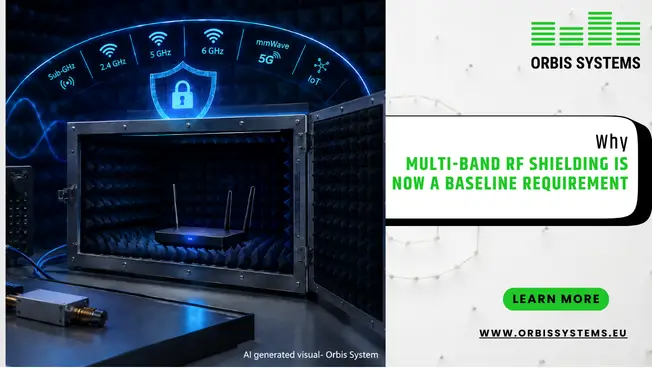
Wireless devices today operate across several technologies and frequency ranges at once, and RF testing environments need to keep pace. A 5G product may need validation across both Sub-6 GHz and mmWave requirements within the same program. An RF shielded chamber is not just a way to keep outside signals out. It is a controlled test environment built to support accurate, repeatable RF measurements across the frequency ranges that matter for the device being tested.
This is part of why multi-band RF shielding is becoming a baseline consideration for many labs, meeting today’s requirements while leaving room for change.
Key Takeaways
- Multi-band RF shielding helps create controlled test conditions across the frequency ranges modern wireless devices need.
- Sub-6 GHz and mmWave testing can call for different chamber configurations, absorber layouts, and RF interfaces, so a chamber built for one may not suit the other.
- Shielding controls external interference, while absorber materials reduce reflections inside the chamber.
- An RF shielded box suits compact device-level testing, while a larger chamber suits broader OTA needs.
- Frequency coverage, shielding performance, chamber configuration, DUT size, interfaces, and future testing plans are all worth weighing when selecting a chamber.
Why Modern RF Testing Requires Broader Frequency Coverage
RF testing has changed as wireless technology has expanded. A test lab may need to validate devices across several standards and frequency ranges rather than a single RF band. 5G illustrates this well, spanning Sub-6 GHz, or FR1, along with mmWave, or FR2, with many chamber solutions now supporting both, including OTA measurements for wireless devices and equipment.
This wider requirement places more weight on the test environment: external signals controlled, internal reflections kept in check, and stable conditions maintained throughout measurement. Frequency coverage is generally something to plan for at the design stage rather than retrofit later.
What Multi-Band RF Shielding Means
Multi-band RF shielding means maintaining effective RF isolation across the frequency ranges a program actually requires, not covering every wireless frequency in one chamber. The right configuration depends on the DUT, measurement method, required frequency range, chamber dimensions, absorber layout, and interfaces.
An RF isolation chamber creates a controlled environment by limiting the effect of external electromagnetic activity. Paired with the right absorber treatment, it can reduce unwanted reflections inside the test volume, which matters most for OTA testing, where the surrounding RF environment influences how repeatable measurements are.
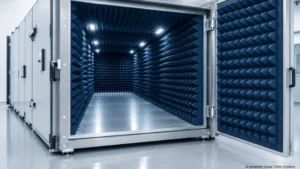
RF-shielded test enclosures can typically be configured based on the DUT, frequency range, and test requirements. Anechoic chamber solutions use RF absorbers to suppress reflections and create near-free-space conditions for antenna and wireless-system measurements.
Why Single-Band Shielding Can Become a Limitation
A chamber built around a narrow frequency requirement can work well for a specific application, but it can begin to limit a program as it grows. A lab may eventually need additional wireless standards, a move from R&D into production validation, different antenna setups, OTA measurements alongside conducted RF testing, or support for higher-frequency technologies. When these needs arise, the original configuration may no longer offer enough flexibility.
This does not mean every environment needs maximum coverage from day one. The chamber should be specified with both current and foreseeable future needs in mind. A modular approach tends to help programs expected to grow. Modular OTA chamber designs allow configurations to be adjusted or expanded without a full rebuild, which is one reason modularity has become a common consideration during specification.
Shielding and Absorption: Two Different Functions
A common misunderstanding is treating shielding and absorption as the same thing, when they serve different purposes. Shielding isolates the test environment from external electromagnetic interference and limits RF leakage. Absorber materials reduce reflections inside the chamber itself.
For controlled OTA testing, both functions tend to matter. External interference affects how stable a measurement is, while internal reflections shape the RF environment around the DUT. A shielded anechoic chamber brings these principles together. Purpose-built anechoic chambers pair RF shielding with absorber-lined interiors to support accurate, repeatable measurements.
The absorber configuration needed can also shift with frequency range, another reason multi-band chamber design is worth treating as an engineering decision rather than a straightforward specification exercise.
Choosing Between an RF Shielded Box and a Full Chamber
Not every RF testing need calls for a large chamber. The physical form should match the DUT, measurement requirements, available space, and intended workflow.
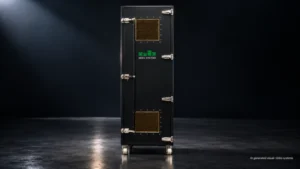
An RF shielded box offers a compact, controlled environment for wireless device testing. Box-format solutions generally support testing for wireless modules, antennas, and IoT devices, with configurable interfaces for RF, AC, DC, USB, Ethernet, and optical connections.
A larger RF shielded test enclosure, room, or OTA chamber tends to make more sense for greater DUT dimensions, antenna positioning, larger measurement distances, or more extensive OTA setups. Some chamber configurations support both Sub-6 GHz and mmWave testing. RF tunnel shielded chambers, for example, are built for OTA testing across FR1 and FR2 ranges and can be configured with absorbers, connectors, and feed systems based on requirements. The right choice provides the RF isolation, frequency coverage, and configuration the program actually needs, rather than simply the largest enclosure available.
What to Consider When Specifying a Multi-Band Test Environment
Before choosing an RF shielded enclosure, it helps to define what the program actually requires. Frequency range is a good starting point, identifying which bands need support now and which may become relevant later. Shielding performance matters as well, since the RF isolation needed depends on the measurements being taken. Absorber configuration is another factor, since reflections need to be managed differently across frequency ranges. DUT requirements, including device size, antenna configuration, positioning, and measurement distance, also shape the right design.
Interfaces need attention, covering RF, power, data, and other connections. Automation is worth considering if the chamber must work alongside positioning systems, and scalability matters since a program may later expand to additional devices, frequency ranges, or production requirements. These factors are connected: a change in frequency range can affect absorber needs, interfaces, positioning, and overall configuration at once.
This engineering-led approach is reflected in companies such as Orbis Systems, where RF shielding and OTA chamber solutions are typically configured around defined frequency ranges and testing requirements rather than delivered as fixed off-the-shelf units.
Multi-Band Capability Is Becoming a Core Design Consideration
Modern wireless testing takes more than placing a device inside a shielded enclosure. The test environment needs to provide controlled RF conditions that match the frequency ranges, measurement methods, DUT characteristics, and performance requirements of the application.
As wireless products span more standards and frequency ranges, multi-band capability is becoming a more central consideration for RF test environments generally. An RF shielded chamber is worth evaluating not just on its ability to block external signals, but also on frequency coverage, absorber configuration, physical design, interfaces, and support for repeatable measurements.
For labs working with Sub-6 GHz, mmWave, 5G, and other evolving wireless applications, building the RF test environment around current requirements while leaving room for future needs offers a more practical, scalable path forward. This is aligned with the structured chamber design focus seen in companies such as Orbis Systems, where configurable RF shielding and OTA chamber solutions are developed around defined frequency ranges and testing requirements.
Frequently Asked Questions
1. What is a multi-band RF shielded chamber?
A multi-band RF shielded chamber is a controlled test environment built to provide effective RF isolation across defined frequency ranges. It limits external RF interference and, with absorber treatment, reduces reflections inside the test volume. The coverage needed depends on the DUT and application.
2. Why does multi-band RF shielding matter for 5G testing?
5G testing can involve both Sub-6 GHz, or FR1, and mmWave, or FR2, ranges. A chamber built for these ranges can provide a controlled environment for antenna characterization, beamforming, MIMO, and throughput testing. Chambers that support both Sub-6 GHz and mmWave configurations tend to offer greater flexibility across evolving 5G validation needs.
3. What is the difference between an RF shielded box and an RF isolation chamber?
An RF shielded box is a compact enclosure for testing individual devices or smaller setups. An RF isolation chamber usually refers to a larger environment built around broader RF or OTA requirements. The right fit depends on the DUT, frequency range, and available space.
4. Does RF shielding also eliminate internal reflections?
Not on its own. Shielding keeps external interference out and limits RF leakage, while absorbers reduce reflections inside the chamber. In an anechoic configuration, absorber-lined surfaces help create near-free-space conditions for more controlled measurements.
5. How should an RF shielded enclosure be selected with future needs in mind?
Start with the frequency ranges, DUT characteristics, and interfaces required today, then consider whether the program is likely to grow. A configurable or modular chamber offers more flexibility without specifying capabilities that are not currently needed.