Table of Contents
- Why RVR Test
- Why Over-the-Air Measurements Matter
- Creating the Right Environment for Accurate Testing
- Looking Beyond the Radio During RF Chamber Testing
- Why Radiated Testing Helps Product Development
- Keeping RF Performance Testing Consistent
- Key Takeaways
- Reliable Wireless Validation Starts with Good Testing
- Frequently Asked Questions
Wireless products are expected to perform well wherever they are used. Whether the device is part of a factory, a vehicle, or a communication network, users expect a stable wireless connection. That is why engineers spend a lot of time testing products before they reach the market.
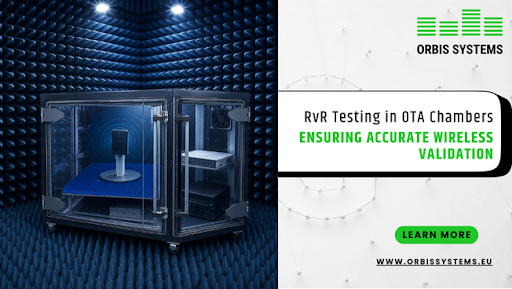
Testing with RF cables is useful, but it does not tell the whole story. Once a device starts communicating through its antenna, the results can change. This is why RvR testing has become an important part of product validation. When it is performed through OTA chamber testing, engineers can check wireless performance in a controlled environment. This makes wireless validation more reliable and helps development teams make better design decisions.
RVR Testing:
In Wi-Fi testing, the Rate vs Range (RvR) test measures your network’s data throughput as the distance or signal attenuation between a router and a device increases. It evaluates how well your Wi-Fi device handles signal loss and rate adaptation (switching to slower, more stable speeds when the signal weakens).
Key Takeaways
- RvR testing measures wireless communication through antennas instead of RF cables.
- OTA chamber testing creates a stable environment for accurate and repeatable measurements.
- RF chamber testing helps engineers evaluate the complete wireless system.
- Radiated testing provides a better understanding of real wireless performance.
- RF performance testing helps teams identify issues before products move into production.
Why RVR Test:
Real-World Performance Validation: Devices perform well when they are right next to the router. RvR testing ensures reliable speeds even as users move away, pass through walls, or experience poor signal conditions. Ensures that devices like IoT sensors or smartphones maintain stable connections from strong (near) to weak (edge-of-coverage) signal condition
Performance Baseline: It establishes the exact throughput degradation curve across signal strengths (measured in dBm) rather than just testing speeds at close range
Testing Rate Adaptation: It tests the router’s or client’s ability to seamlessly downshift transmission rates (MCS encoding) without dropping the connection when the signal degrades
Identifying Bottlenecks: It reveals if a device disconnects prematurely, suffers from poor rate adaptation, or if a slow legacy device chokes the network
Identifying Firmware/Hardware Bugs: Updates or hardware changes can sometimes cause “performance cliffs”, where speeds drop drastically at a certain distance. RvR testing catches these regressions before they reach real users
Why Over-the-Air Measurements Matter
Every wireless device sends and receives signals through its antenna. Because of this, the antenna becomes part of the complete communication path. If engineers only test the radio through cables, they may miss problems that appear later when the antenna is used.
This is where RvR testing adds value. It measures communication between devices over the air instead of through direct RF connections. As a result, engineers can see how the complete wireless system performs rather than checking only one part of it.
For example, a small design change can affect antenna performance. A different enclosure material, a new battery position, or another internal component may influence the signal. These changes are difficult to understand through cable-based measurements alone. However, they become much easier to identify during RvR testing.
For this reason, many engineering teams include this type of testing before a product moves to production.
Creating the Right Environment for Accurate Testing
Accurate measurements depend on stable conditions. If unwanted RF signals enter the test area, the results can change from one measurement to the next. That makes it difficult to compare different test runs.
This is why engineers use OTA chamber testing. The chamber creates a controlled RF environment where outside interference is reduced. Since the surroundings remain stable, measurements become easier to repeat.
A controlled environment also supports better wireless validation. Engineers can compare different hardware versions, software updates, or antenna designs without worrying that outside signals have affected the results.
Consistency is just as important as accuracy. When every test follows the same conditions, development teams can trust the data and make informed decisions.
Looking Beyond the Radio During RF Chamber Testing
A wireless product is made up of many parts that work together. The radio, the antenna, the enclosure, and even the position of internal components can affect wireless communication. Therefore, engineers need a testing method that looks at the complete device.
This is one reason why RF chamber testing is widely used during product development. It allows engineers to measure the performance of the full wireless system instead of testing only the radio hardware.
Several factors help improve measurement quality.
- Good RF shielding limits outside interference.
- RF absorbing materials reduce unwanted reflections.
- Accurate positioning keeps every measurement consistent.
- Stable equipment improves repeatability.
- Automated testing reduces differences between test runs.
When these elements work together, engineers can compare results with greater confidence. This is especially important for companies performing Wireless RvR testing, where repeatable measurements are needed throughout different stages of development.
Why Radiated Testing Helps Product Development
Engineers make many design changes before a product is ready for production. Some changes improve wireless performance, while others may reduce it without being obvious. Therefore, every change should be checked before the design is finalized.
This is where radiated testing becomes useful. It shows how the complete device performs when it communicates through its antenna. Since the whole wireless path is included, engineers can understand how different design choices affect communication.
For example, moving an antenna by a small distance may change the signal pattern. Likewise, adding a new component inside the enclosure can influence wireless performance. These effects are easier to identify during RF performance testing because the measurements represent the complete device instead of only the radio section.
Today, this type of testing supports the development of many wireless products. It is widely used for telecommunications equipment, IoT devices, consumer electronics, automotive systems, industrial wireless products, and research projects. Although every product is different, the goal remains the same. Engineers need reliable data before the product reaches production.
Keeping RF Performance Testing Consistent
Good equipment is only one part of the testing process. The way a test is carried out also affects the results. Even small changes in the setup can lead to different measurements. Therefore, a consistent process is essential.
The following practices help improve RF performance testing.
- Keep the chamber calibrated and check it regularly.
- Place the device in the same position during every test.
- Follow one testing procedure for every measurement.
- Record the test conditions for future comparison.
- Use Functional test fixtures where they support the overall validation process.
Many engineering teams use the same process from the early design stage until final product validation. This makes it easier to compare results over time and understand whether changes have improved wireless performance.
Orbis Systems develops OTA chamber solutions that support controlled RF testing environments. The company focuses on helping engineering teams carry out accurate and repeatable wireless measurements. By creating stable testing conditions, Orbis Systems supports reliable wireless validation throughout product development.
Reliable Wireless Validation Starts with Good Testing
Wireless technologies continue to evolve, and product designs are becoming more complex. As a result, testing methods must also keep pace. RvR testing gives engineers a better view of how a device performs during real wireless communication. At the same time, OTA chamber testing provides the controlled environment needed to produce reliable and repeatable results.
When testing is carried out in a consistent way, development teams can compare measurements with confidence and make informed design decisions. Orbis Systems supports this approach by providing OTA chamber solutions that help create dependable environments for wireless validation and repeatable RF measurements.
Frequently Asked Questions
1. When should RvR testing be performed during product development?
RvR testing is most effective after the main hardware design is complete and before production begins. At this stage, engineers can check how the complete wireless system performs and identify any antenna or communication issues while there is still time to improve the design. Early testing also reduces the chance of expensive changes later in the development cycle.
2. Why are repeatable measurements important in OTA chamber testing?
Repeatable measurements help engineers compare one test with another under the same conditions. If the environment changes between tests, it becomes difficult to know whether a difference is caused by the product or by the test setup. A controlled environment created through OTA chamber testing helps produce reliable results throughout the validation process.
3. Can RF chamber testing help identify antenna design issues?
Yes. RF chamber testing measures the performance of the complete wireless system, including the antenna. It can help engineers identify issues related to antenna placement, enclosure design, or device orientation before the product reaches production. This makes it easier to improve the design while development is still in progress.
4. Why is radiated testing preferred for modern wireless devices?
Many modern devices use built-in antennas that cannot be fully evaluated through cable-based testing alone. Radiated testing measures wireless communication over the air, giving engineers a clearer picture of how the device is likely to perform in real operating conditions. This supports more accurate wireless validation.
5. How can automated testing improve RF performance testing?
Automated testing helps keep every measurement consistent by following the same process each time. It reduces manual errors, saves testing time, and makes it easier to compare results across different stages of product development. As a result, engineering teams can perform RF performance testing more efficiently and with greater confidence.