Table of Contents
- Understand Your Testing Requirements
- Select the Right test and measurement equipment
- Why Reliable Test System Performance Matters
- The Value of Automation and System Integration
- Choosing Industrial Battery Testing Equipment
- Consider Future Scalability
- Invest in a Testing Environment That Supports Long-Term Performance
- Frequently Asked Questions
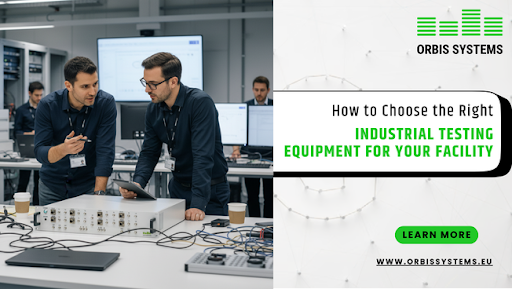
Choosing the right industrial testing equipment is harder than it looks. Most facilities assume it comes down to specs and price, but that usually leads to buying equipment that works fine on paper and causes headaches in practice. The testing equipment in your facility affects measurement accuracy, product quality, and day-to-day operational flow in ways that are easy to underestimate until something goes wrong.
These days, a growing number of facilities are moving away from standalone instruments and toward Industrial Testing Solutions that connect instruments, automation, and software into one working system. This guide breaks down what to actually consider when making that choice, addresses what essential equipment is for battery testing in industrial settings, and covers what reliable test system performance really requires.
Key Takeaways
- Choose industrial testing equipment based on your facility’s real testing needs, not just specification comparisons.
- Select test and Measurement Equipment that delivers accurate and consistent results across all testing stages.
- Treat reliable test system performance as a core operational requirement, not a secondary consideration.
- Look for Industrial Testing Solutions that genuinely support automation, scalability, and efficient workflows.
- Plan long-term infrastructure around integrated test systems, automated test systems, and system integration testing from the start.
- Verify that industrial battery testing equipment properly covers electrical, thermal, and performance validation for your specific application.
Understand Your Testing Requirements
Before looking at any equipment, stop and think about what your facility actually does. This sounds obvious, but a surprising number of purchasing decisions skip this step entirely and end up with mismatched setups.
Production volume, product type, facility conditions, and measurement precision requirements all point toward different kinds of equipment. A research lab needs flexibility above everything else. Setups change depending on the project, and rigid systems get in the way. A manufacturing floor needs the opposite. Consistency matters more than flexibility there. Processes have to run the same way every time, across every shift.
Getting clear on which of those situations describes your facility saves money and prevents a lot of frustration down the road. It also makes it much easier to align equipment decisions with what engineering and production teams actually need day to day.
Select the Right Test and Measurement Equipment
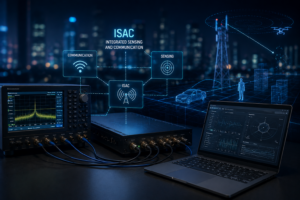
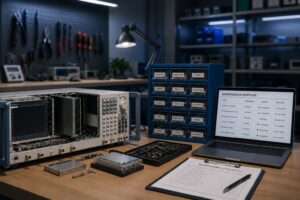
Industrial testing setups almost always involve multiple instruments, not one. The combination of test and measurement equipment that works depends on the application, and just as important as what each instrument does is how well they work together.
Equipment that typically appears in industrial testing includes:
- power supplies and electronic loads
- oscilloscopes and digital multimeters
- signal generators and spectrum analyzers
- data acquisition systems and switching systems
- environmental test chambers and custom test fixtures
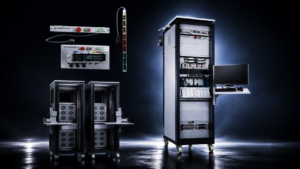
Pulling these together into integrated test systems tends to give better results than running them as separate units. Instruments that talk to each other reduce manual steps, keep data collection cleaner, and help testing stay consistent rather than varying between runs for no obvious reason.
Why Reliable Test System Performance Matters
Good instruments are necessary. They are not sufficient on their own. The full testing environment needs to produce repeatable results consistently, and that does not happen automatically just because the individual instruments are high quality.
Reliable test system performance comes from several things working together. System design, calibration schedules, controlled testing conditions, and clear procedures all play a part. When one of those breaks down, variability starts creeping into results in ways that can be genuinely difficult to diagnose.
There is also a practical cost argument here. Catching a product issue at the testing stage is far cheaper than catching it later. As production volume increases, that gap widens fast. Small inconsistencies that seem manageable at low volumes become expensive rework problems at scale. Building an environment that stays stable over time is one of the most practical things a facility can do for long-term efficiency. That stability is what separates useful Industrial Testing Solutions from those that just look good in a proposal.
The Value of Automation and System Integration
Production environments are always under pressure to go faster. That pressure is real, but speed without accuracy just moves the problem somewhere else. Automated test systems are useful precisely because they let facilities move faster without introducing the inconsistency that manual processes tend to bring in.
When a test sequence runs automatically, it runs identically every time. That removes a large source of variation. Results get logged automatically, too, which makes traceability much more manageable than relying on manual entry.
Adding system integration testing to the picture means instruments, software, and control systems stop operating as isolated pieces and start working as one environment. Maintenance becomes less complicated. Upgrades are less disruptive. When production needs change, which they always do eventually, adding to an integrated setup is usually far more practical than replacing separate systems one by one.
Choosing Industrial Battery Testing Equipment
Battery technology has moved fast across automotive, energy storage, telecom, and industrial electronics, and that pace is not slowing down. The demand for industrial battery testing equipment that can keep up with more complex products while still producing accurate results has grown considerably because of this.
The question of what essential equipment is for battery testing in industrial settings does not have a single fixed answer. It depends on battery chemistry, application, and validation requirements. That said, industrial battery testing generally needs to cover electrical performance, charge and discharge behavior, capacity, internal resistance, thermal response, and long-duration cycling performance. Covering all of that requires multiple instruments working in coordination.
Equipment that supports synchronized data collection and consistent measurement across these parameters gives manufacturers a solid validation foundation. It also keeps the setup adaptable as battery designs continue to evolve. A testing environment that can grow and adjust is genuinely more useful than one that has to be rebuilt every time a new chemistry or format comes into production.
Consider Future Scalability
Testing requirements change over time. New products arrive, volumes go up, regulations shift, and technology creates new demands that did not exist a few years ago. None of that is unusual. What matters is whether the testing environment can handle those changes without requiring a complete overhaul.
Modular designs and flexible software platforms make expansion possible without replacing everything. Scalable Industrial Testing Solutions allow facilities to add instruments, bring in more automation, or expand measurement channels within an existing framework. That keeps costs lower and keeps disruption to production minimal when changes are needed.
When evaluating Industrial Testing Equipment, it is worth asking directly whether the system can realistically support additional automation, more channels, and new validation requirements a few years out. That question is easy to overlook during initial selection and tends to matter a great deal later.
Invest in a Testing Environment That Supports Long-Term Performance
The right industrial testing equipment is not just about accurate readings today. It is about building an environment that holds up over time, scales with production, and stays reliable as requirements shift. clear testing goals, the right test and measurement equipment, and genuine planning for future needs are what make that possible, rather than just intended.
Orbis Systems has practical expertise in engineering and integrated test systems, and works with organizations to build testing environments that hold up under real industrial conditions. Investing in well-designed industrial testing solutions gives facilities a foundation that supports growth rather than creating new limitations every time demands change.
Frequently Asked Questions
What is Industrial Testing Equipment?
Industrial Testing Equipment covers the instruments and systems used to evaluate product performance, safety, functionality, and quality across research, development, validation, and manufacturing. Having the right testing equipment is a basic requirement that directly affects product quality and production consistency.
Why is reliable test system performance important?
Reliable test system performance keeps measurements accurate from one cycle to the next and stops small errors from turning into costly production problems. Without it, variability builds up and surfaces as rework, delays, or quality failures that are far more expensive to fix later.
What are essential equipment for battery testing in industrial settings?
Industrial battery testing generally requires power supplies, electronic loads, digital multimeters, data acquisition systems, battery cyclers, temperature monitoring tools, and control software. These instruments need to work together in a coordinated setup, especially as battery designs grow more complex.
How do automated test systems improve industrial testing?
Automated test systems remove manual steps from the testing process, reducing operator error and keeping results consistent across every cycle. Documentation is handled automatically through standardized reports, which keep records organized and easy to review.
How do integrated test systems benefit manufacturing facilities?
Integrated test systems bring instruments, software, automation, and communication interfaces into one environment, making testing more consistent and system management simpler. When requirements grow or change, expanding an integrated setup is far more manageable than connecting systems that were never designed to work together.