Table of Contents
- Why Older Testing Methods Are No Longer Enough
- How RF Chambers Are Changing
- Why OTA Test Chambers Matter More Now
- The Growing Role of Automation in ISAC Testing
- Preparing RF Testing for What Comes Next
- Frequently Asked Questions
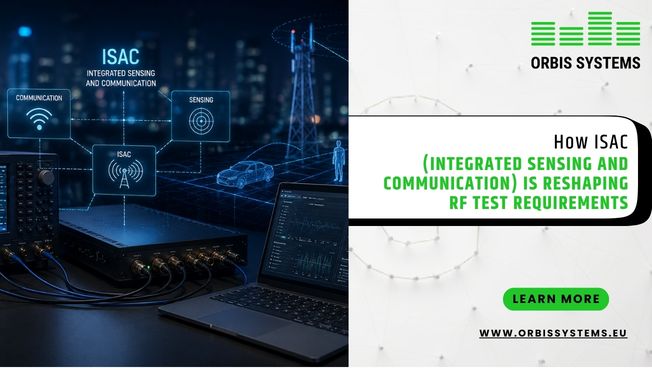
Integrated Sensing and Communication, or ISAC, is one of the technologies coming up frequently in discussions around 6G and future wireless networks. It allows a single radio system to handle communication and sensing at the same time, rather than treating them as separate functions. A device can send and receive data while also capturing information about its surroundings, such as nearby objects, distance, or movement. Automotive, industrial automation, smart city planning, and defense are all sectors examining this closely.
As ISAC moves closer to real deployment, testing needs to keep pace. RF chamber testing now needs to evaluate communication and sensing performance side by side, rather than as two separate checks. This is prompting many labs to take a fresh look at their current setups, including the chambers and equipment they already rely on.
Key Takeaways
- ISAC combines communication and sensing within a single radio system, so RF chamber testing now needs to cover both functions rather than only one.
- An RF shielded chamber remains important for reducing interference and supporting accurate, repeatable results.
- A wireless OTA chamber and OTA test chamber give engineers a way to measure radiated performance under realistic conditions
- A 5G OTA chamber supports validation of the antenna systems and beamforming techniques tied to current and upcoming wireless standards.
- An automated test system helps labs run complex test plans consistently while reducing manual effort.
- Integrated RF test solutions bring chamber hardware, automation, and measurement tools together, making it easier for labs to manage growing test requirements without repeatedly overhauling their setup.
Why Older Testing Methods Are No Longer Enough
Wireless testing has long focused on measurements such as throughput, signal strength, latency, and antenna performance. Those measurements still matter. However, ISAC introduces something that most existing test plans were not built to handle. Engineers now need to evaluate how well a device senses its surroundings while it is also communicating, and whether one function interferes with the other.
Interference or inconsistent test conditions can affect both readings, not only one. That raises the importance of maintaining a properly controlled environment. Supporting ISAC testing generally means a lab needs to measure both functions in the same session, achieve results that hold up across repeated runs, keep the electromagnetic environment under control, and handle more complex test setups involving multiple devices and frequencies. For many labs, this is less about acquiring new equipment and more about rethinking how existing equipment is used.
How RF Chambers Are Changing
RF chamber testing was traditionally focused primarily on blocking outside signals. That remains part of the role, but chambers now need to reproduce real-world conditions more closely while keeping external variables out of the picture. An RF shielded chamber is central to this, since it reduces electromagnetic interference that would otherwise affect both communication and sensing results. With that interference reduced, the measurements engineers collect are easier to trust and easier to repeat.
ISAC testing often requires more flexibility as well. Chambers may need to support different device positions, multiple antenna configurations, beamforming checks, and higher frequencies. Since sensing and communication operate on the same system, a change to one can appear in the other, so understanding that link matters. A well-controlled chamber gives engineers a clearer way to observe these effects, whether early in development or further along in product validation.
This approach is reflected in companies such as Orbis Systems, where bringing several testing capabilities into one coordinated setup helps validation work move more smoothly, particularly as test requirements continue to expand.
Why OTA Test Chambers Matter More Now
Wireless devices continue to add antennas and push into higher frequency bands, which is why over-the-air testing has become a larger part of the validation process. A wireless OTA chamber allows engineers to measure radiated performance without a cable connection, giving a more accurate picture of how a device actually behaves once in use.
For devices built around ISAC, over-the-air testing may need to capture both communication quality and sensing performance in a single pass. A capable OTA test chamber should support antenna performance measurements, beam management, communication quality checks, and radiated performance evaluation, while remaining stable across different wireless technologies.
A 5G OTA chamber offers similarly controlled conditions, suited to advanced antenna systems and beamforming work. As 5G-Advanced continues to develop and early 6G research moves forward, over-the-air testing is expected to remain part of the picture. It does not replace standard lab measurements. It adds a broader view of how the full system behaves.
The Growing Role of Automation in ISAC Testing
ISAC adds meaningful complexity to testing. Engineers often need to work through many combinations of scenarios, antenna configurations, frequencies, and device positions, all while keeping results consistent from one run to the next. Performing that manually takes time, and small differences tend to appear between test cycles.
An automated test system helps by running through predefined measurement sequences the same way every time. That level of consistency is difficult to achieve with manual testing. Automation also simplifies data collection and reduces the small variations that come from different people running the same test. Labs that adopt automation tend to see better repeatability, faster turnaround on complex test plans, more consistent procedures, easier integration with existing workflows, and less overhead when managing large volumes of test data.
More labs are also moving toward integrated RF test solutions that combine chamber hardware, positioning systems, switching equipment, automation software, and measurement tools into one coordinated system. This kind of setup is easier to manage day to day, which matters as wireless standards continue to change and labs work to keep pace without rebuilding their infrastructure each time.
Preparing RF Testing for What Comes Next
ISAC represents a real shift in how wireless technology is developing, and it comes with testing needs that go beyond what standard RF validation was originally built for. Meeting those needs takes a controlled test environment, measurement practices that remain stable over time, and more automation than many labs currently use.
This engineering-led approach is aligned with the direction taken by companies such as Orbis Systems, where integrated wireless testing environments continue to be developed alongside broader industry needs. As new wireless standards take shape, labs that invest in scalable, well-integrated testing environments now are likely to be better positioned to meet future demands.
Frequently Asked Questions
1. What is Integrated Sensing and Communication (ISAC)?
ISAC is an approach to wireless technology where one radio system manages both communication and sensing at the same time. It is expected to play a role in future 6G networks and other advanced wireless applications.
2. Why does ISAC need a different approach to RF testing?
Because ISAC requires checking communication quality and sensing accuracy together rather than separately, testing becomes more involved and generally calls for more capable test environments than older wireless validation methods.
3. Why does an RF shielded chamber matter for ISAC testing?
An RF shielded chamber reduces outside electromagnetic interference, which helps produce more accurate and repeatable results when evaluating both communication and sensing performance in the same test.
4. How do OTA chambers support ISAC validation?
A wireless OTA chamber or OTA test chamber allows engineers to check radiated wireless performance without a direct cable connection, giving a clearer picture of how advanced antenna systems perform in actual use.
5. What role does automation play in future RF testing?
An automated test system allows labs to run complex measurement sequences consistently, reducing manual effort while supporting the kind of scalable testing that evolving wireless technologies require.