
Table of Contents
- Why Consistency Is Important in Testing
- How Local Engineering Support Helps
- Building a Complete Test System
- RF Testing in Different Stages
- Long-Term System Use and Support
- Combining Global and Local Strengths
- A Clear and Reliable Testing Approach
- Frequently Asked Questions
RF and wireless testing have become increasingly precise as modern devices support multiple bands, advanced modulation schemes, and technologies such as 5G and MIMO. As device complexity grows, maintaining controlled and repeatable test conditions becomes critical to ensure accurate and reliable results.
To achieve consistent results across different locations, companies require standardized test systems with proper calibration and shielding. At the same time, fast and effective local engineering support is essential to address issues such as system integration, troubleshooting, and maintenance.
This is where global test solutions and local engineering support complement each other. Global solutions ensure consistency and standardization, while local expertise enables quick response and minimal downtime.
Orbis Systems follows this approach by combining robust RF test systems with dedicated local engineering support. This helps customers maintain reliable testing processes without delays or operational challenges.
In this blog, we explain this approach in a clear and practical way, making it easy to understand and apply.
Key Takeaways
- Global test solutions enable repeatable and correlated test results across multiple locations, improving overall product quality and validation consistency.
- Local engineering support ensures fast troubleshooting, system integration, and minimal downtime through on-site assistance.
- A complete RF test system including shielding, calibrated instruments, and controlled signal paths ensures accurate and reliable measurements.
- Regular RF equipment support, such as calibration, preventive maintenance, and software updates, helps maintain system performance and measurement accuracy.
- Long-term service support improves system stability, reliability, and equipment lifespan.
- Combining standardized global systems with responsive local support enhances operational efficiency and simplifies test management.
Why Consistency Is Important in Testing
Many companies test products in multiple locations. Because of this, test results must be consistent and comparable across all sites. If results vary significantly from one lab to another, it becomes difficult to trust the data.
This is why global test solutions are important:
These solutions help maintain standardized test conditions, including calibrated equipment, controlled environments, and uniform test procedures. As a result, companies can compare results with confidence.
These test system support services help in several ways:
- Ensure consistent testing methods across locations
- Improve repeatability and correlation of results
- Support smooth scaling from development to production
For example, if a device is tested in one lab, it should produce comparable results within defined tolerance limits when tested in another lab. This is essential for maintaining product quality.
Consistent systems also make work easier for teams. Engineers can follow the same procedures in every location, improving efficiency and reducing errors.
At the same time, systems must remain flexible. As wireless technologies such as 5G continue to evolve, test setups need to adapt to new requirements and standards.
How Local Engineering Support Helps
Global test systems are essential for standardization, but they are not sufficient on their own. Companies also need engineering support that is close to their operations.
Local engineering support teams can respond quickly when issues occur. They are familiar with the test setup and can provide hands-on support, such as checking RF connections, verifying calibration, and troubleshooting system-level problems. Because of this, issues are resolved faster.
Without local support, even minor problems, uch as cable losses, connector faults, or instrument communication errors, can cause delays and interrupt testing.
With local specialized support services, companies can:
- Resolve technical issues quickly
- Minimize system downtime
- Adjust test setups and parameters based on local requirements
In addition, RF test equipment support becomes more effective with local teams. Engineers can perform on-site checks, calibration verification, and immediate corrections.
As a result, systems continue to operate reliably, and testing processes remain uninterrupted.
Building a Complete Test System
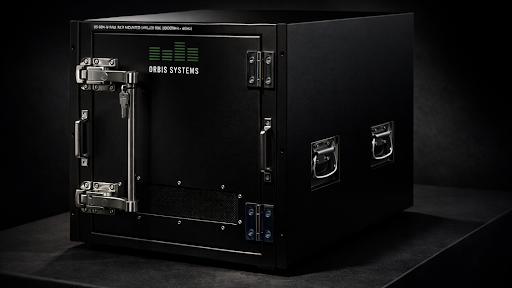
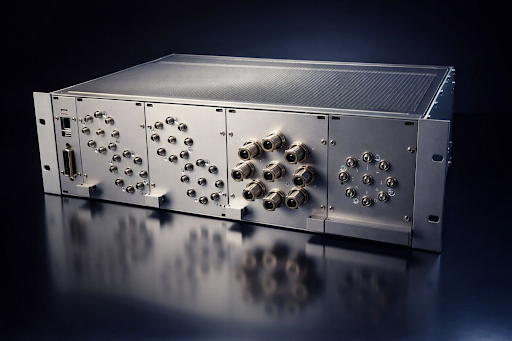
A test system consists of multiple components that must work together seamlessly. In RF and wireless testing, this can include shielding enclosures, test instruments, RF cables, switches, and control software. If any part of the system does not perform correctly, the overall test results can be affected.
Orbis Systems focuses on delivering complete, integrated test systems rather than individual components. This approach improves overall system performance and reduces the risk of measurement errors.
This process includes:
- Planning the system architecture based on test requirements
- Integrating all components with proper RF connections and control interfaces
- Performing system calibration and validating measurement performance
When all elements are properly integrated and calibrated, testing becomes more accurate and reliable.
Standardized system deployment across multiple locations allows companies to use the same test setup globally. This ensures consistent test conditions and comparable results.
As a result, teams do not need to learn different setups at each location, saving time and reducing operational complexity.
A complete system also improves coordination between teams, as everyone follows the same structure and procedures.
RF Testing in Different Stages
RF testing is required at multiple stages of product development, and each stage has different requirements.
Research and Development
At this stage, flexibility is important. Engineers need to evaluate different designs, test multiple frequency bands, and make quick adjustments. Test systems must support configurable setups and detailed measurements.
Validation Stage
In this stage, accuracy and repeatability are critical. Testing is performed under controlled conditions using calibrated equipment to ensure reliable results. This stage may include pre-compliance or standards-based testing (such as for 5G performance), where consistent measurement conditions are essential.
Production Stage
During production, speed and consistency are key. Automated RF test systems are used to handle high volumes, with optimized test time and clear pass/fail criteria, while maintaining measurement accuracy.
Global test solutions help ensure that the same test setups and performance levels are maintained across multiple production locations.
At every stage, RF test equipment support is necessary. This includes calibration, maintenance, and troubleshooting to ensure that systems continue to operate correctly and deliver accurate results.
As a result, companies can maintain product quality throughout the entire lifecycle.
Long-Term System Use and Support
RF test systems are typically used over long operational lifecycles. To maintain accuracy and reliability, they require regular support and maintenance.
Orbis Systems supports long-term system use through structured service programs.
These services include:
- Regular system checks, such as calibration verification and RF path inspection
- Monitoring system performance to detect measurement drift or equipment issues
- Updating software, firmware, and configurations to support new technologies and standards
These activities are part of comprehensive support services, including test system maintenance, lifecycle management, and technical support.
Such services help maintain system stability and measurement accuracy over time.
For example, regular checks can identify small issues—such as connector wear or calibration drift—before they lead to larger problems. System updates ensure compatibility with evolving technologies, including new wireless standards.
As a result, systems continue to perform reliably over extended periods.
In addition, proper advanced support services reduce overall operational costs by extending equipment life and minimizing unexpected failures.
Combining Global and Local Strengths
The combination of global test systems and local engineering support creates a robust and efficient solution.
Global test solutions ensure standardized setups and consistent, comparable results across multiple locations. At the same time, local engineering support provides fast response, hands-on troubleshooting, and flexibility to address site-specific requirements.
This combination offers several benefits:
- Consistent and correlated testing across all sites
- Faster problem resolution and reduced downtime
- Effective system adjustments, such as calibration tuning and test parameter optimization
- Improved operational efficiency
Companies operating in RF test environments—such as labs and production lines—benefit from this approach by maintaining both measurement accuracy and test throughput.
In addition, it improves coordination between teams across different regions by ensuring common systems, procedures, and support structures.
A Clear and Reliable Testing Approach
RF testing requires both consistency and flexibility. Companies need systems that operate with standardized configurations across locations, while also allowing quick adjustments to meet changing requirements.
Orbis Systems demonstrates this approach by combining global test solutions with local engineering support.
This approach helps maintain measurement accuracy and repeatability, reduce system downtime, and support long-term system performance. It also simplifies the management of testing operations across multiple locations.
For companies working with RF test systems, this provides a clear and practical framework for reliable and efficient testing.
Frequently Asked Questions
1. What are global test solutions?
Global test solutions are standardized testing systems designed to operate consistently across multiple locations. They ensure comparable and repeatable results within defined tolerances, helping companies maintain quality and confidence in their data.
2. Why is local engineering support important?
Local engineering support is important because it allows a quick response to problems. Engineers can reach the site faster and solve issues directly. This reduces downtime and keeps testing systems running smoothly.
3. How does RF test equipment support help in testing?
RF test equipment support helps maintain system performance through calibration, preventive maintenance, system checks, and troubleshooting. With proper support, systems continue to deliver accurate and repeatable results.
4. What are worldwide test system services?
Worldwide test system services help companies deploy and manage standardized testing systems across multiple locations. They ensure consistent configurations, procedures, and performance across all sites.
5. Why are lifecycle management services needed?
Lifecycle management services help maintain systems over time. They include monitoring, updates, and regular maintenance. These services help extend system life and reduce the risk of unexpected failures.