Table of Contents
- Why Reliable Wireless Testing Matters
- What Test Infrastructure Deployment Means
- The Importance of RF Chamber Manufacturing
- Elements of Turnkey Test Solutions
- Automation and Positioning in Modern Testing
- Planning Deployment for R&D Production
- Building a Reliable Testing Environment
- Frequently Asked Questions
Why Reliable Wireless Testing Matters
Wireless products are becoming more advanced every year. Devices now support higher data speeds, multiple antennas, and complex radio features. Because of this, companies must invest in proper test infrastructure deployment to ensure their products perform as expected. A well-planned testing environment allows engineers to measure performance accurately and repeat results with confidence. It also helps reduce delays during product validation.
Test infrastructure deployment involves more than placing equipment in a lab. It includes RF chamber manufacturing, precision positioning systems, and complete turnkey test solutions that work together as one system. When these parts are carefully integrated, teams can test devices under controlled conditions without interference. As a result, measurements remain stable and reliable across repeated tests.
Key Takeaways
- Test infrastructure deployment ensures accurate and repeatable wireless measurements.
- RF chamber manufacturing creates controlled environments minimizes external interference
- Turnkey test solutions integrate chambers, instrumentation, and automation into one system.
- Precision positioning systems improve measurement consistency and alignment accuracy.
- Careful planning supports both R and D flexibility and production efficiency.
What Test Infrastructure Deployment Means
Test infrastructure deployment refers to the complete setup of a wireless testing environment. It covers planning, installation, integration, and validation of all required hardware and software. The goal is to create a controlled space where over-the-air measurements can be performed accurately.
The environment must provide high shielding effectiveness to attenuate external radio signals and prevent interference. Second, the system must support the precise movement of the device under test. Third, the entire setup should allow automated control for consistent measurements. Therefore, successful deployment ensures that results are repeatable and comparable over time.
In addition, proper planning helps avoid integration issues later. When systems are configured correctly from the beginning, engineers can focus on product performance instead of troubleshooting equipment.
The Importance of RF Chamber Manufacturing
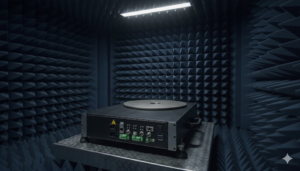
RF chamber manufacturing is a critical part of any wireless test lab. An RF chamber isolates the device under test from external signals. It uses shielding materials and absorber lining to reduce reflections and minimize multipath effects within the chamber.
Many facilities also invest in custom anechoic chambers to meet specific frequency ranges, size requirements, and measurement standards. These chambers are designed to match precise testing objectives while maintaining high isolation performance.
A well-manufactured chamber provides high isolation. Consequently, engineers can measure antenna patterns, radiated power, sensitivity, and, when integrated with network emulation systems, wireless throughput without environmental disturbances. This improves measurement accuracy and ensures consistency.
Furthermore, chamber size and configuration must match the testing requirements. Some applications require compact chambers for small devices. Others need larger setups for more complex systems. In both cases, careful RF chamber manufacturing supports stable testing conditions and dependable data.
Elements of Turnkey Test Solutions
Turnkey test solutions combine all required components into one integrated system. Instead of assembling each element separately, teams receive a pre-integrated solution that is ready for operation after installation.
These solutions generally include:
- Shielded RF chambers for controlled testing
- Integrated instrumentation for signal generation and analysis
- Precision positioning systems for accurate DUT alignment
- Automation interfaces for test control
Because everything is configured to work together, commissioning time is reduced. In addition, system compatibility issues are minimized. Therefore, engineers can begin testing sooner and maintain a consistent workflow.
Turnkey test solutions also support both Sub 6 GHz and mmWave testing requirements. As wireless standards evolve, scalable infrastructure ensures long-term usability. This makes turnkey integration a practical approach for modern labs.
Automation and Positioning in Modern Testing
Automation plays a major role in effective test infrastructure deployment. Manual testing can introduce variability and increase the risk of human error. However, automated systems provide consistent control over measurements and device movement.
For example, modern systems support API-based or network control interfaces, enabling integration with external software platforms.
.As a result, laboratories can connect testing workflows with internal management tools. This improves efficiency and traceability.
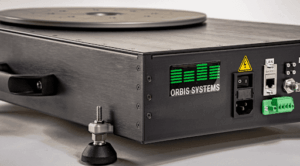
Positioning systems are equally important. They enable precise multi-axis movement of antennas and devices. Accurate positioning ensures repeatable orientation during antenna pattern measurements and beam testing. In addition, high-resolution sensors maintain alignment even after power interruptions.
Together, automation and positioning systems enhance reliability. They ensure that each test follows the same procedure and produces dependable data.
Planning Deployment for R&D Production
Different environments have different needs. Research and development labs require flexibility. Engineers often change configurations and test parameters. Therefore, modular setups are valuable in R&D settings.
On the other hand, production environments prioritize speed and repeatability. Systems must handle higher test volumes while maintaining consistent results. For this reason, structured deployment planning is essential.
Key considerations include:
- Chamber size and scalability
- Integration of instrumentation
- Automation compatibility
- Space and safety requirements
By addressing these factors early, organizations avoid costly modifications later. Moreover, well structured deployment supports future expansion as technology evolves.
Building a Reliable Testing Environment
Reliable wireless testing depends on structured planning and careful integration. Test infrastructure deployment brings together RF chamber manufacturing, positioning systems, and turnkey test solutions into one coordinated setup. When each element is properly implemented, engineers achieve accurate, repeatable, and efficient measurements.
Moreover, scalable design and automation ensure long-term usability. When supported by end-to-end manufacturing, organizations benefit from consistent quality control across design, fabrication, integration, and validation stages. By investing in well-planned deployment, organizations create a stable foundation for validating current and future wireless technologies.
Frequently Asked Questions
1. What is test infrastructure deployment in wireless testing?
Test infrastructure deployment refers to the complete setup of a wireless testing environment. It includes installation of RF chambers, positioning systems, measurement equipment, and automation software. The purpose is to create a controlled environment for reliable over-the-air measurements.
2. Why is RF chamber manufacturing important?
RF chamber manufacturing ensures that testing takes place in a shielded space. The chamber blocks external signals and reduces reflections. This improves accuracy and ensures that measurements are not influenced by environmental noise.
3. What are turnkey test solutions?
Turnkey test solutions are pre-integrated systems that combine chambers, instrumentation, positioning systems, and automation interfaces. Because all components are configured to work together, installation and commissioning are simplified. This allows faster transition from setup to testing.
4. How do positioning systems improve testing accuracy?
Positioning systems allow precise control of device orientation. During antenna pattern or beam measurements, even small changes in angle can affect results. Therefore, controlled multi-axis movement ensures repeatability and accurate performance evaluation.
5. Can one deployment support both R and D and production testing?
Yes. A well-planned deployment can support both environments. Modular configurations allow flexibility for research testing, while automation and structured workflows support production throughput. Proper design ensures scalability for future requirements.