Table of Contents
- The Beginning of Smarter RF Shielding Methods
- Why Flexible RF Shielding Matters Today
- What Curtain Technology Is and Why It Matters
- How Orbis Systems Is Innovating With Curtain-Based RF Shielding
- Real-World Use Cases for RF Curtain Systems
- How to Choose Between Curtains, Boxes, and Chambers
- How Curtain Technology Supports Future Testing
- Frequently Asked Questions
Key Takeaways
- RF isolation systems are essential as the interference risk grows with wireless expansion.
- Curtain RF shielding is flexible and cost-effective for semi-isolated and prototype testing, though it provides lower isolation than a fully shielded modular chamber.
- Orbis Systems enhances this concept by combining it with their proven RF shielded enclosures.
- EMI shielding solutions support multi-device testing and reduce errors.
- Hybrid systems let labs balance precision and flexibility.
- Curtain shielding is suitable for functional testing and large setups, but not ideal for high-isolation OTA, mmWave FR2, or certification testing.
- Choosing between a curtain, a box, or a chamber depends on the performance budget and space.
The Beginning of Smarter RF Shielding Methods
Testing wireless devices is getting tougher every year because engineers now need more innovative ways to control RF interference than ever before.
As wireless technology becomes more complex, the demand for accurate and interference-free testing continues to rise. This shift has made RF isolation systems an essential part of modern testing environments. Labs, production lines, and R&D facilities now rely on advanced shielding methods that allow flexible setups, fast reconfiguration, and stable measurement conditions.
Orbis Systems is expanding its approach to RF shielding by introducing curtain-based technology that supports both flexibility and precision. This approach supports flexible test zones and good functional isolation, though it does not match the high precision or isolation levels of rigid chambers used for certification or high-frequency testing.
Why Flexible RF Shielding Matters Today
As wireless devices advance, test environments must keep up with growing complexity. Higher frequency bands, multi-antenna systems, and dense device ecosystems require reliable shielding to prevent interference and preserve test accuracy.
Flexible RF shielding matters because modern labs face challenges such as limited space, growing test requirements, and faster product cycles. They also need systems that can adapt quickly without costly rebuilds.
Why flexibility is important
- The number of wireless devices in test labs continues to grow
- Engineers need a quick setup and reconfiguration
- Fixed chambers are sometimes too large or too costly
- Production lines need fast and repeatable testing
Flexible shielding also supports environments that must change frequently, such as mixed-product lines or labs that test different wireless standards.
Benefits of flexible shielding
- Faster deployment of temporary or semi-permanent test areas
- Better use of limited space
- Lower cost compared with building large, rigid chambers
- Improved efficiency for multi-device testing
What is Curtain Technology and Why It Matters?
Curtain-style shielding is an adjustable enclosure made from conductive fabric or panel materials that block external RF signals. It creates a defined test area without the need for a full rigid chamber. This makes it useful for labs that need mobility, scalability, or temporary shielding on demand.
Curtains offer a good balance between isolation performance and practical deployment. They work well for early-stage R&D and functional RF testing, especially for sub-6 GHz applications, but they are not suited for high-precision mmWave, EMC compliance, or certification-level measurements.
RF Protection Enclosures and Curtain Comparison
This comparison helps clarify where curtain shielding fits in the overall range of options.
|
Feature |
RF Curtains |
Traditional RF Shielded Enclosures |
|
Footprint |
Flexible and relocatable |
Fixed and large footprint |
|
Capital Cost |
Lower |
Higher |
|
Mobility |
High and easy to reposition |
Low and usually permanent |
|
Isolation Performance |
Moderate (lower than rigid enclosures) |
Very high |
|
Best Use Case |
Modular labs and production lines |
Certification and advanced R&D testing |
Curtains provide a firm middle ground when labs need shielding but cannot commit to permanent setups.
How Orbis Systems Is Innovating With Curtain-Based RF Shielding
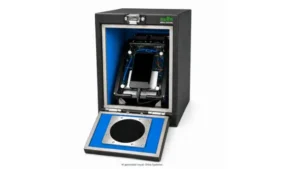
Orbis Systems is known for producing reliable RF shielded enclosures and functional test systems built for wireless and communication testing. Their RF shielded boxes provide strong electromagnetic isolation for wireless devices in both R&D and practical testing environments.
By applying their knowledge of shielding and automation, Orbis is developing flexible curtain-based solutions that work well in laboratories and production settings.
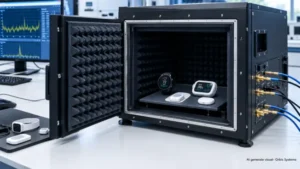
RF Shielded Enclosures Working With Curtain Zones
Hybrid setups allow engineers to combine high-isolation rigid boxes with flexible curtains for multi-stage testing. This gives accuracy where it matters and flexibility where speed is essential.
EMI Shielding Solutions for Multi-DUT Environments
EMI shielding solutions play an important role when multiple devices are tested at the same time. Curtain systems are practical for functional testing, high-throughput setups, and mixed testing environments where flexibility is needed. However, they are not suitable for mmWave FR2 or certification-level testing, as those applications require high-isolation RF chambers to ensure precision and compliance.
Modular Components and RF Isolation Accessories
Orbis supports a wide ecosystem of modular accessories, including interface panels for RF, AC, USB, and Ethernet connections. Their systems are known for easy integration with automated test equipment and shielding enhancements.
Expert insight
Modern RF shielding needs to be modular and support high-density testing. Curtain systems are helpful for functional testing, pre-validation, production zoning, and isolating large DUTs. Still, they cannot replace high-isolation chambers required for mmWave 5G FR2, precision antenna testing, or regulatory compliance.
Call to action
Unlock cleaner and more accurate testing with flexible shielding that grows with your needs. Connect with Orbis to explore your options.
Real-World Use Cases for RF Curtain Systems
Curtain-based shielding is used in several industries that deal with wireless devices, sensors, and communication technology.
5G OTA Testing
Orbis Systems also offers full OTA chambers for high-precision testing, and curtain setups can be used alongside them to add flexibility in the testing layout.
Automotive V2X and Infotainment
Vehicles now rely on wireless communication for safety and entertainment. Curtain systems allow fast setup changes for different modules without needing a new chamber for each project.
IoT and Consumer Device Production
High-volume manufacturing involves testing many units at once. Curtain shielding helps isolate each test area while keeping the line moving smoothly.
Bullet points showing solved challenges:
- Reducing unexpected interference from nearby test stations
- Allowing layout changes without facility rebuilds
- Supporting different device sizes and shapes
- Helping teams scale production-ready test setups
Improve your workflow and save engineering hours by using flexible shielding setups designed around your process.
How to Choose Between Curtains, Boxes, and Chambers
Choosing the right shielding approach depends on isolation requirements, device types, and testing frequency.
Factors to consider
- Required isolation level for your application
- Frequency range and standards being tested
- Throughput and number of devices
- Space limitations and mobility
- Integration with automation systems
Cost and performance considerations
- Curtains cost less but may not suit certification-grade testing
- Boxes provide high isolation for repeatable measurements
- Chambers are ideal for advanced OTA and detailed R&D
- Hybrid setups combine the strengths of all three options
Wireless technologies continue to expand in complexity, and this creates a growing need for reliable shielding that supports accurate testing. Today’s labs and production facilities require RF isolation systems that keep up with evolving standards and workflows.
Orbis Systems brings deep experience in test system design and RF protection enclosures, making it well-positioned to offer innovative shielding setups. By combining rigid enclosures with flexible curtain zones and strong EMI shielding solutions, Orbis provides a complete and scalable way to manage interference in modern test environments.
If you are ready to improve your testing process, explore Orbis Systems’ advanced shielding options and discover how flexible solutions can enhance your workflow.
Frequently Asked Questions
What is an RF shielding curtain?
It is a fabric or panel-based enclosure that blocks external RF signals and forms a controlled test zone.
Where are RF isolation systems used?
They are used in R&D labs, wireless test centres, production QA lines, automotive labs, and IoT device manufacturing.
Can RF shielding help reduce interference from 5G devices?
Yes, RF shielding helps reduce interference from 5G devices.
It works well for sub-6 GHz and general testing, but mmWave/FR2 testing requires high-performance rigid chambers for full isolation.
How do I choose the right EMI shielding solution?
You should consider isolation level, device type, frequency band, space, throughput, and automation needs.