
Preparing 5G & IoT Devices for Certification: A Practical RF Compliance Guide
Table of Contents
- Why RF Compliance Cannot Be Ignored
- What RF Compliance Testing Really Checks
- Understanding RF Regulatory Standards
- Preparing Devices Before Formal Testing
- Why a Controlled RF Test Environment Matters
- How the Wireless Certification Process Works
- Common Causes of Delay and How to Avoid Them
- Conclusion: Preparing With Clarity
- Frequently Asked Questions (FAQs)
Key Takeaways
- RF compliance testing confirms that a device uses radio frequencies correctly
- RF regulatory standards differ by region and must be identified early
- The wireless certification process follows defined steps and documentation rules
- Controlled test setups improve measurement accuracy
- Early preparation reduces retesting and approval delays
Why RF Compliance Cannot Be Ignored
Every 5G and IoT device communicates using radio signals. These signals travel through shared frequency bands that are used by many devices at the same time. Because of this, governments set clear rules to control how wireless products operate. These rules are defined through RF regulatory standards and checked through RF compliance testing.
If a device does not meet these rules, it may interfere with other equipment or fail to work reliably. In many cases, such a device cannot be sold at all. For this reason, manufacturers must understand the wireless certification process early in development. This guide explains that process in a clear and practical way.
What RF Compliance Testing Really Checks
RF compliance testing looks at how a wireless device behaves when it transmits and receives signals. The goal is not to judge performance quality, but to confirm that the device stays within allowed limits.
In simple terms, testing checks whether the device:
- Transmits only on approved frequencies
- Stays within allowed power levels
- Does not create unwanted emissions
- Remains stable during operation
For 5G and IoT products, this testing can be more detailed. Many devices support several bands and technologies. As a result, RF compliance testing is usually done in stages rather than all at once.
Understanding RF Regulatory Standards
Different regions apply different RF regulatory standards, even though the core intent is similar. Each region defines its own test limits, methods, and approval process.
Common regulatory systems include:
- United States: FCC regulations for radio transmitters
- European Union: CE marking under the Radio Equipment Directive, supported by ETSI standards
- Cellular ecosystems: Industry certification programs such as GCF and PTCRB validate network compatibility for cellular devices
Because requirements vary, manufacturers must decide early which markets they want to enter. This decision affects test planning, design choices, and documentation work.
Preparing Devices Before Formal Testing
Pre-compliance preparation is an internal step that happens before a device is sent to a certified test laboratory. Although not legally required, it is widely used to reduce risk.
Typical preparation work includes:
- Reviewing antenna placement and RF routing
- Measuring basic transmit power and emissions
- Checking frequency accuracy over time
- Identifying areas close to regulatory limits
This stage helps teams understand how the device behaves in real conditions. As a result, problems can be fixed earlier, when changes are still manageable.
Why a Controlled RF Test Environment Matters
RF measurements are sensitive to surrounding signals. Nearby Wi-Fi routers, mobile phones, or base stations can affect results if testing is done in an open space.
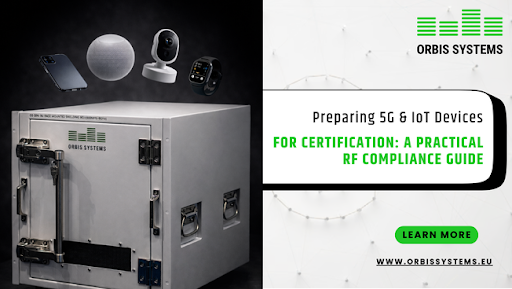
For this reason, controlled environments are commonly used. An RF shielded box blocks external radio signals and creates a stable space for testing. This allows engineers to repeat measurements and trust the results.
A controlled setup usually includes:
- A shielded enclosure to isolate the device
- Calibrated RF measurement instruments
- Defined signal paths and connections
This type of environment supports consistent data collection during RF compliance testing.
How the Wireless Certification Process Works
After preparation is complete, the device enters the formal wireless certification process. This process follows a defined structure.
First, an accredited test laboratory is selected. Next, technical documents are submitted. These include schematics, block diagrams, and test instructions. After document review, the lab performs the required RF tests.
The process generally includes:
- Documentation review
- Execution of required tests
- Analysis of results
- Report generation and submission
If issues are found, corrections must be made and tests repeated. Only after successful completion can approval be granted.
Common Causes of Delay and How to Avoid Them
Delays often happen when problems appear late in the process. However, many of these delays can be avoided with careful planning.
Common causes include unclear requirements, missing documents, and late design changes. To reduce these risks:
- Identify target regions early
- Perform pre-compliance testing regularly
- Keep detailed records of design versions
- Align internal tests with lab methods
These steps help move RF compliance testing and certification forward without unnecessary stops.
Conclusion: Preparing With Clarity
Certification for 5G and IoT devices is a structured technical process. When teams understand RF regulatory standards, prepare devices carefully, and follow the wireless certification process step by step, the results are more predictable.
Early testing, clear documentation, and controlled measurement environments make certification smoother and more efficient. Preparation, rather than correction, remains the most effective approach.
Frequently Asked Questions
1. What is RF compliance testing, and why is it required?
RF compliance testing checks whether a wireless device stays within approved limits for frequency use, power, and emissions. It is required to prevent interference and ensure safe operation in shared radio environments.
2. How do RF regulatory standards affect development?
RF regulatory standards define limits that influence antenna design, RF layout, and component selection. Ignoring these limits early often leads to redesigns later.
3. What is the role of pre-compliance testing?
Pre-compliance testing helps teams identify potential failures before formal certification. It reduces the risk of test failure and shortens approval timelines.
4. Why is an RF shielded box important during testing?
An RF shielded box blocks external signals. This creates stable conditions so RF measurements are accurate and repeatable.
5. How long does the wireless certification process usually take?
The duration depends on device complexity and preparation quality. Devices that complete thorough pre-compliance testing usually move faster through certification.